Browse by Topic
Popular
Popular Posts
Latest
Latest C# Posts
C# Anonymous Type vs Record: Practical Comparison
Compare C# anonymous types and records on syntax, equality, immutability, and when to choose each for data modeling.
C# Anonymous Type Properties: Syntax and Behavior
C# anonymous type properties: Learn how to declare them, their read-only behavior, equality semantics, LINQ usage, and practical limitations.
C# Anonymous Type with LINQ: Projection and Usage
Learn how C# anonymous types work with LINQ for projections, grouping, joins, and composite keys, and when a named DTO is the better choice.
C# Anonymous Type: Syntax, Usage, and Limitations
c# anonymous type: Learn how to use C# anonymous types for read-only data projections, their syntax, runtime behavior, and when to prefer tuples or records.
C# Dynamic Runtime Binding Explained with Examples
C# dynamic runtime binding defers member resolution until runtime. Understand how the dynamic keyword works with the DLR, when RuntimeBinderException appears, and the performance trade-offs to expect.
C# Dynamic Method Invocation at Runtime
Learn how to call C# methods by name at runtime using reflection, the dynamic keyword, and cached delegates, with practical performance and maintainability tradeoffs.
C# Dynamic vs Var: Type Safety and Runtime Behavior
C# dynamic vs var: Understand the real differences between compile-time type inference and runtime binding, including performance costs, error handling, and when to choose each.
c# dynamic vs object: Choosing the Right Type
c# dynamic vs object: Compare C# dynamic and object types: runtime behavior, performance implications, and when to use each for maintainable code.
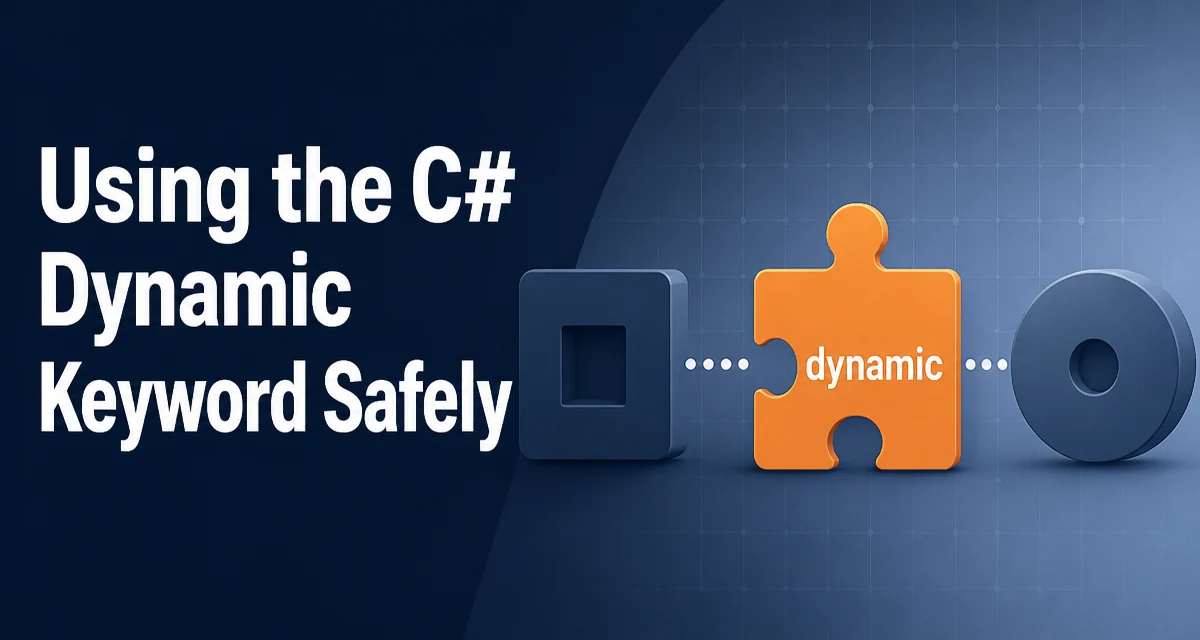
Using the C# Dynamic Keyword Safely
c# dynamic keyword: Learn when and how to use the `dynamic` keyword in C# for runtime binding, interoperability, and reflection scenarios, including performance and sa...
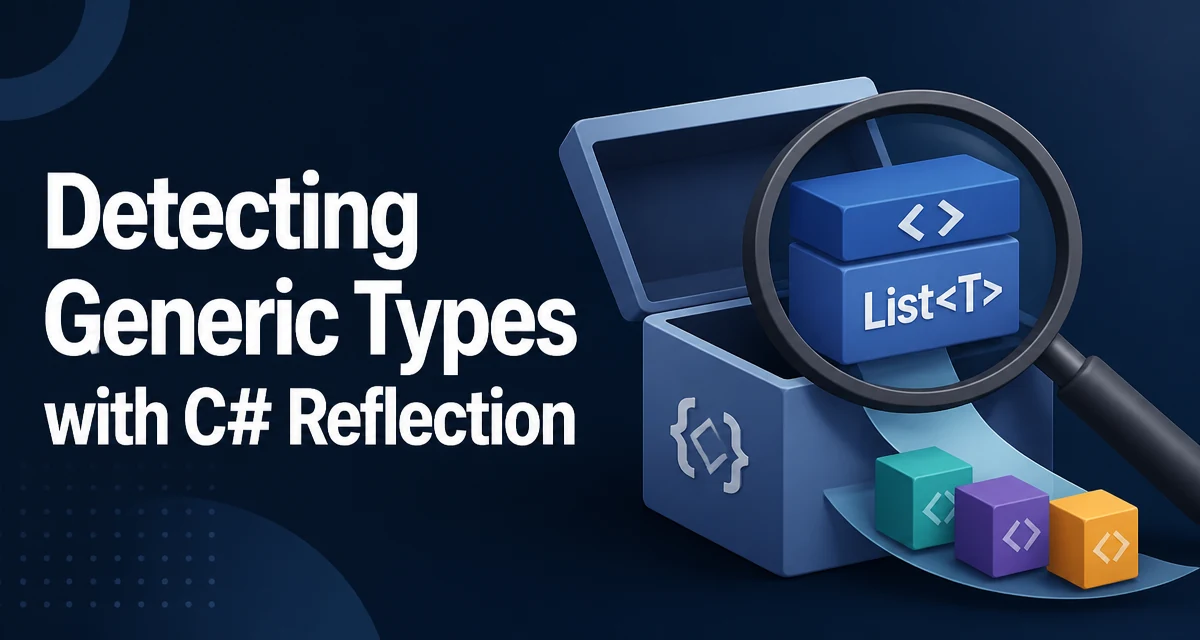
Detecting Generic Types with C# Reflection
Learn how to detect generic types with C# reflection: inspect type properties, read generic arguments and definitions, and resolve generic interfaces and base classes.