Browse by Topic
Popular
Popular Posts

Latest
Latest C# Posts

C# LINQ Count: Syntax, Predicates, and Performance
c# linq count: Learn how to use the LINQ Count method in C#: basic syntax, predicate overloads, LongCount, and performance considerations for large collections.

C# LINQ Contains: Usage, Performance, and Pitfalls
Understand how C# LINQ Contains determines membership, when to use a custom equality comparer, and how performance differs between List and HashSet.
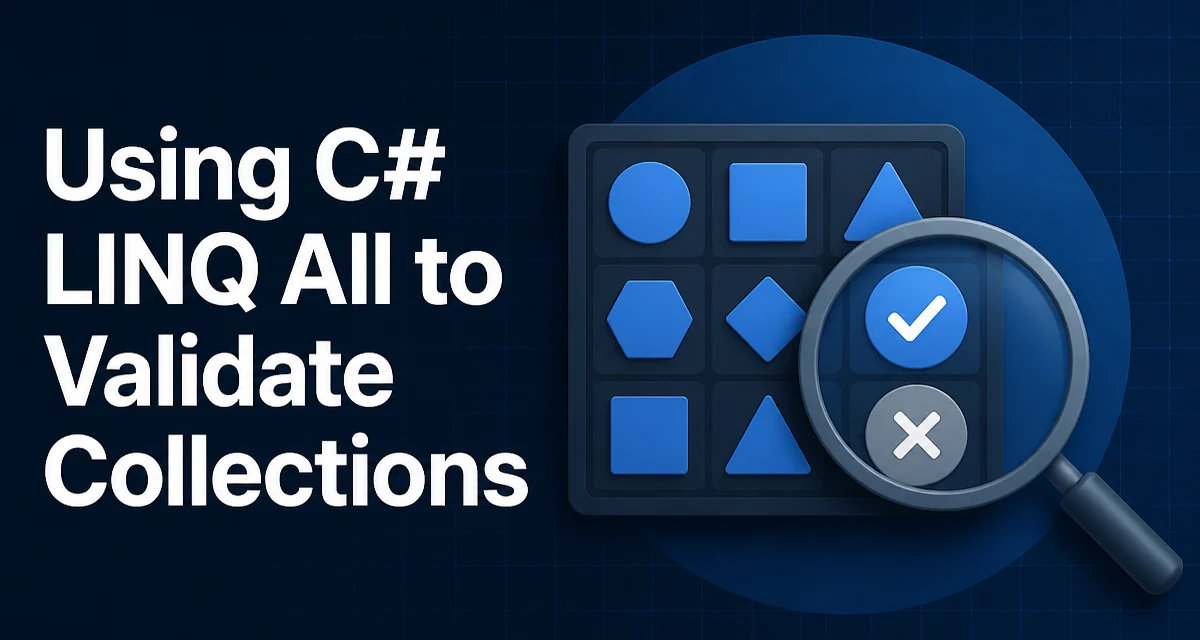
Using C# LINQ All to Validate Collections
c# linq all: Learn how the C# LINQ All method works, its short-circuiting behavior, empty-sequence semantics, and when to prefer a manual loop.

C# LINQ Any: Usage and Behavior
Learn how to use the LINQ Any method in C#, including its syntax, predicate behavior, performance tradeoffs, and how it differs from Count() and Exists().

C# LINQ ElementAt: Usage, Performance, and Alternatives
Learn how C# LINQ ElementAt accesses elements by index, when it is O(1) or O(n), and when alternatives such as ElementAtOrDefault or direct indexing are better.
C# LINQ Last: Syntax, Edge Cases, and Performance
c# linq last: Learn how C# LINQ Last and LastOrDefault work, including predicate overloads, empty sequence behavior, performance tradeoffs, and alternatives like index...
C# Single vs First: Key Differences and Usage
Understand the differences between C# LINQ Single and First: exception behavior, scanning tradeoffs, and when to use each.
Using SingleOrDefault in C# LINQ
Learn how SingleOrDefault works in C# LINQ: what it returns for empty or duplicate matches, when it throws InvalidOperationException, and how it compares to FirstOrDefault.

C# LINQ Single: Usage, Exceptions, and When to Use It
Understand C# LINQ Single: how it behaves, when it throws, and how to choose it over SingleOrDefault or First when you need a unique match.
C# First vs FirstOrDefault: Key Differences
Learn when First() throws on an empty sequence and when FirstOrDefault() returns a default value in C# LINQ queries.