Browse by Topic
Popular
Popular Posts
Latest
Latest C# Posts

C# Try Catch Finally: How the Blocks Actually Behave
Understand how try, catch, and finally blocks interact in C#, when the finally block runs, and how to avoid common exception-handling mistakes.
C# try catch: Syntax, Usage, and Pitfalls
c# try catch: Learn the practical syntax and behavior of the C# try-catch statement, including exception filters, finally, performance implications, and common mistakes.
C# Exception Handling: Patterns for Robust Code
Practical C# exception handling patterns: try-catch-finally, exception filters, custom exceptions, performance tradeoffs, async code, and result types.
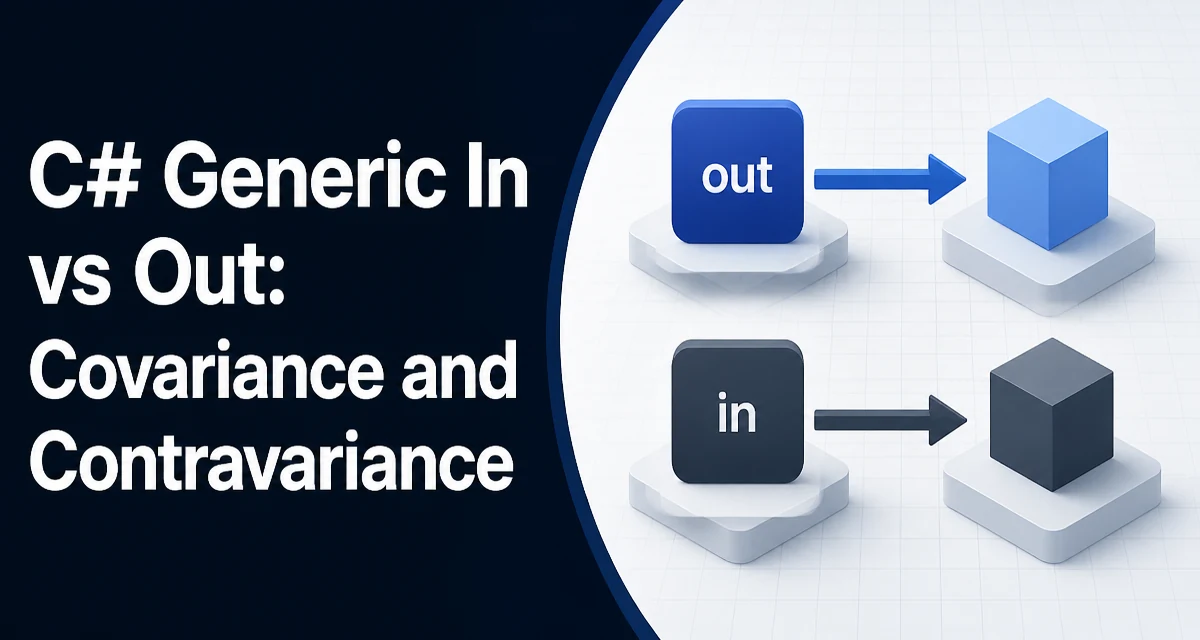
C# Generic In vs Out: Covariance and Contravariance
Understand C# generics `in` vs `out`: covariance and contravariance, when to use each keyword, and how the compiler enforces these rules.
C# Generic Contravariance: How It Works
Learn how C# generic contravariance lets base-type implementations work with derived types, including practical interface and delegate examples.
C# Generic Covariance: How It Works and Where to Use It
Understand C# generic covariance with practical examples, including how the out keyword enables safe type substitution in interfaces and delegates.
C# Multiple Generic Type Parameters: Syntax and Usage
c# multiple generic type parameters: Learn how to declare and use C# generic types and methods with multiple type parameters, including constraints, type inference, an...

C# where T : unmanaged: Generic Unmanaged Types
Learn how the C# where T : unmanaged constraint enables generic code with pointers, stackalloc, and sizeof, and when to use it.
C# where T notnull: Generic Constraint Explained
c# where t notnull: Understand the C# notnull generic constraint, how it works with nullable reference types, and when to apply it in your generic APIs.
C# where T : new() Constraint: Syntax and Usage
c# where t new: Understand the C# where T : new() constraint: how it requires a parameterless constructor, where it applies, and how to use it safely in generic code.