Browse by Topic
Popular
Popular Posts




Latest
Latest Java Posts
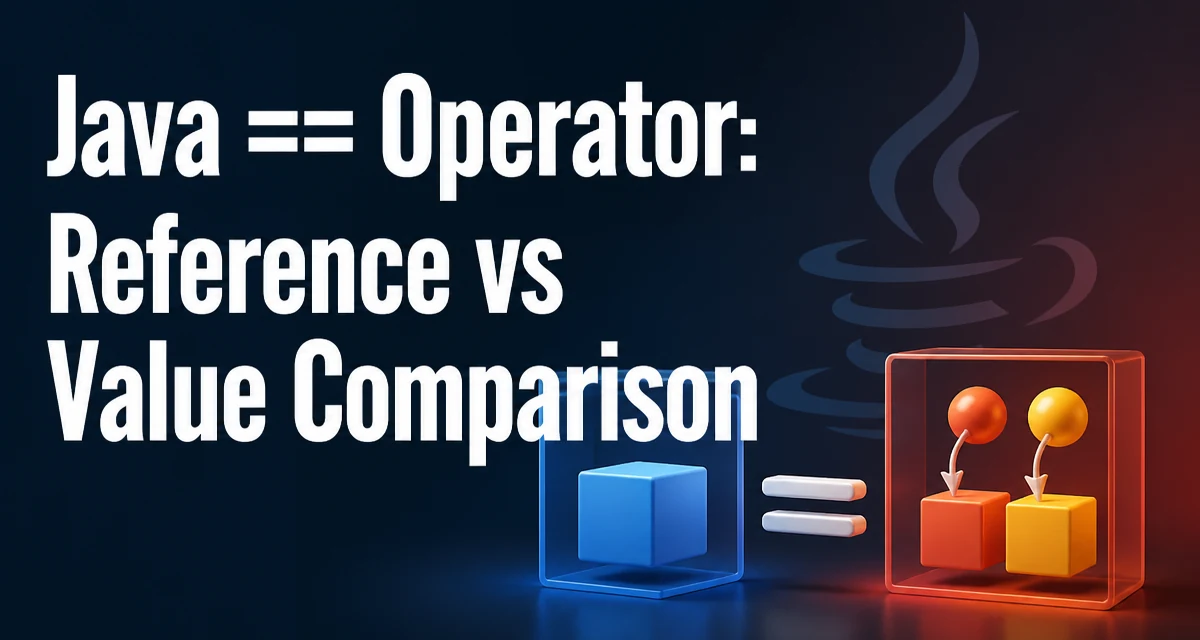
Java == Operator: Reference vs Value Comparison
Understand how Java's == operator compares primitives by value and objects by reference, and when to use equals() instead.

Java Equality Operators: == vs equals()
Understand how == and equals() behave for primitives, objects, and strings in Java, and learn to avoid common equality pitfalls.

Java Relational Operators: Syntax and Pitfalls
Learn how Java's six relational operators compare values and references, from primitive numeric promotion and NaN behavior to == vs equals and common Integer/String comparison traps.

Java Comparison Operators Explained
Learn how Java comparison operators work on primitives and objects, avoid equality and array-comparison pitfalls, and choose the right comparison strategy.

Java Compound Assignment Operators
Java compound assignment operators such as +=, -=, and *= combine an operation with assignment, but they also apply an implicit cast and evaluate the left operand only once. Learn how these behaviors work and where they can cause silent data loss.
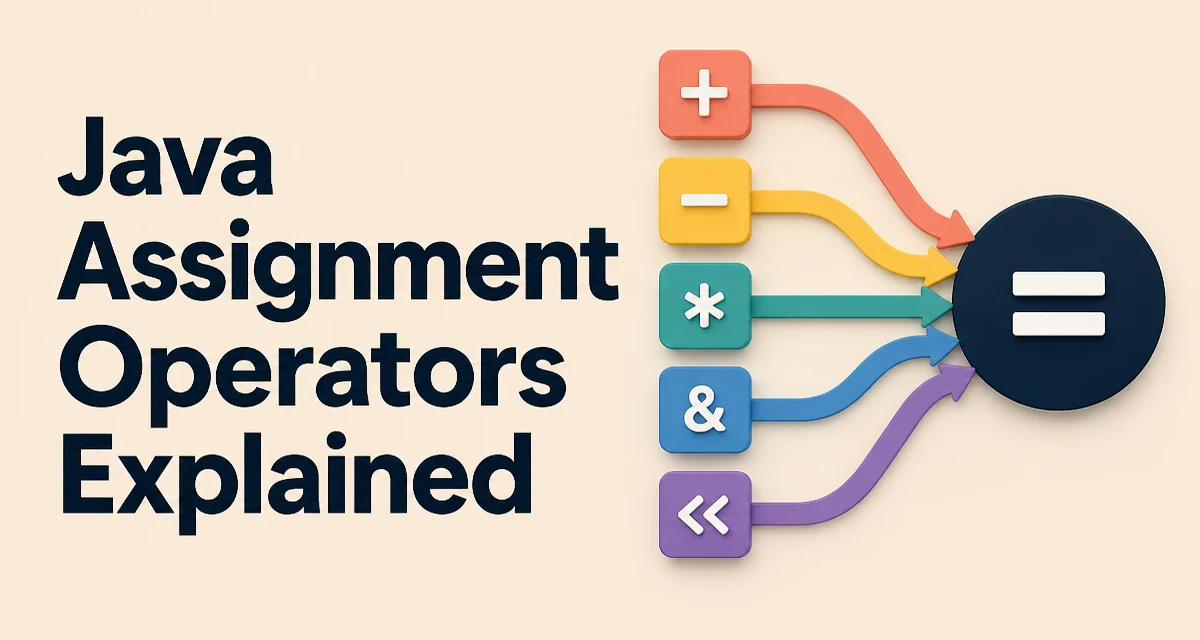
Java Assignment Operators Explained
Understand Java assignment operators: simple =, compound arithmetic and bitwise forms, implicit narrowing casts, and common pitfalls.

Java Prefix vs Postfix Increment: Semantics and Pitfalls
Understand the difference between Java's prefix and postfix increment operators, how their values behave in expressions, and where each form is appropriate.

How to Use the Java Decrement Operator
Understand how Java's decrement operator (`--`) works in prefix and postfix form, including evaluation order, common mistakes, and practical code examples.

Understanding the Java increment operator
A practical guide to Java's increment operator: prefix vs postfix semantics, common pitfalls, and subtle behavior in expressions.

Java Modulo Operator: Remainder and Negative Values
java modulo operator: Understand how Java's % operator computes remainders, handles negative operands, and when to use Math.floorMod for true modulo behavior.