Browse by Topic
Popular
Popular Posts


Latest
Latest Java Posts
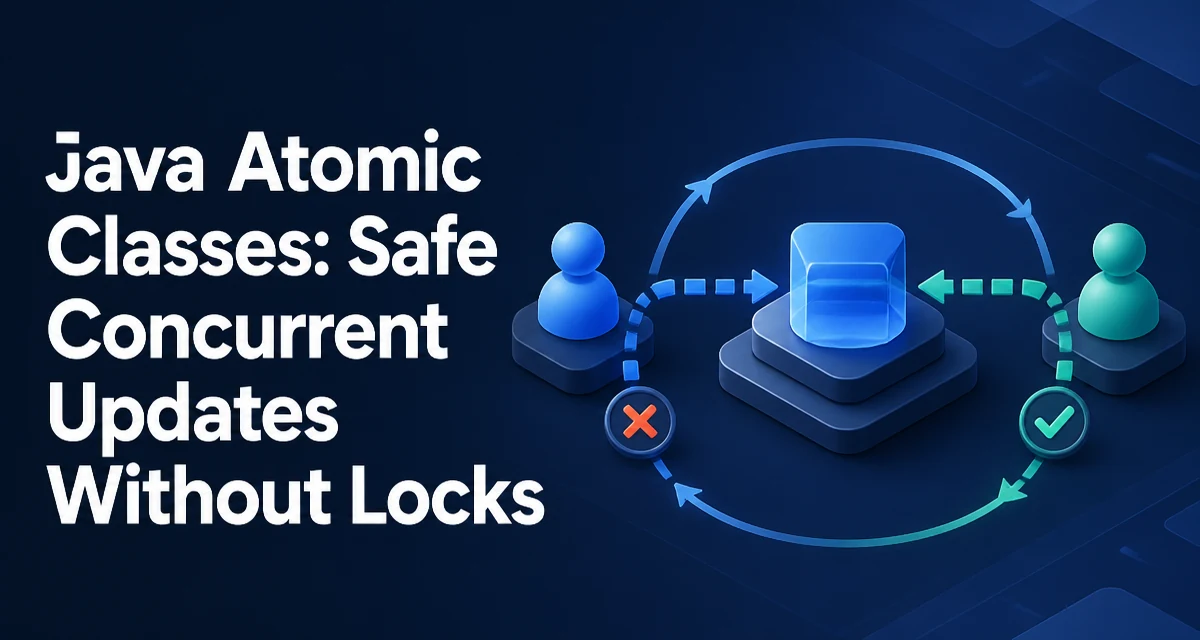
Java Atomic Classes: Safe Concurrent Updates Without Locks
Learn how Java atomic classes like AtomicInteger and AtomicReference provide lock-free thread-safe updates, how CAS works, and when to use them.

Java AtomicInteger for Thread-Safe Counters
java atomicinteger: Learn how to use Java AtomicInteger for thread-safe counters and atomic operations without locks, including core methods, performance, and pitfalls.
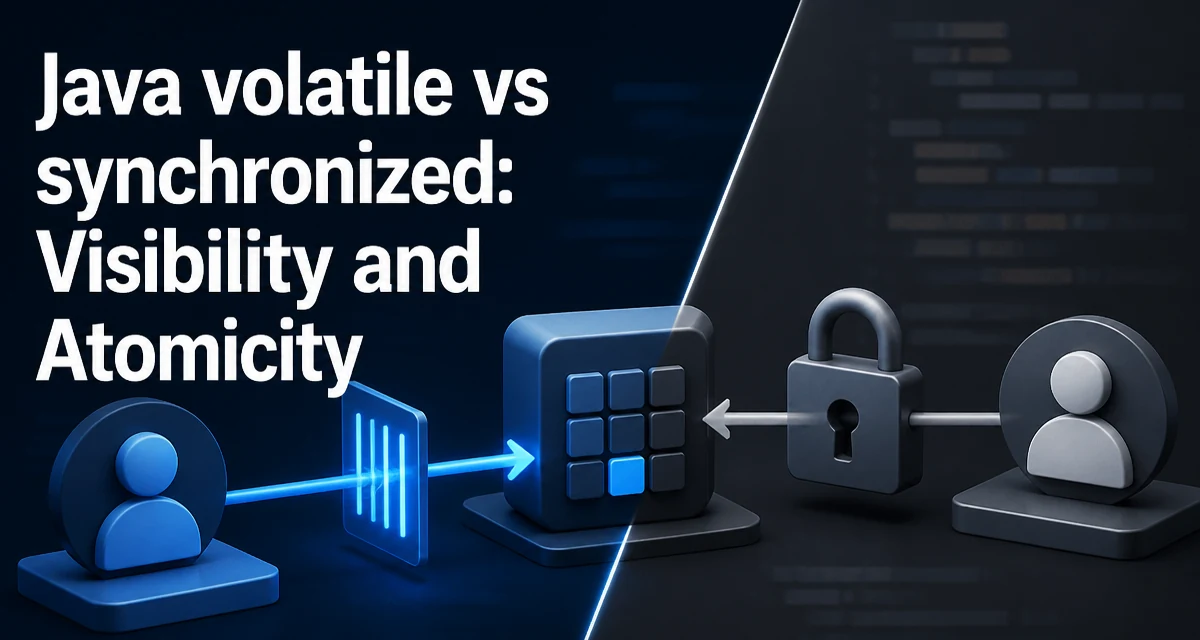
Java volatile vs synchronized: Visibility and Atomicity
Understand the difference between volatile and synchronized in Java: visibility, atomicity, memory semantics, and when to use each.

Java volatile Keyword: Visibility Without Atomicity
java volatile keyword: Explains what the volatile keyword guarantees in Java, where it applies, and why it cannot replace synchronized or atomic classes.

Java Deadlock: Causes, Detection, and Prevention
Learn how Java deadlocks occur, how to detect them with thread dumps, and how to prevent them using consistent lock ordering and timeouts.
Java Thread Safety: Synchronization and Atomic Variables
Learn how to write thread-safe Java code with synchronization, volatile fields, atomic variables, and concurrent collections, and how to choose the right approach for shared state.
Java Race Condition: Causes, Fixes, and Prevention
Race conditions occur in Java when multiple threads access shared mutable data without coordination. Learn how to detect them and fix them using synchronized, volatile, atomic classes, and locks.
Java Synchronized Method vs Block: Lock Scope
Understand the differences between synchronized methods and synchronized blocks in Java, including which lock is acquired, lock granularity, reentrancy, and practical criteria for choosing between them.
Java Synchronized Block: Scope, Locking, and Tradeoffs
Learn how a Java synchronized block controls access to critical sections, how to choose lock objects, and when to use it over synchronized methods.
Java Synchronized Method: Locking Behavior and Use Cases
Learn how Java synchronized methods acquire intrinsic locks, handle reentrancy, and affect performance, and when synchronized blocks or explicit locks are better.