Browse by Topic
Popular
Popular Posts




Latest
Latest Java Posts

Java Annotations: Syntax, Retention, and Runtime Use
A practical guide to Java annotations: declaration syntax, retention policies, reflection-based runtime lookup, and common pitfalls when creating custom annotations.

Java Regex Groups: Capturing and Named Groups
Learn how to use capturing groups, named groups, and backreferences in Java regex with practical examples.

Java String.split() Regex: Splitting with Patterns
Java String.split() takes a regex, not a literal delimiter. Learn how to escape metacharacters, use the limit parameter, and reuse compiled Pattern objects for better performance.
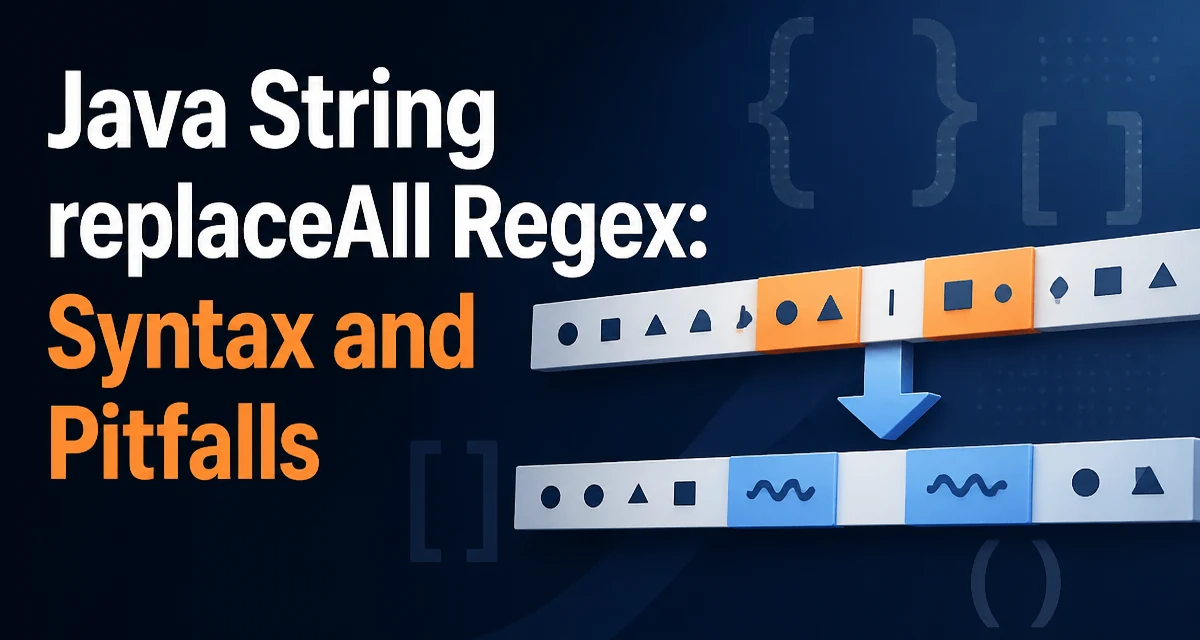
Java String replaceAll Regex: Syntax and Pitfalls
How Java's String.replaceAll() interprets regex patterns, handles escaping and group references, and when to reuse compiled Pattern instances instead of recompiling.

Java String.matches: How to Use It Effectively
Understand how Java's String.matches method compiles a regex, why it anchors to the whole string, the cost of repeated calls, and when to use Pattern and Matcher instead.

Java Matcher find() Explained
java matcher find: Understand how Java Matcher.find() scans input for pattern occurrences, differs from matches(), and works with loops and capturing groups.

Java Matcher matches() Method Explained
Learn how Java's Matcher.matches() checks an entire string against a regex pattern, compare it with find() and lookingAt(), see validation examples, and avoid common mistakes.
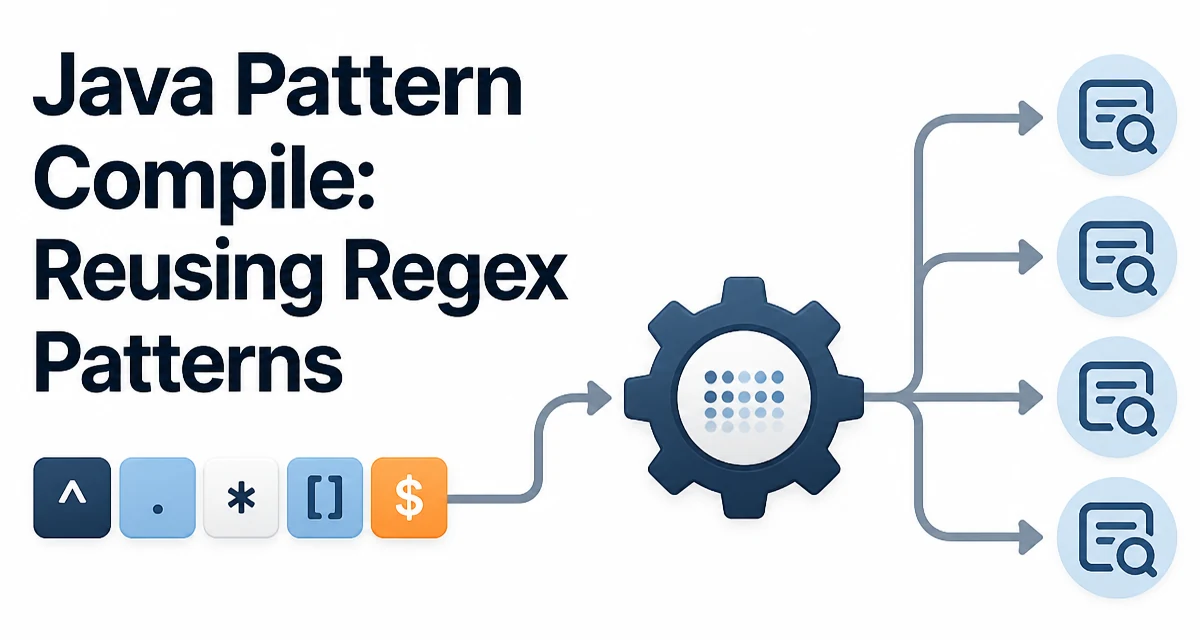
Java Pattern Compile: Reusing Regex Patterns
java pattern compile: Learn how Pattern.compile() works in Java, why reusing compiled patterns matters, and how to avoid common regex performance pitfalls.

Using the Java Matcher Class for Pattern Matching
java matcher class: Learn how to use the Java Matcher class for regex pattern matching, including find, matches, groups, and performance considerations.
Java Pattern Class: Compiling and Reusing Regular Expressions
Learn how to use the Java Pattern class to compile and reuse regular expressions efficiently, avoid common pitfalls, and improve matching performance.