Browse by Topic
Popular
Popular Posts


Latest
Latest Java Posts
Java Generic Method: Syntax and Practical Usage
Learn how to declare and use generic methods in Java, including type inference, bounds, wildcards, and runtime behavior.
Java Generic Class: Syntax, Bounds, and Type Erasure
Learn how to declare and use Java generic classes, including bounded type parameters, wildcards, and the implications of type erasure at runtime.

Java Generics: Type Safety and Runtime Behavior
Understand Java generics, including type erasure, wildcards, and practical patterns for writing type-safe, reusable code.

Using Collections.synchronizedList in Java
java collections synchronizedlist: Learn how Collections.synchronizedList works, when it guarantees thread safety, and where manual synchronization is still required.
Java Collections UnmodifiableList: How to Create and Use
Learn how to create unmodifiable lists in Java with Collections.unmodifiableList(), List.of(), and Collectors.toUnmodifiableList(), including behavior and pitfalls.
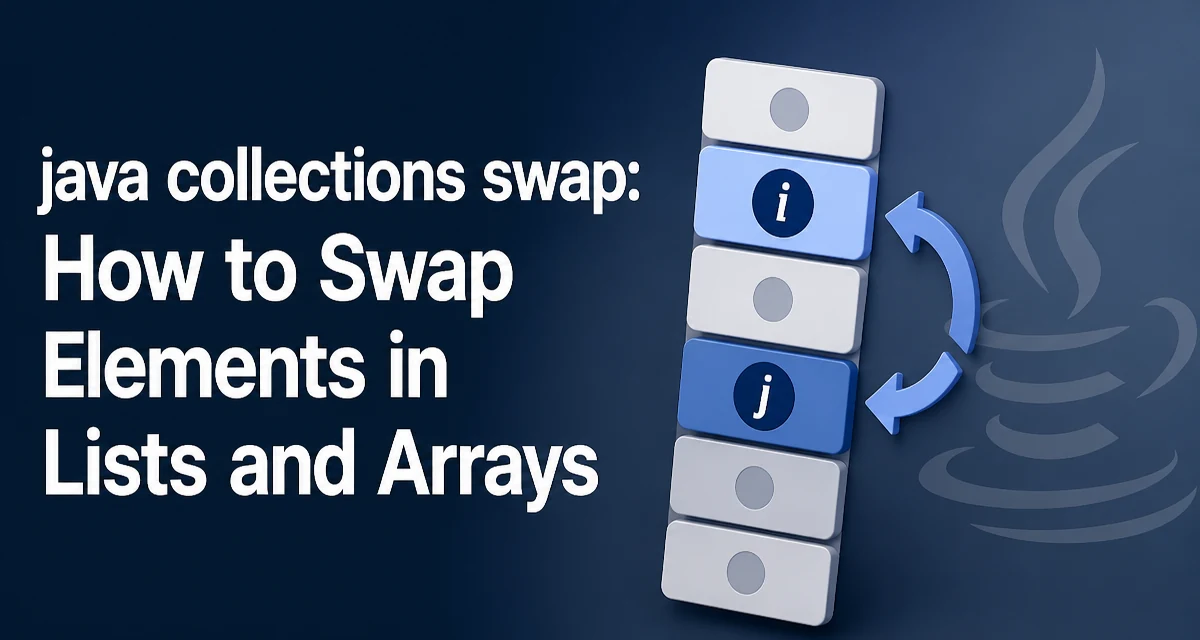
java collections swap: How to Swap Elements in Lists and Arrays
java collections swap: Learn how to swap elements in Java collections and arrays using Collections.swap, manual index-based swapping, and understand performance tradeo...

Java Collections fill: Replacing List Elements
Learn how to use Java's Collections.fill to replace all list elements with a single value, including behavior, pitfalls, and performance.
Java Collections Frequency: Counting Occurrences
Learn how to use Collections.frequency() to count occurrences in Java collections, including equality rules, nulls, maps, performance, and when a frequency map or stream is the better choice.

Finding Min and Max in Java Collections
java collections min max: Learn how to find the minimum and maximum values in Java collections using Collections and Stream API, with custom comparators and empty coll...

How to Shuffle Collections in Java
Learn how to use Collections.shuffle() to randomize List elements, control randomness with a custom Random, shuffle arrays, and avoid common pitfalls.