Browse by Topic
Popular
Popular Posts


Latest
Latest Java Posts
Java HashMap computeIfAbsent: Syntax and Use Cases
Learn how HashMap.computeIfAbsent works: its syntax and behavior, and when to choose it over putIfAbsent or compute for building maps.

Java HashMap compute: In-Place Value Updates
HashMap.compute updates an entry in place with a remapping function. See when to use it, how it differs from merge and computeIfAbsent, and common pitfalls.
Java HashMap replace: Update Existing Entries
java hashmap replace: Learn how the Java HashMap replace method works, its two overloads, return values, and when to use it instead of put.

How HashMap containsValue Works in Java
java hashmap containsvalue: Learn how HashMap.containsValue works in Java, including its O(n) time complexity, equals-based comparison, null handling, and when to pref...

Java HashMap containsKey: Usage and Performance
Learn how to use HashMap.containsKey to check key existence, understand its null-key behavior, performance, and common pitfalls in Java.

Java HashMap remove: Syntax, Return Values, and Pitfalls
Learn how to remove entries from a Java HashMap, including return values, null handling, iteration safety, performance tradeoffs, and common pitfalls.

Using HashMap getOrDefault in Java
Learn how to use HashMap.getOrDefault in Java to return a fallback value for missing keys, handle null values correctly, and avoid verbose null checks.
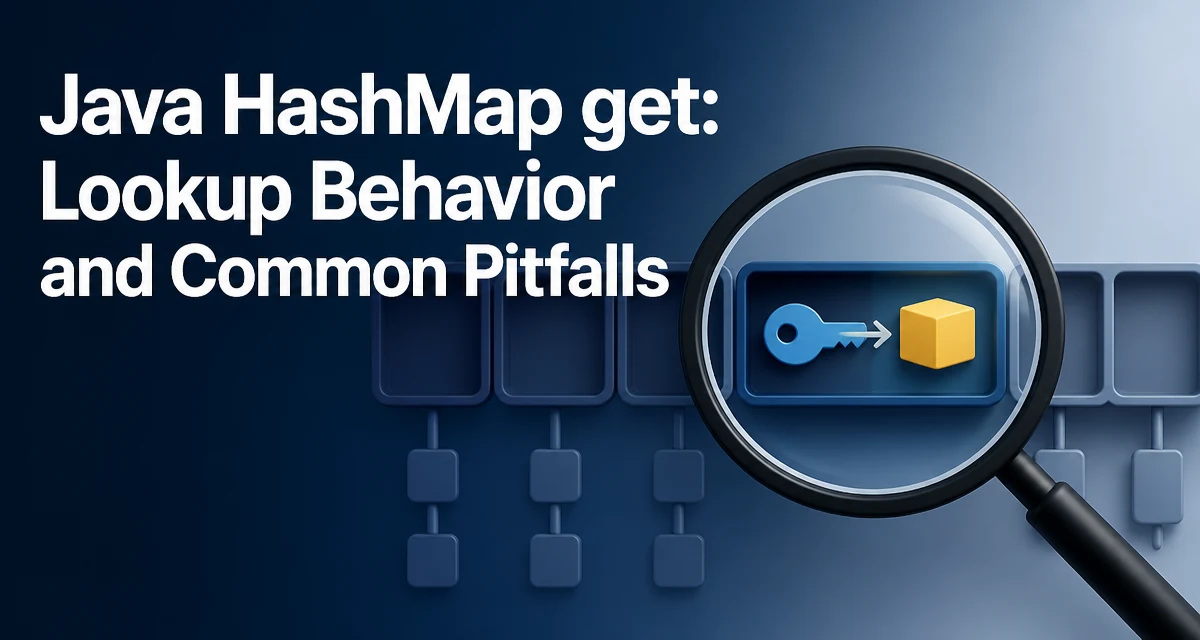
Java HashMap get(): Lookup Behavior and Common Pitfalls
Understand how Java's HashMap.get() works, including hashing behavior, performance, null handling, thread safety, and common mistakes when retrieving values.

Java HashMap putIfAbsent: Usage and Behavior
java hashmap putifabsent: Understand how Java HashMap putIfAbsent works, its return value, concurrency implications, and when to prefer it over put or computeIfAbsent.
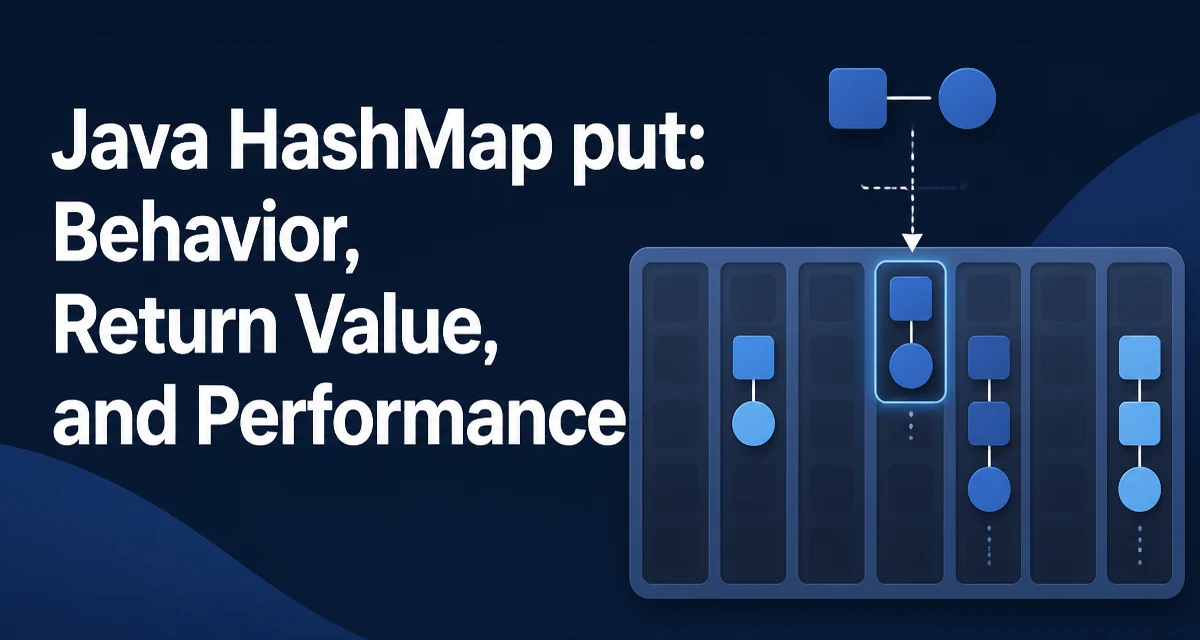
Java HashMap put: Behavior, Return Value, and Performance
java hashmap put: Understand how HashMap.put works: return value, null handling, collisions, resizing, and performance tradeoffs in Java.