Browse by Topic
Popular
Popular Posts

Latest
Latest Python Posts
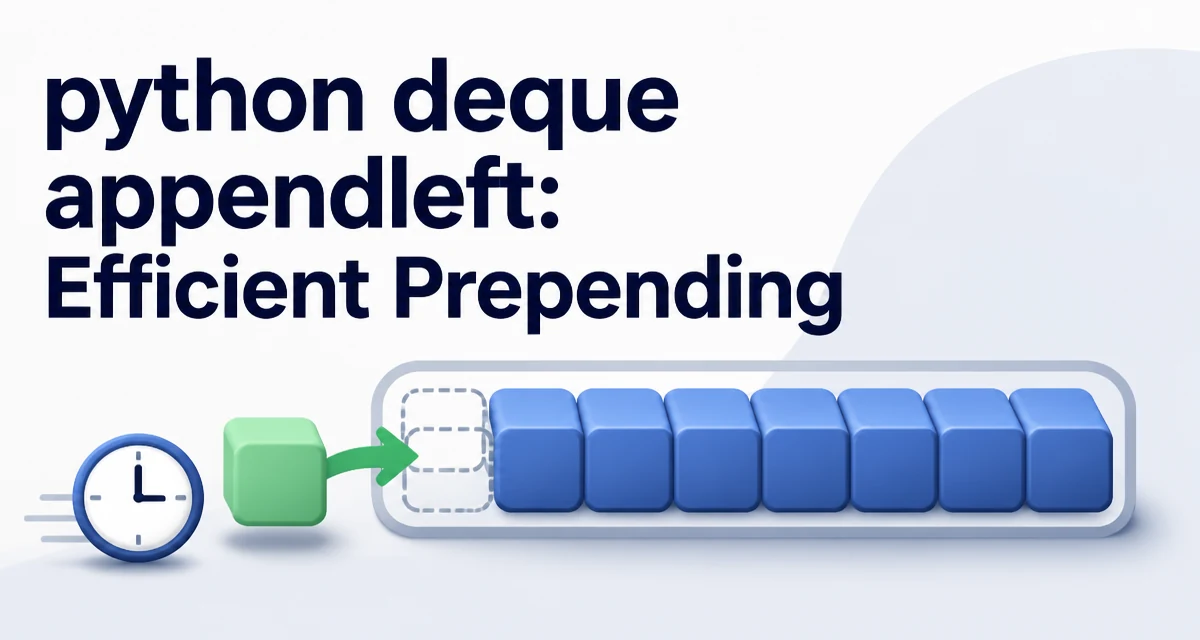
Using Python deque.appendleft() for Efficient Prepending
Learn how to use deque.appendleft() for O(1) prepending in Python, with syntax examples, performance trade-offs, and practical use cases.
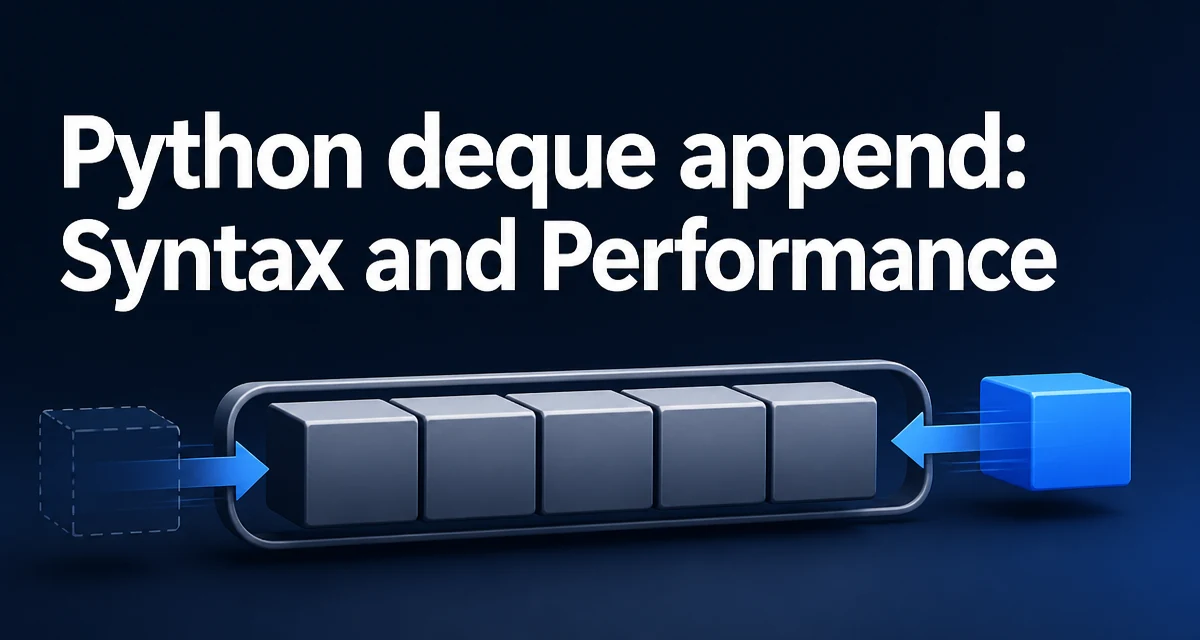
Python deque append: Syntax and Performance
Learn how python deque append works, why it is O(1), and when to use it instead of a list for queues, sliding windows, and bounded buffers.
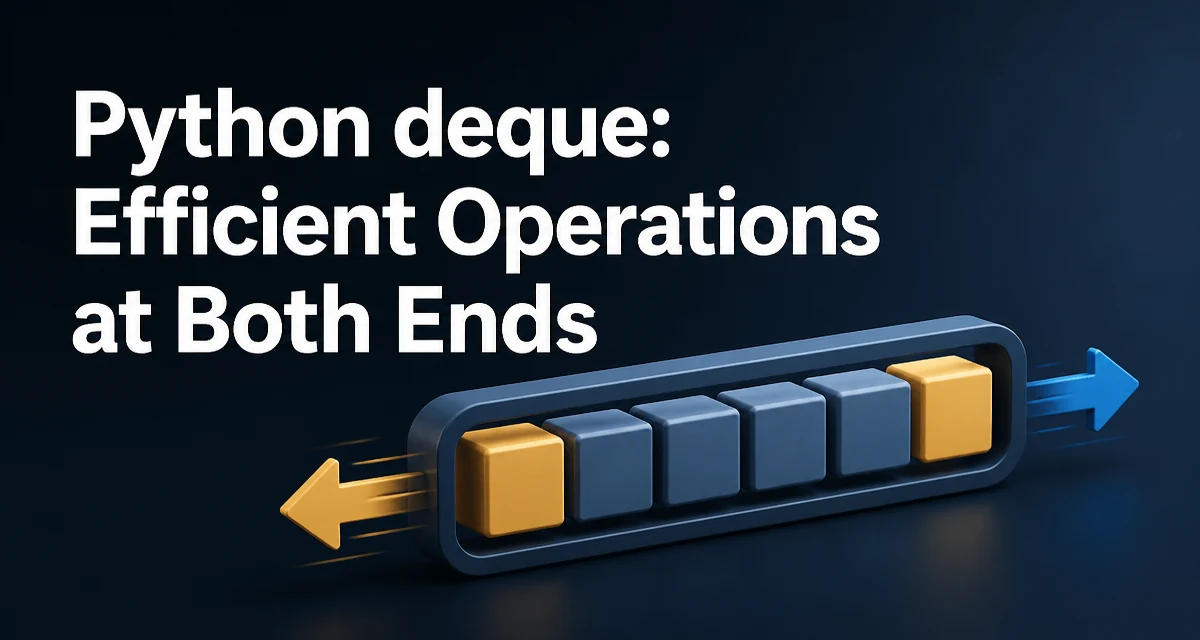
Python deque: Efficient Operations at Both Ends
Understand how Python's collections.deque supports O(1) appends and pops from both ends, with usage patterns, performance insights, and decision criteria.
Python defaultdict Usage: Handling Missing Keys Gracefully
Learn how to use Python's defaultdict to handle missing dictionary keys automatically, with practical examples and common pitfalls.
Python defaultdict: Handling Missing Keys Gracefully
Learn how Python defaultdict provides automatic default values for missing keys, with practical examples and performance considerations.
Python Counter Update: How to Modify Counts Correctly
Learn how to modify counts in a Python Counter with update(), addition and subtraction, in-place subtract(), and handling missing keys.
Python Counter most_common: Usage and Behavior
How Python's Counter.most_common() works: return format, n parameter edge cases, internal implementation, and performance tradeoffs.
Python Counter Usage for Efficient Counting
Learn how to use Python's collections.Counter for counting items, updating counts, arithmetic operations, and choosing it over a plain dict when it makes sense.
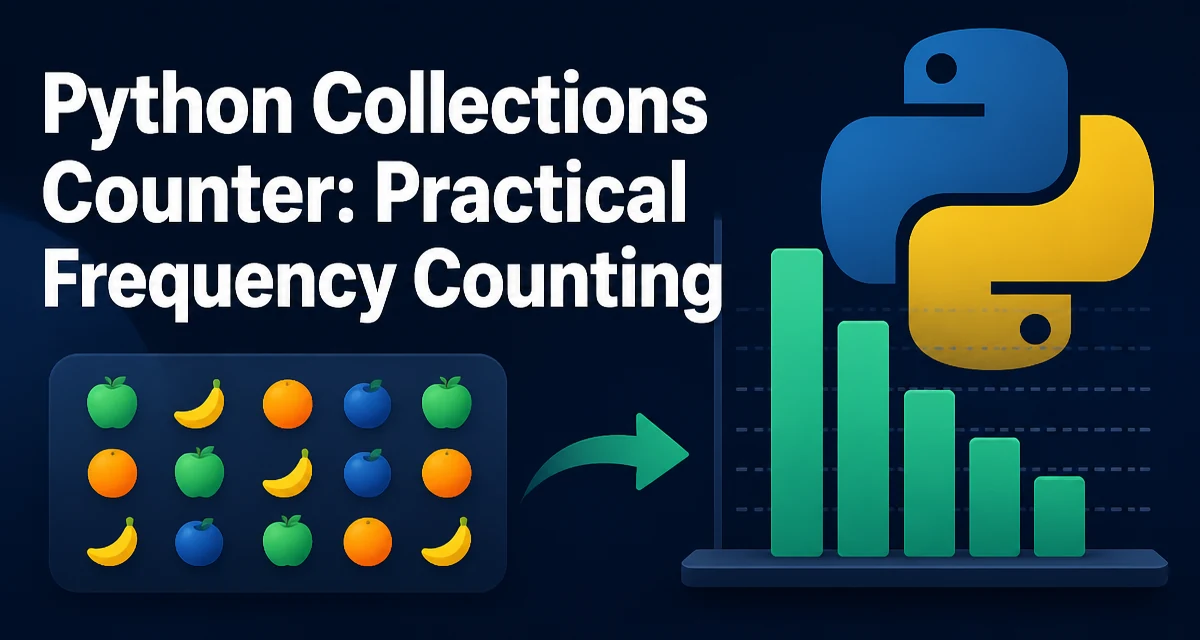
Python Collections Counter: Practical Frequency Counting
Learn how to use Python's collections.Counter to count elements, merge counters, and analyze frequency data with practical code examples.

Python Collections: Specialized Containers Beyond Built-ins
See how Python's collections module extends built-in containers with namedtuple, defaultdict, Counter, deque, and ChainMap, and when each one is the right choice.