Browse by Topic
Popular
Popular Posts

Latest
Latest Python Posts
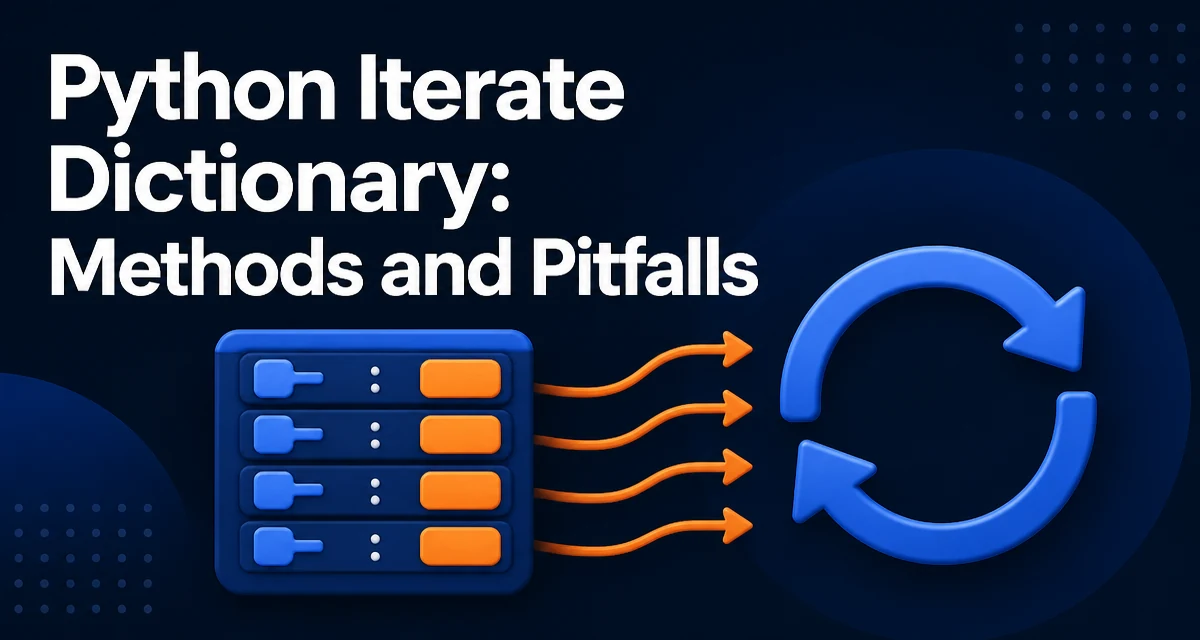
How to Iterate Over a Python Dictionary: Methods and Pitfalls
Learn the correct ways to iterate over Python dictionaries, including key, value, and item access, order guarantees, and safe modification.

Using Python's dict.items() for Key-Value Iteration
Learn how Python's dict.items() returns a dynamic view of key-value pairs, how to iterate and unpack it, and when to use it instead of keys() or values().

Python dict values: Access and Iterate Efficiently
python dict values: Learn how to work with dict.values() in Python: iterate values, check membership, handle missing keys, and understand view objects vs lists.

Python Dict Keys: Access, Iteration, and Performance
Learn how to access, iterate, and check membership of Python dictionary keys, including ordering and performance tradeoffs.
How to Delete a Dictionary Key in Python: del, pop(), and More
Learn how to remove keys from Python dictionaries with del, pop(), popitem(), and clear(), including error handling and performance trade-offs.

Python Dict Clear: Syntax, Behavior, and Aliasing
Learn how `dict.clear()` removes all items from a Python dictionary in place, why it matters for aliases and shared state, and when reassignment is the better choice.
Python dict popitem: Remove and Return Dictionary Items
python dict popitem: Learn how dict.popitem() removes and returns entries, its LIFO behavior in Python 3.7+, empty-dict KeyError handling, and when to use it over pop(...

Python dict pop: Syntax, Defaults, and Pitfalls
Learn how to use Python's dict.pop() method to remove keys and retrieve values, including default handling and common pitfalls.
Removing Items from a Python Dictionary: Methods and Tradeoffs
Practical ways to remove items from a Python dictionary using del, pop(), popitem(), clear(), and dictionary comprehensions, including error handling and performance tradeoffs.
Python get vs setdefault: Choosing the Right Dict Method
Understand the behavioral difference between dict.get and dict.setdefault: which method mutates the dictionary, how eager default evaluation works, and how to choose based on read-only vs get-or-create intent.