Browse by Topic
Popular
Popular Posts

Latest
Latest Python Posts
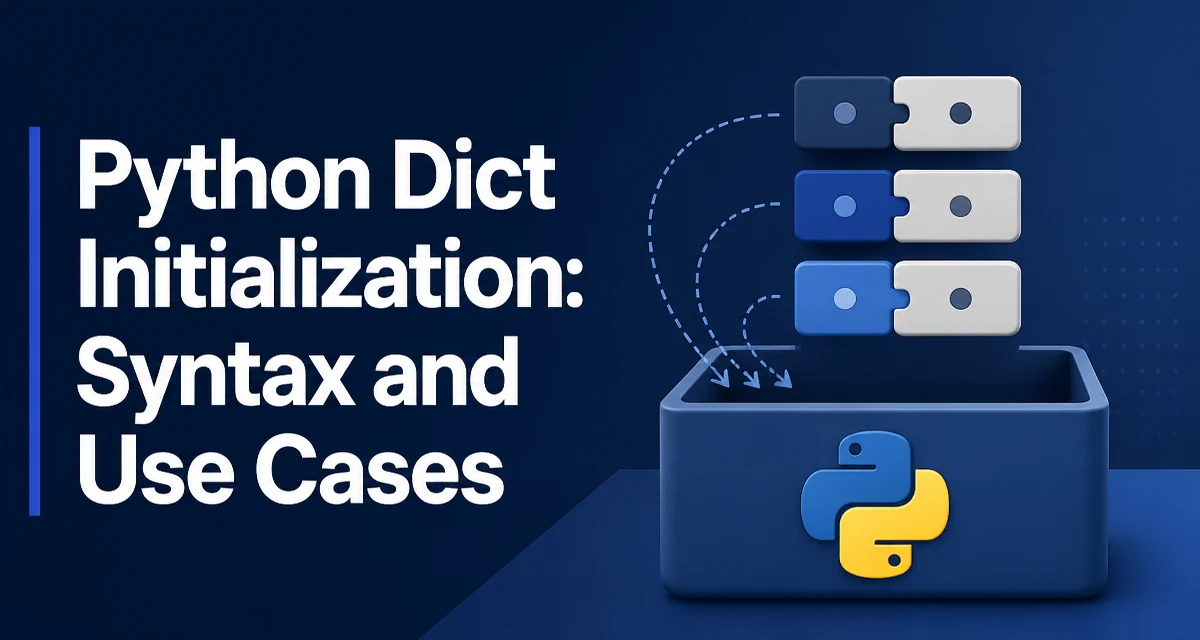
Python Dict Initialization: Syntax and Use Cases
Compare Python dict initialization methods: literals, dict(), comprehensions, fromkeys, and merge operators. Learn which fits each situation and avoid the shared mutable default trap.
Python Dict Declaration: Syntax, Type Hints, and Performance
Learn how to declare Python dictionaries using literals, dict(), comprehensions, and type hints, with practical guidance on choosing the right style.
Python Dictionary: Practical Usage and Performance
Learn how to create, access, and manipulate Python dictionaries, understand their performance characteristics, and avoid common pitfalls in real-world code.
Python Frozenset Hashable: Keys and Set Members
python frozenset hashable: Learn why frozenset is hashable in Python, how to use it as a dictionary key or set member, and when it beats a regular set.
Python Frozenset Usage: Immutable Sets in Practice
python frozenset usage: Learn how to use Python frozenset for immutable, hashable sets: construction, set operations, dict keys, caching, and when to choose frozenset...
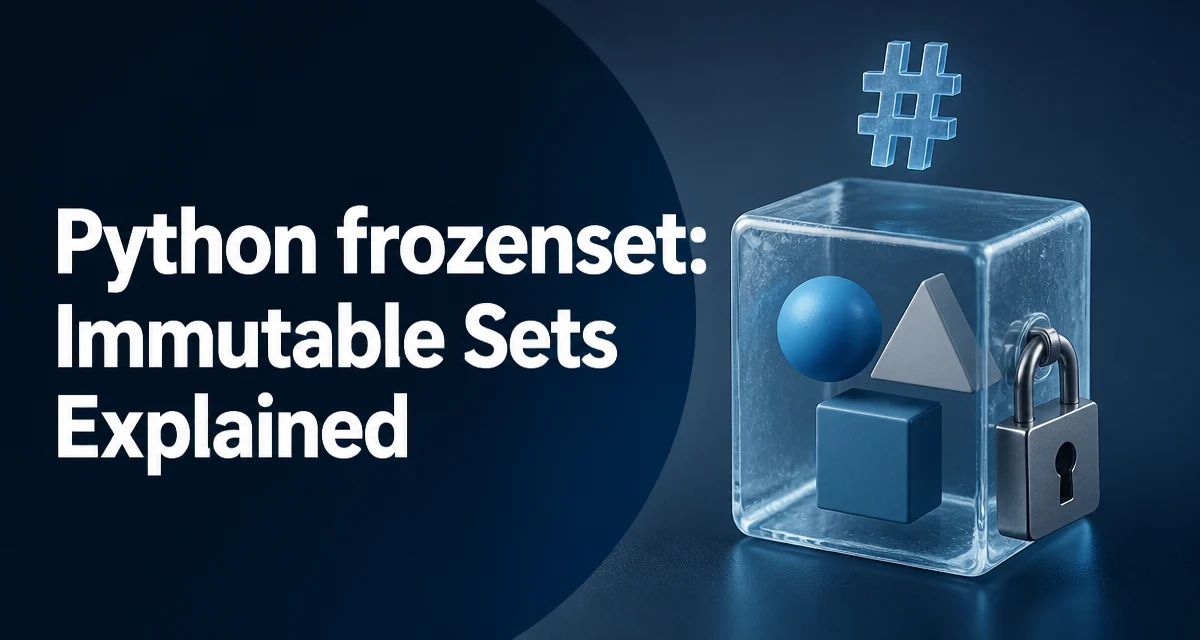
Python frozenset: Immutable Sets Explained
python frozenset: Learn how Python frozenset creates immutable, hashable sets, and when to use them over regular sets for reliable dictionary keys and data integrity.
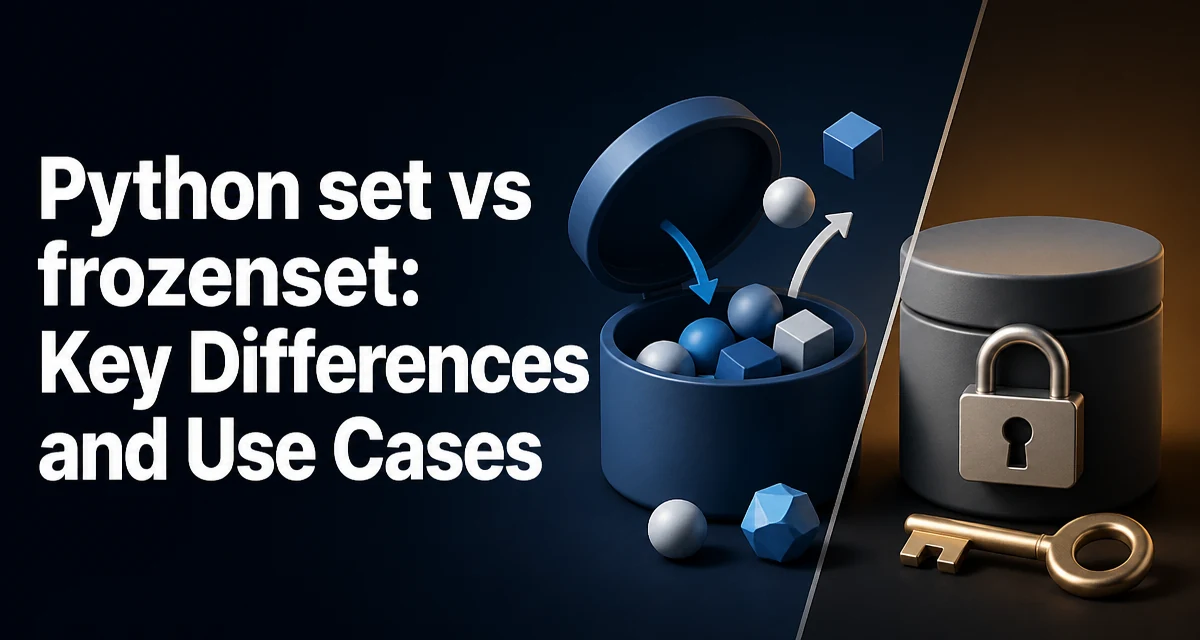
Python set vs frozenset: Key Differences and Use Cases
Compare Python's set and frozenset: mutability, hashability, performance, and when to use each for dictionary keys, caching, and set operations.
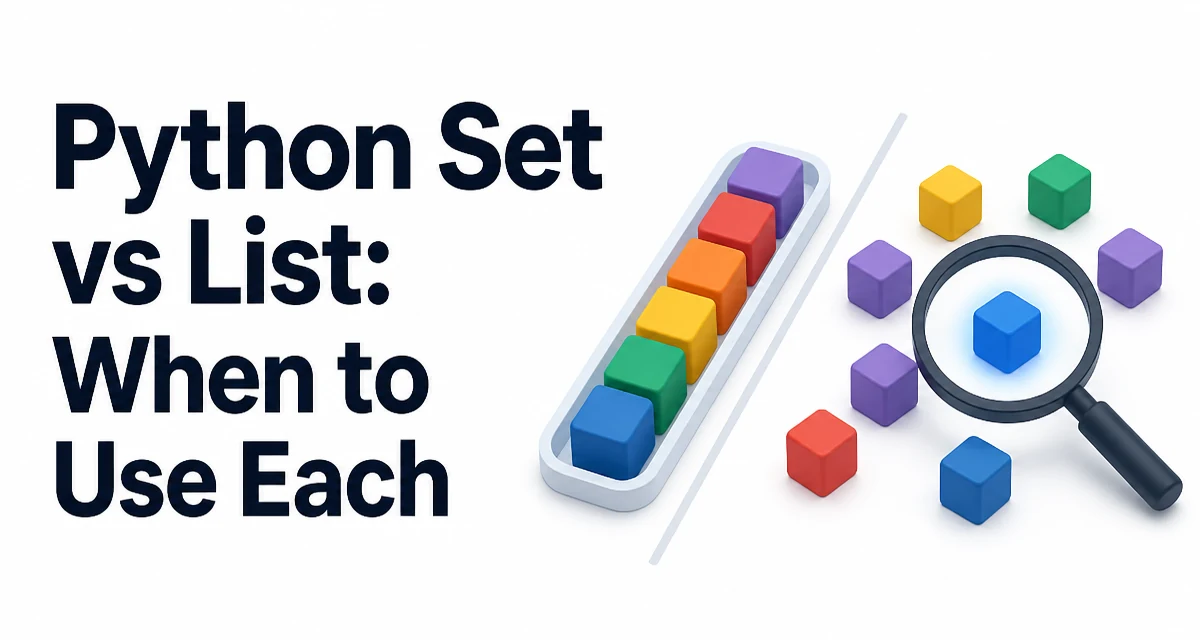
Python Set vs List: When to Use Each
Compare Python sets and lists: ordering, duplicates, membership testing, memory, and when each structure is the right choice.
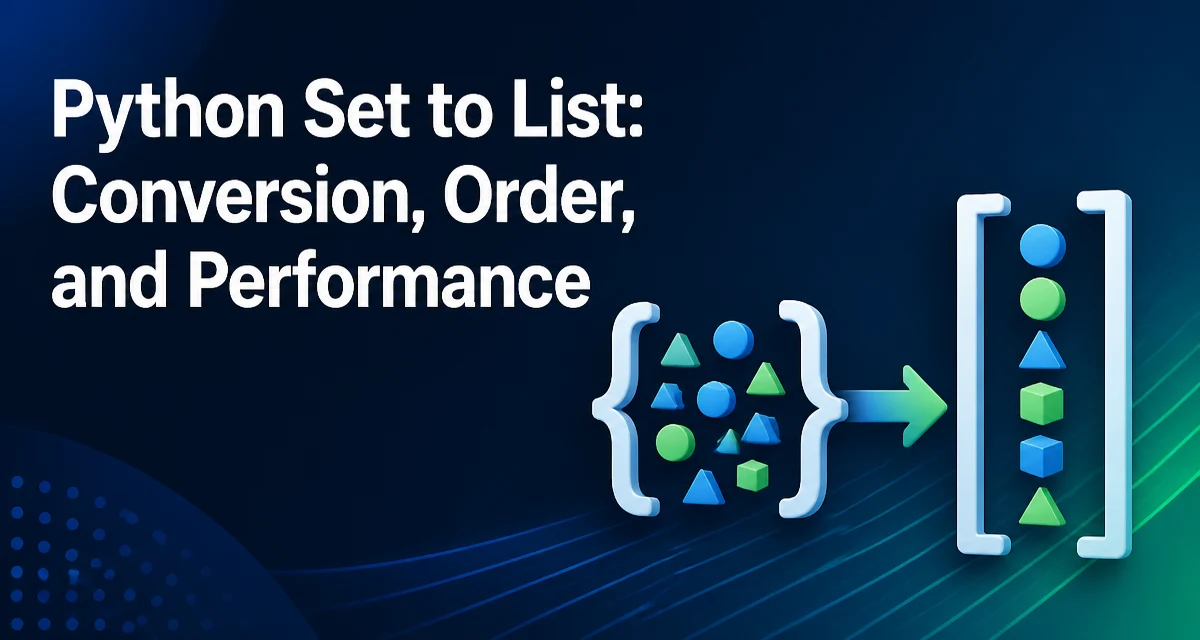
Python Set to List: Conversion, Order, and Performance
Learn how to convert a set to a list in Python with list(set()), including ordering behavior, performance tradeoffs, and when to use a set instead of a list.
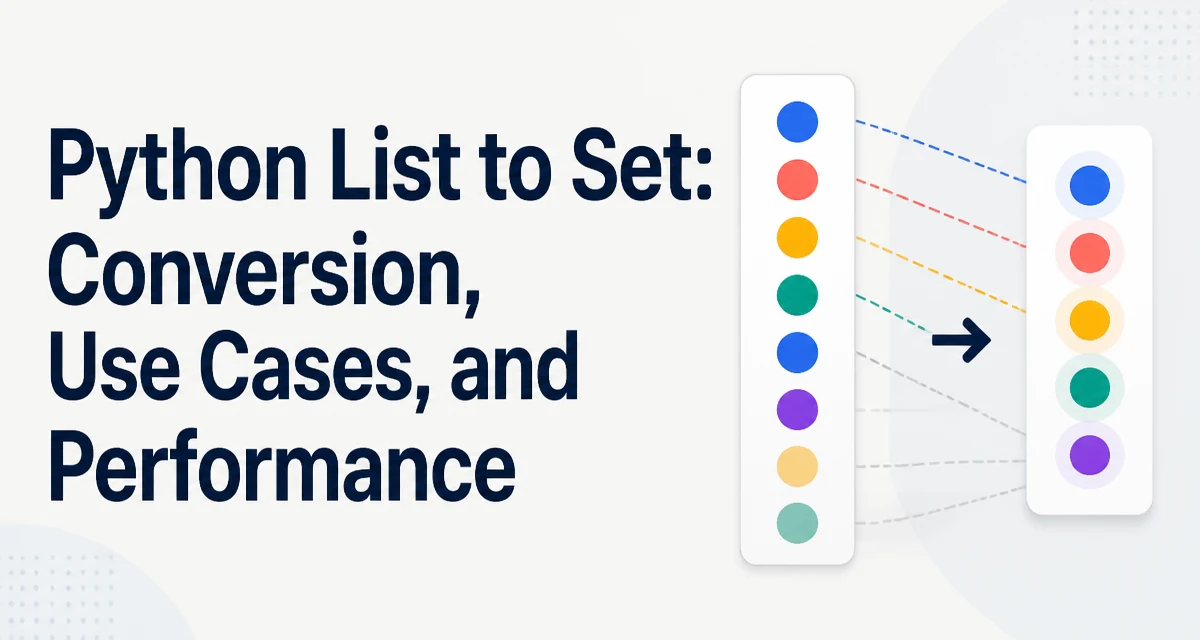
Python List to Set: Conversion, Use Cases, and Performance
Learn how converting a Python list to a set removes duplicates and enables fast membership checks, plus what to know about ordering, hashability, and performance tradeoffs.