Browse by Topic
Popular
Popular Posts

Latest
Latest Python Posts

Python Set Update: Adding Elements In-Place
python set update: Learn how to use Python's set.update() to add multiple elements in-place, its differences from union() and add(), and common pitfalls.
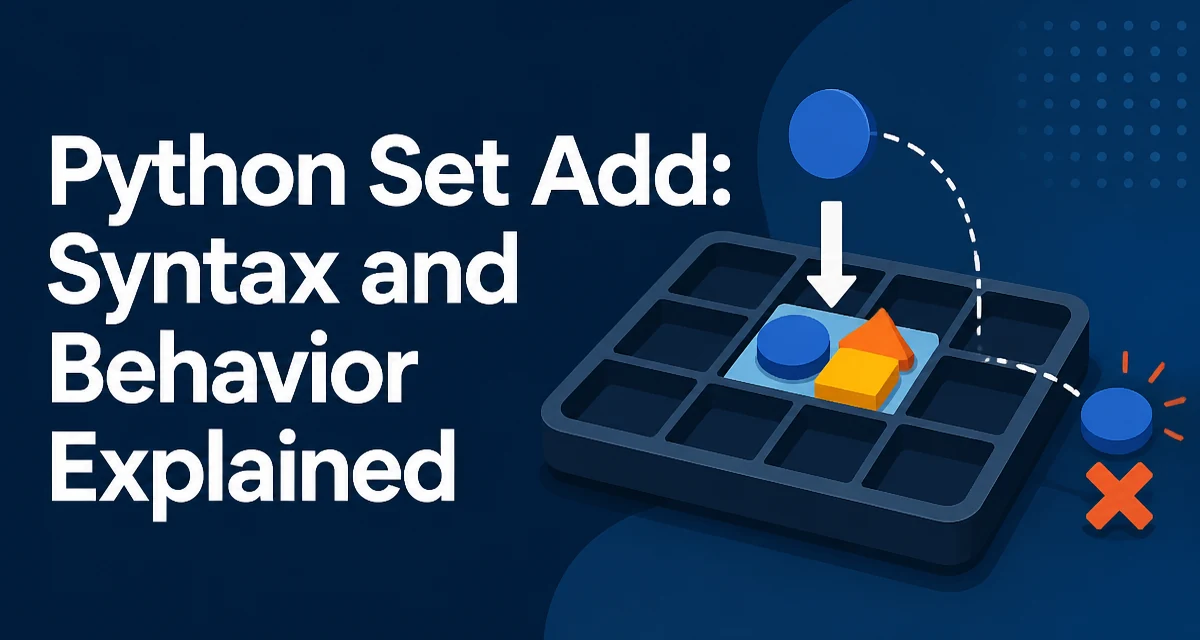
Python Set Add: Syntax and Behavior Explained
Learn how Python's set.add() works: idempotent insertion, hashability requirements, add vs update, performance behavior, and common mistakes.

How to Create a Python Empty Set
Learn the correct way to create a Python empty set, why {} creates an empty dictionary, and how to use empty sets effectively in real code.
Python Set Initialization: Syntax, Methods, and Pitfalls
Learn the correct ways to initialize sets in Python: literals, the set() constructor, comprehensions, empty sets, and common pitfalls to avoid.
Python Set Declaration: Syntax and Pitfalls
python set declaration: Learn how to declare sets in Python, including literals, the set() constructor, and the empty-set gotcha that confuses many developers.
Python Set: Operations, Performance, and Use Cases
python set: Learn how Python sets store unique elements, perform union and intersection operations, and provide fast membership testing for practical data tasks.
Python Multiple Return Values: Tuples, Namedtuples, and Dataclasses
python multiple return values: Learn how to return multiple values from a Python function using tuples, namedtuples, dataclasses, and other containers, with practical...
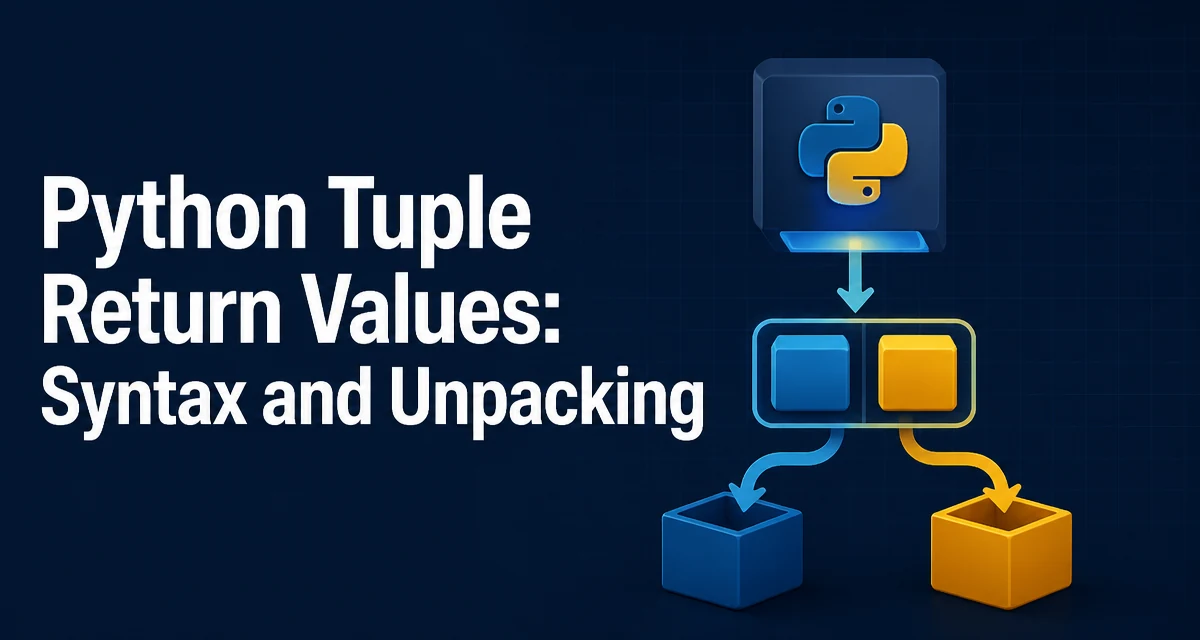
Python Tuple Return Values: Syntax and Unpacking
Learn how to return tuples from Python functions, unpack them into separate variables, and choose between tuples, named tuples, and dataclasses.
Python namedtuple Usage: Practical Examples
python namedtuple usage: Learn how to use Python's namedtuple to create readable, lightweight data structures, including syntax, defaults, performance, and when to pre...
Python Namedtuple: Lightweight, Readable Data Containers
python namedtuple: Learn how Python's namedtuple creates lightweight immutable data containers, when to use them over dictionaries or classes, and their performance tr...