Browse by Topic
Popular
Popular Posts




Latest
Latest Python Posts

Python Nested Tuples: Syntax, Access, and Use Cases
python nested tuple: Learn how to create, access, and work with nested tuples in Python, including practical use cases and performance considerations.

Python Tuple as Dictionary Key: How and Why
python tuple as dictionary key: Learn how to use Python tuples as dictionary keys, why they work, common pitfalls, and when to choose alternatives like dataclasses.

Python Tuple Repetition with the * Operator
Learn how Python tuple repetition works with the * operator, including syntax, mutable element pitfalls, performance tradeoffs, and alternatives.

Python Tuple Concatenation: Combining Tuples with + and *
Learn how to concatenate tuples in Python using + and *, understand immutability, and avoid common performance pitfalls.

Python Tuple vs List: Key Differences
python tuple vs list: Understand the practical differences between Python tuples and lists, including mutability, memory usage, and when each is the right choice.

Python Tuple Immutability: What It Means in Practice
Understand Python tuple immutability in practice: what operations fail, why immutability is shallow, how hashability works, memory tradeoffs, and when tuples are the better choice.
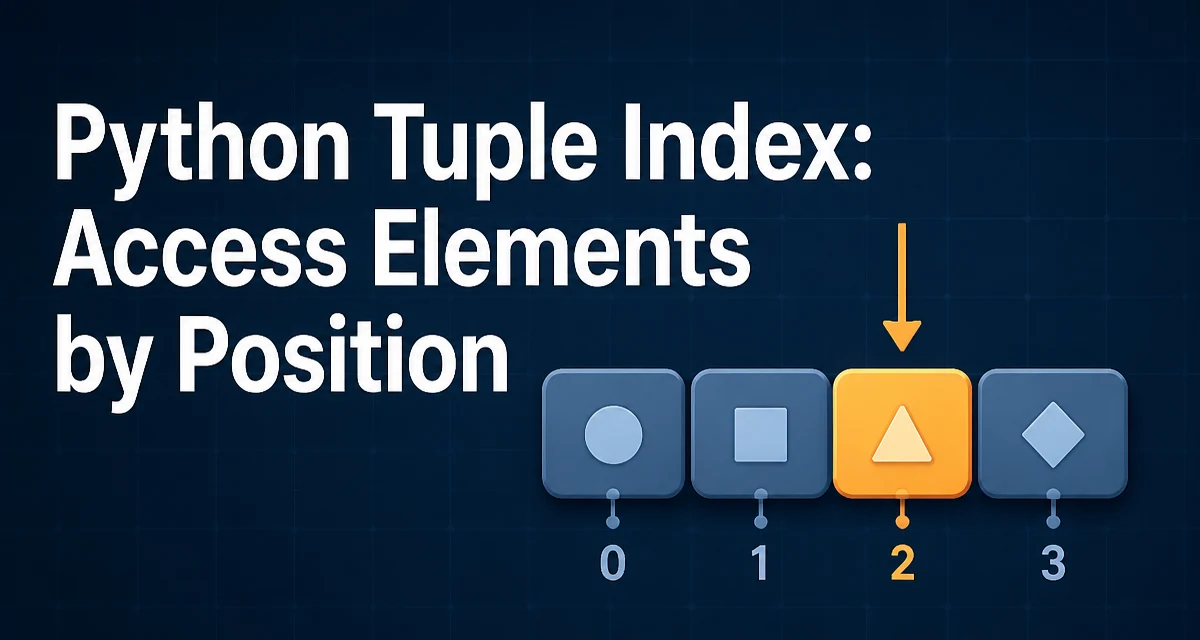
Python Tuple Index: Access Elements by Position
python tuple index: Learn how to access tuple elements by position, use the index() method, slice tuples, and avoid common indexing errors in Python.
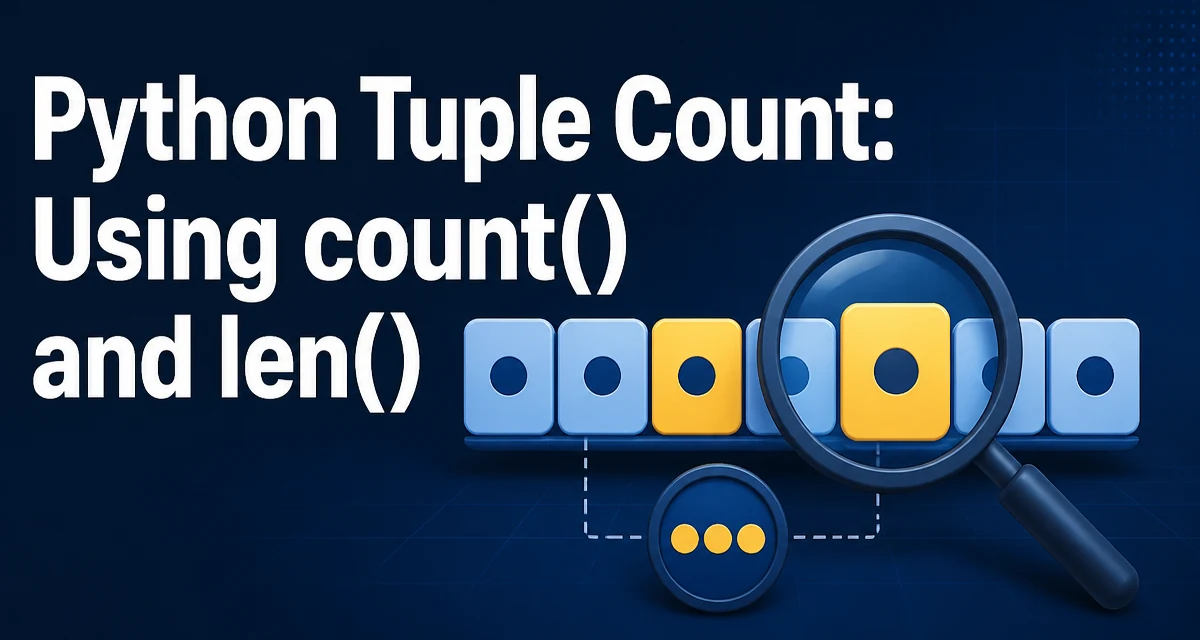
Python Tuple Count: Using count() and len()
Learn how to count elements in Python tuples: use count() for occurrences of a value and len() for total items, with examples and edge cases.

Python Tuple Slicing: Syntax, Steps, and Pitfalls
Learn how to slice tuples in Python, including start, stop, and step behavior, negative indexes, and common edge cases.
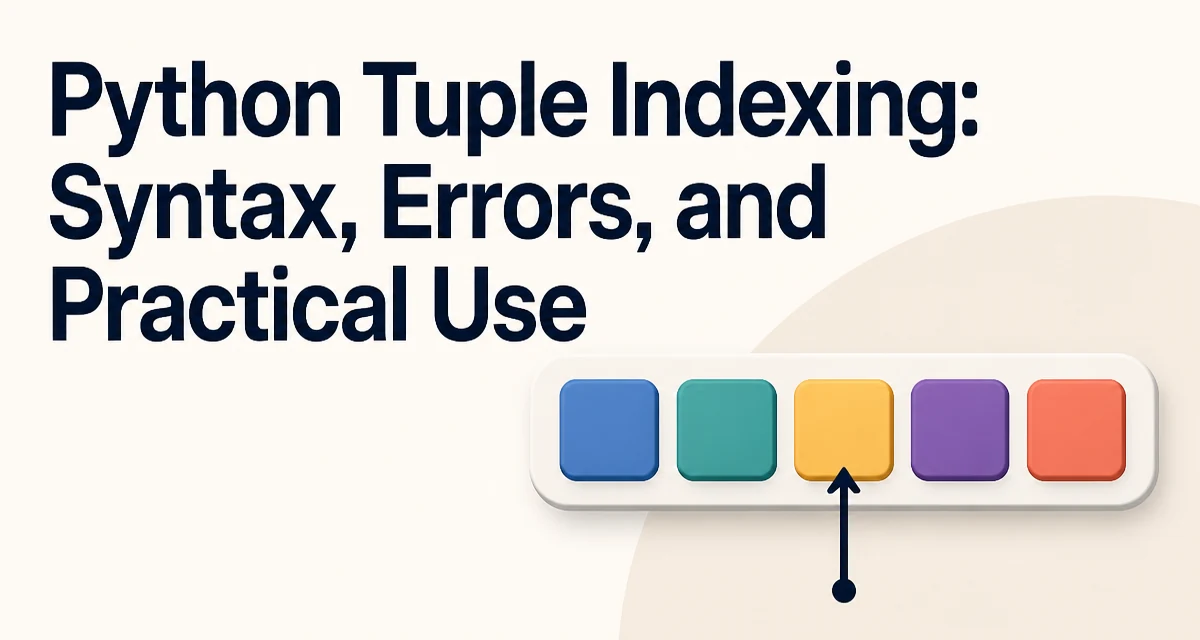
Python Tuple Indexing: Syntax, Errors, and Practical Use
python tuple indexing: Understand how Python tuple indexing works: positive and negative indices, slicing, nested tuples, common errors, and when tuples outperform lists.