Browse by Topic
Popular
Popular Posts


Latest
Latest Python Posts
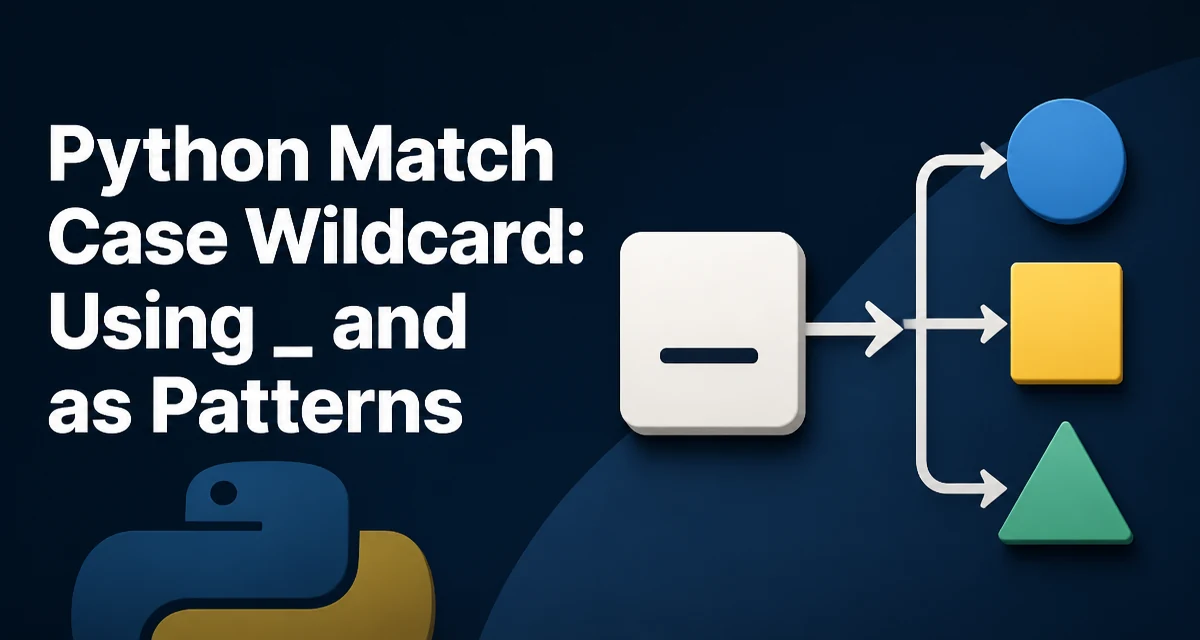
Python Match Case Wildcard: Using _ and as Patterns
Understand Python match case wildcard patterns: `_` matches anything, `as` captures it, and case order decides which pattern wins.

Python Match Case Default: Using the Wildcard Pattern
Learn how the default case in Python's match statement works, how to use the wildcard pattern, and avoid common pitfalls when handling unmatched values.
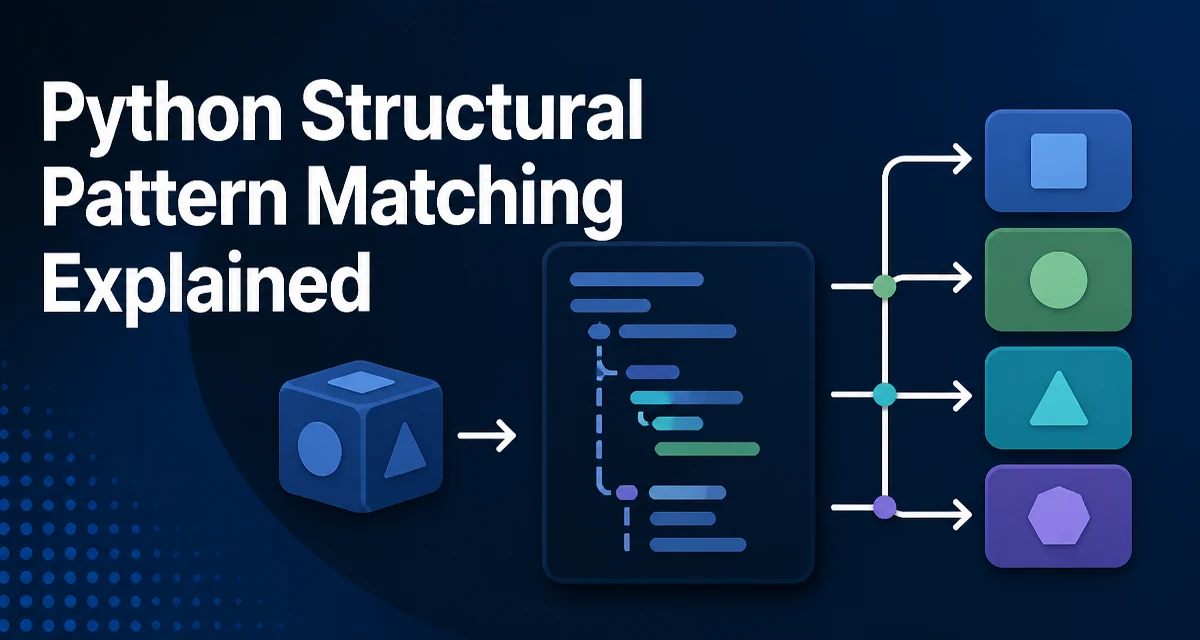
Python Structural Pattern Matching Explained
Python structural pattern matching lets you write case-based code that destructures data and binds variables. This guide covers match syntax, guards, mappings, classes, and common pitfalls.
Python Match Statement: Structural Pattern Matching
Learn how Python's match statement implements structural pattern matching: literal, capture, sequence, mapping, and class patterns, plus guards and common edge cases.
Python match case: Structural Pattern Matching
python match case: Learn Python match case for structural pattern matching: syntax, patterns, guards, common pitfalls, and when to prefer it over if-elif.
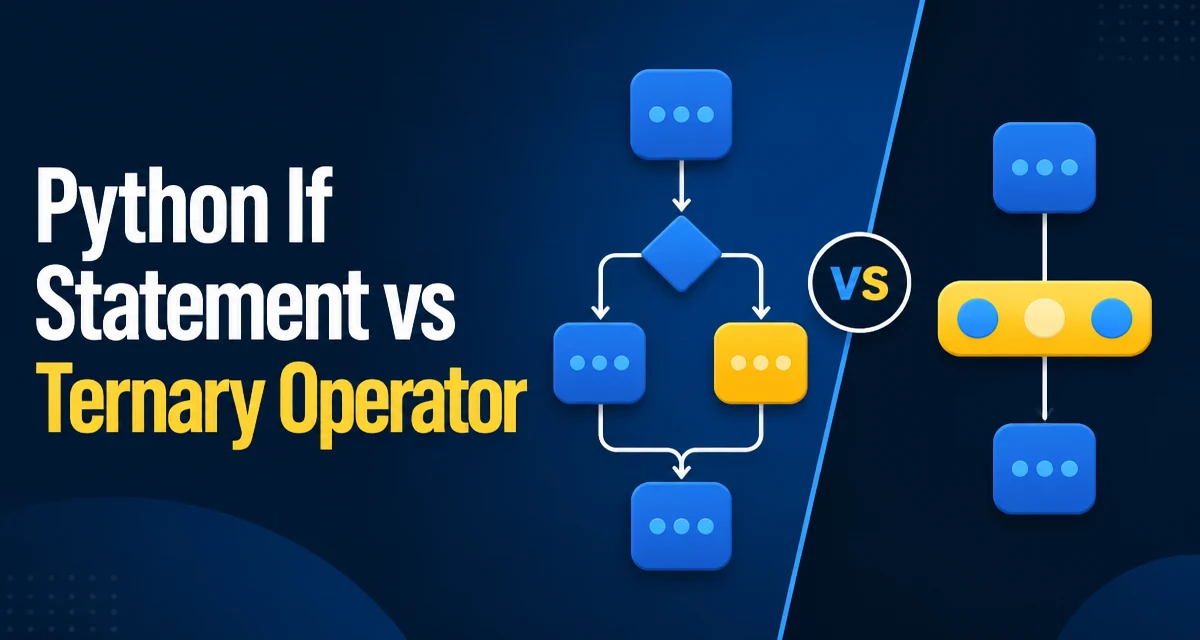
Python If Statement vs Ternary Operator
Learn the practical differences between Python if statements and ternary conditional expressions: syntax, readability, side effects, evaluation order, and when to choose each.
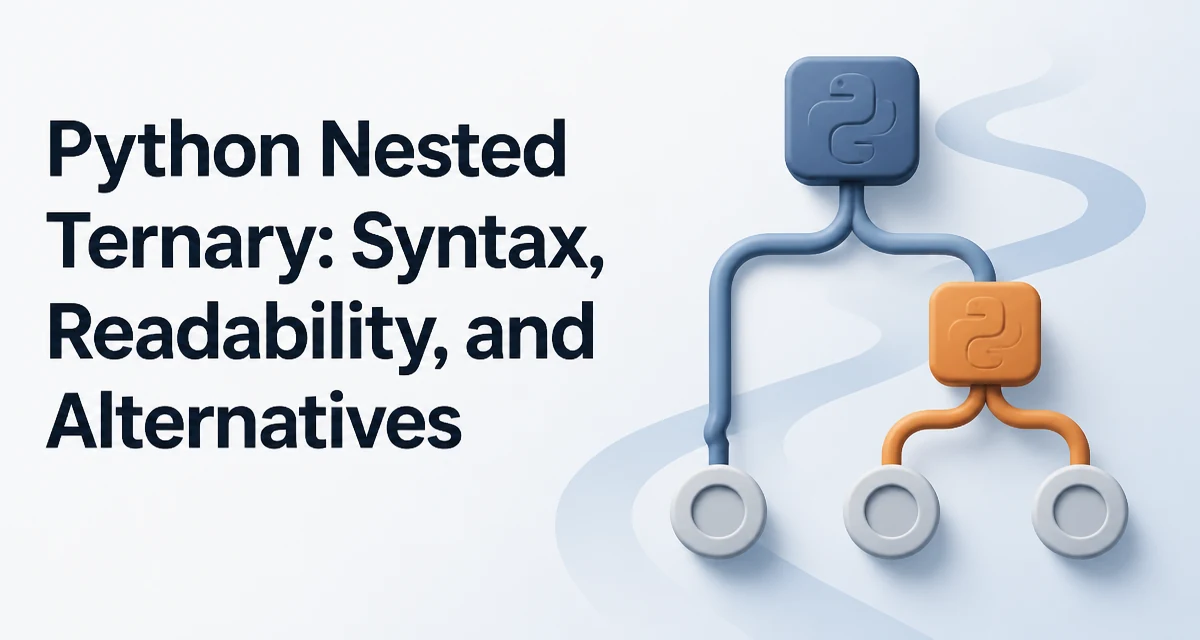
Python Nested Ternary: Syntax, Readability, and Alternatives
Learn how Python evaluates nested ternary expressions, when they improve clarity, and when if/elif/else chains or dictionaries are better alternatives.
Python Ternary Expression: Syntax and Usage
Learn how to use Python's ternary conditional expression for concise assignments, understand its syntax, and avoid common pitfalls.
Python Ternary Operator: Syntax and Practical Use
Learn how to use Python's conditional expression (the ternary operator) for concise value selection, including syntax, common mistakes, and when a regular if-else is clearer.
Python Conditional Expression: Syntax and Use Cases
Learn the Python conditional expression (ternary operator) syntax, how it differs from if-else statements, and when to use it for cleaner, more readable code.