Browse by Topic
Popular
Popular Posts
Latest
Latest Python Posts
Python not in Operator: Syntax and Usage
Learn how Python's not in operator tests membership across lists, sets, dicts, and custom objects, including performance tradeoffs and common mistakes.
Python's in Operator: Membership Testing Explained
Learn how Python's in operator tests membership in lists, sets, dictionaries, strings, generators, and custom classes, including performance tradeoffs and common pitfalls.
Python Membership Operators: in and not in
Learn how Python's in and not in operators test membership across lists, strings, dictionaries, and sets, including performance trade-offs and edge cases.
Python Object Identity: How `is` and `id()` Work
Learn how Python object identity works, what `id()` and `is` actually check, and when to use identity checks instead of equality comparisons.
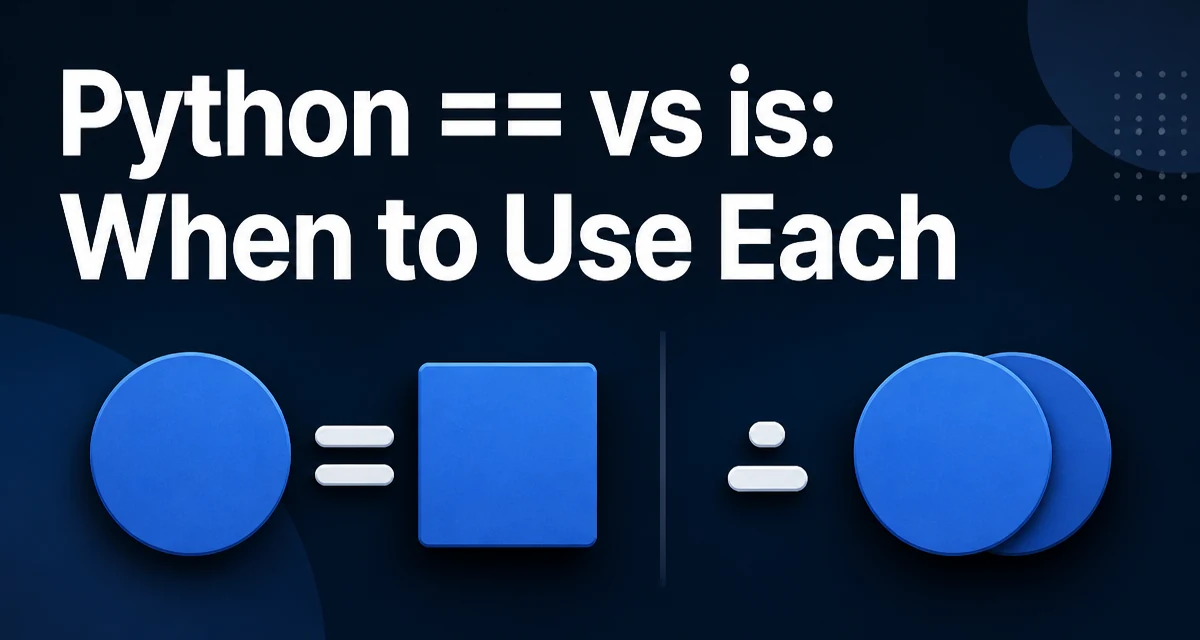
Python == vs is: When to Use Each
Python's == compares values, while is compares object identity. This article explains when to use each, with code examples and best practices for correctness and readability.
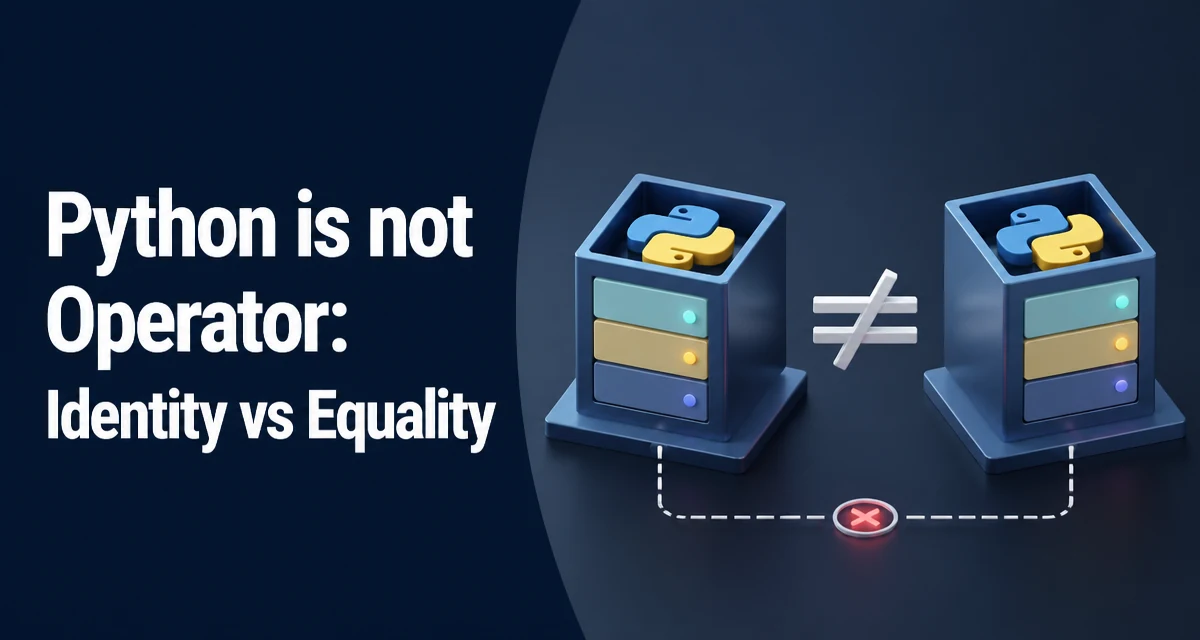
Python `is not` Operator: Identity vs Equality
Understand Python's `is not` operator, how it differs from `!=`, and when to use it for identity checks with None and singletons.
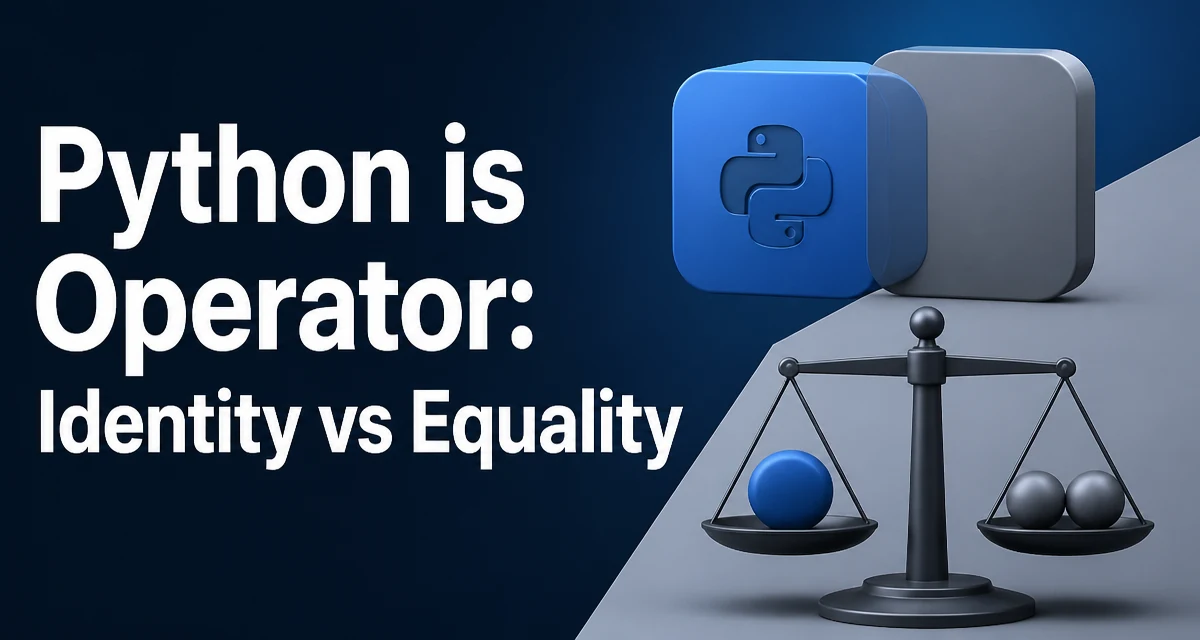
Python is Operator: Identity vs Equality
Learn how Python's `is` operator checks object identity, when to use it instead of `==`, and common pitfalls with integer interning, string caching, and singletons.
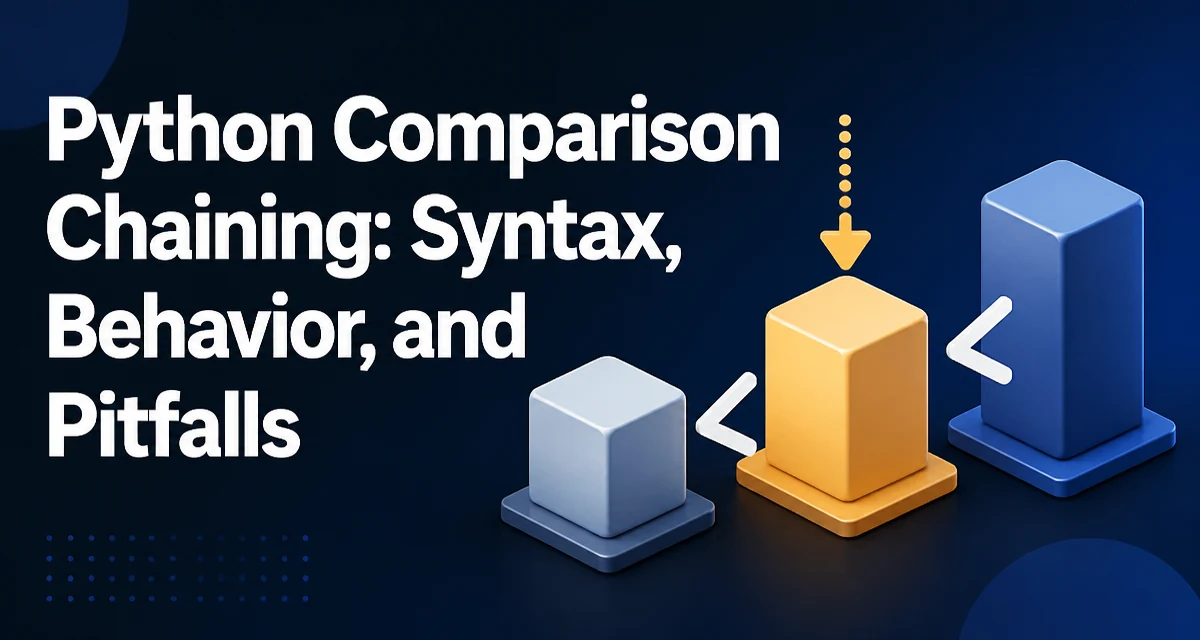
Python Comparison Chaining: Syntax, Behavior, and Pitfalls
Learn how Python comparison chaining works, how expressions like a < b < c are evaluated, and when to prefer the chained form over explicit and.
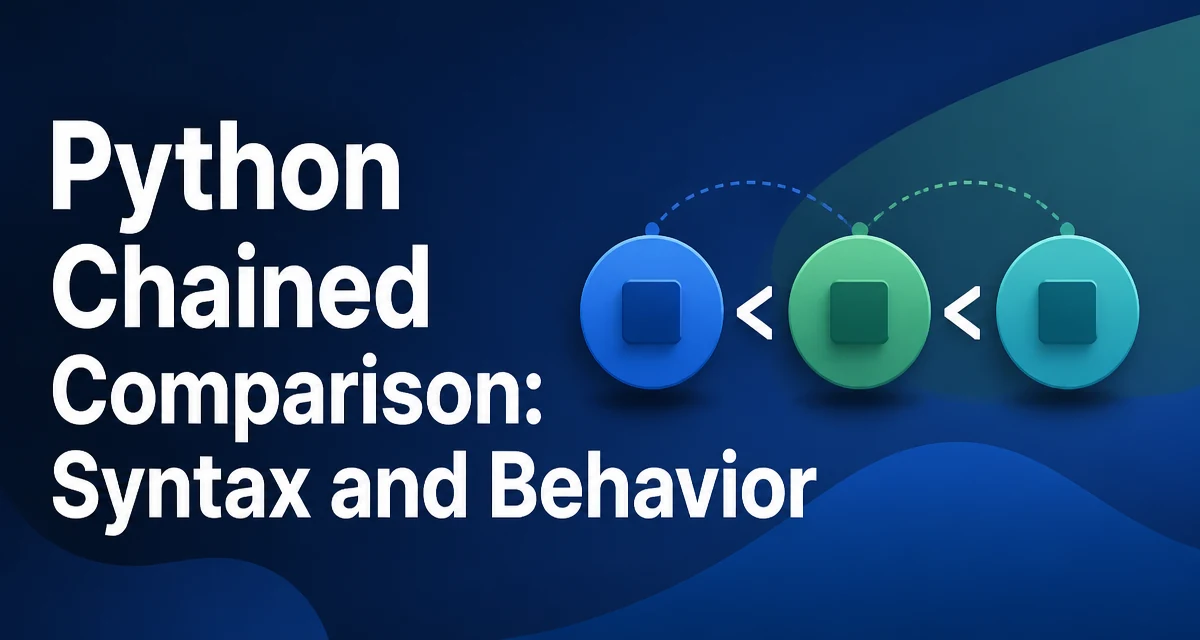
Python Chained Comparison: Syntax and Behavior
Learn how Python's chained comparisons work, including evaluation semantics, short-circuiting, and practical use cases for cleaner conditionals.
Python Less Than Operator: Syntax and Comparison Behavior
Understand how Python's less than operator works for numbers, strings, and custom objects, including chaining, overloading, and common pitfalls.