Browse by Topic
Popular
Popular Posts
Latest
Latest Python Posts
Python int Type: Arbitrary Precision and Its Costs
Python's int type is arbitrary-precision, so arithmetic does not overflow like fixed-width C integers. Learn how large values affect memory and performance, plus conversion and serialization pitfalls.
Python Numeric Types: int, float, and complex Explained
python numeric types: Understand Python's built-in numeric types—int, float, and complex—including precision behavior, conversions, arithmetic rules, and common pitfalls.
Python Built-in Data Types: A Practical Reference
python built in data types: Practical guide to Python's built-in data types: behavior, performance characteristics, and when to choose each type for real-world code.
Understanding Python Data Types
A practical guide to Python's built-in data types, their mutability, performance tradeoffs, and how to use type hints effectively in real code.
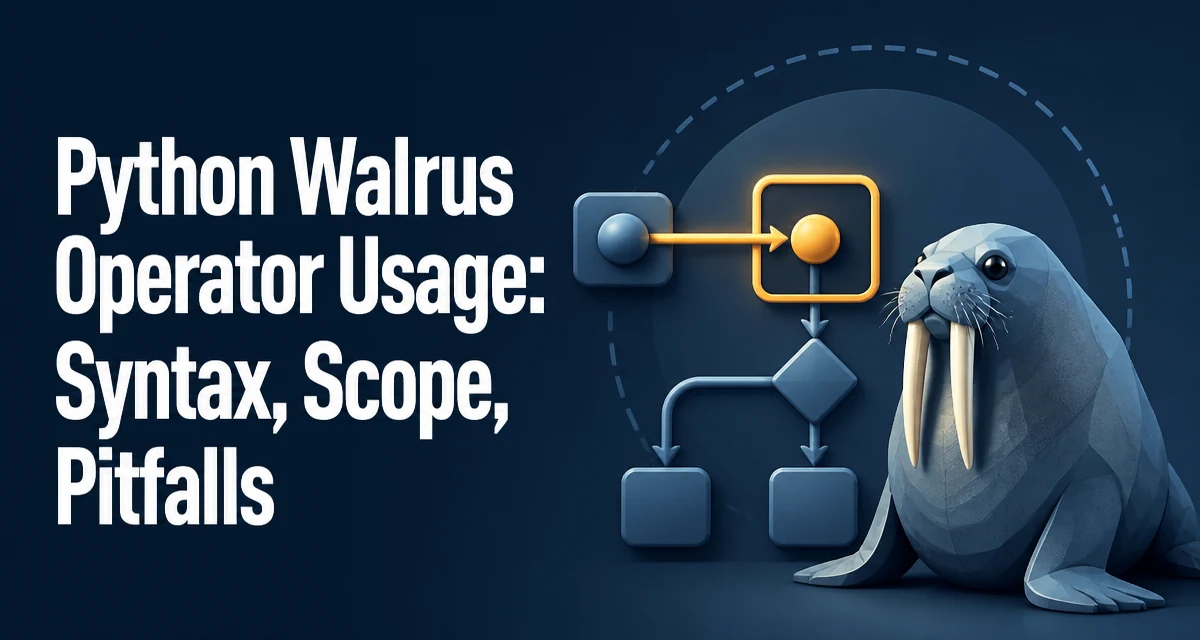
Python Walrus Operator Usage: Syntax, Scope, Pitfalls
python walrus operator usage: Learn how the Python walrus operator (:=) works: syntax, practical patterns in loops and comprehensions, scope rules, and when to avoid it.
Python Assignment Expression: Syntax and Practical Use
Understand when the Python assignment expression (the walrus operator) improves code and when a normal assignment is clearer, with syntax and examples.
Python Walrus Operator: Syntax, Use Cases, and Pitfalls
Learn how the Python walrus operator (:=) works, when it improves code, and where it can hurt readability and maintainability.
Python Annotated Variables: Syntax and Practical Use
Learn how to annotate variables in Python, how annotations differ from type hints, and how static type checkers use them.
Python Variable Type Annotation: Syntax and Usage
Learn how to use Python variable type annotations to document expected types, improve code clarity, and enable static type checking with mypy.
Python Type Hints: Syntax, Tools, and Runtime
How to use Python type hints: annotation syntax, common patterns, static checking with mypy, and runtime behavior.