Browse by Topic
Popular
Popular Posts
Latest
Latest Posts
Python Float Comparison: How to Compare Floats Correctly
python float comparison: Learn why direct float equality fails and how to compare floats reliably using tolerance, math.isclose, and practical testing strategies.
Python Float Precision: Handling Rounding Errors
Python floats are binary approximations. Understand why operations like `0.1 + 0.2` can be inexact, how to inspect the stored value, and when to use Decimal.
Python Floating Point: Precision, Errors, and Fixes
Learn why 0.1 + 0.2 is not 0.3 in Python, how binary floating point works, and how to compare, round, and choose the right numeric type.
Python Float Usage: Precision, Comparisons, Formatting
Learn practical Python float usage: precision limits, safe comparisons, formatting, conversions, and when to use Decimal.
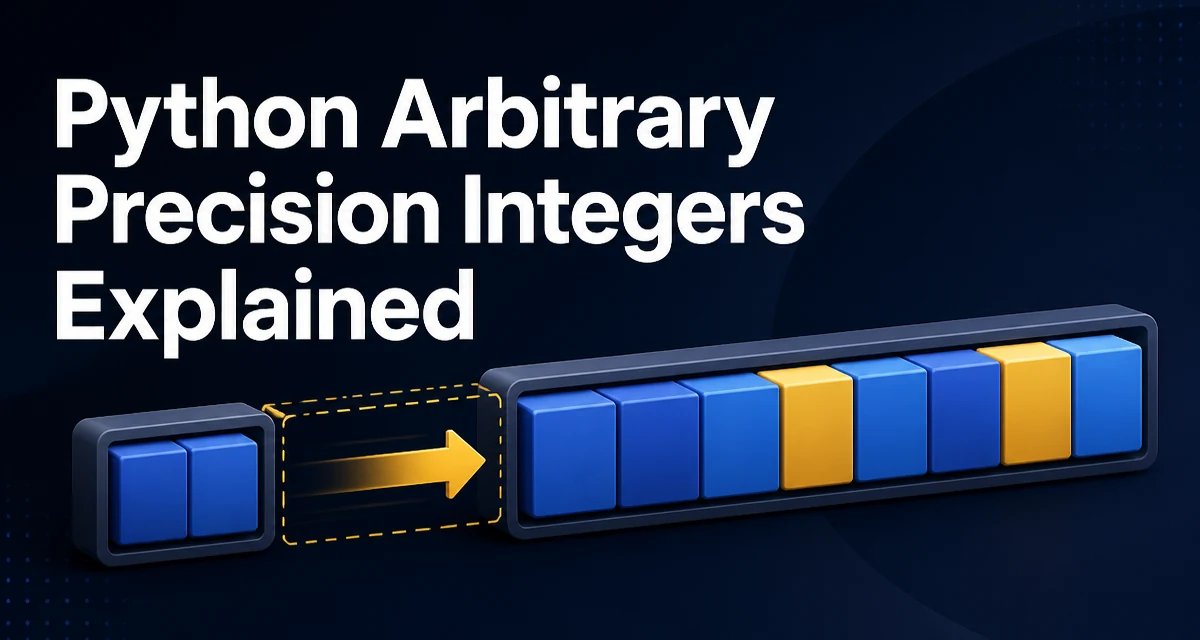
Python Arbitrary Precision Integers Explained
Explains how Python's arbitrary precision integers work, highlights their performance and memory costs, and describes when fixed-width numeric types are the better choice.
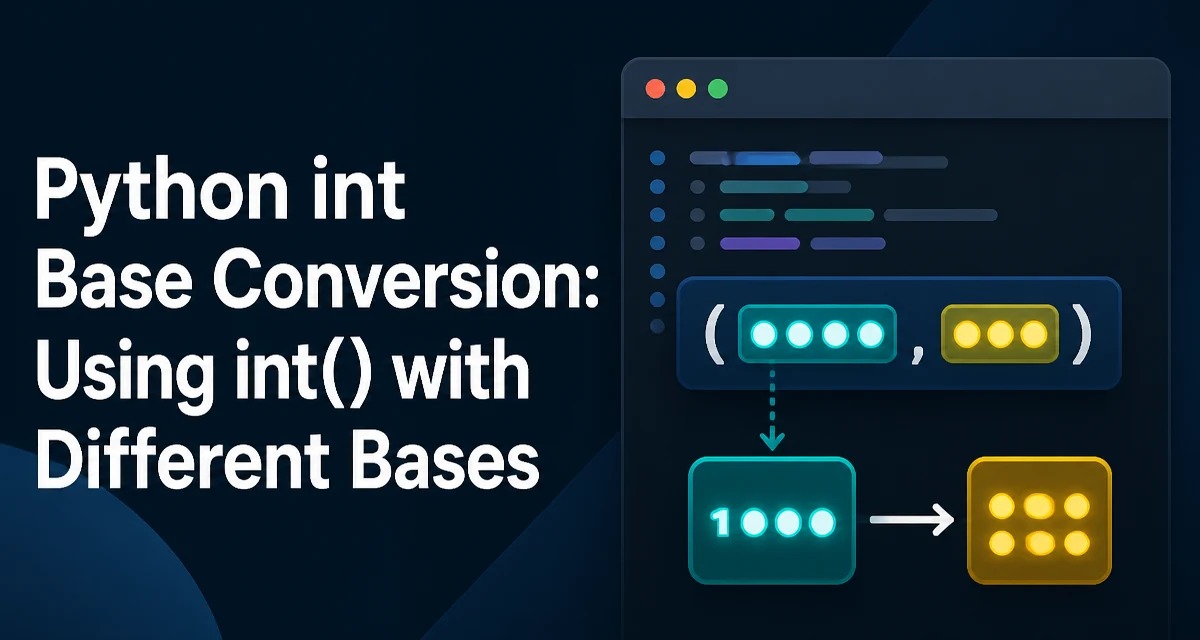
Python int Base Conversion: Using int() with Different Bases
python int base conversion: Learn how Python's int() converts strings and numbers between bases, with syntax, error handling, and edge cases for base 2 to 36.
Python Hexadecimal Integer: Conversion and Formatting
Practical Python guide to converting integers to and from hexadecimal strings, formatting hex output, and using bitwise operations.
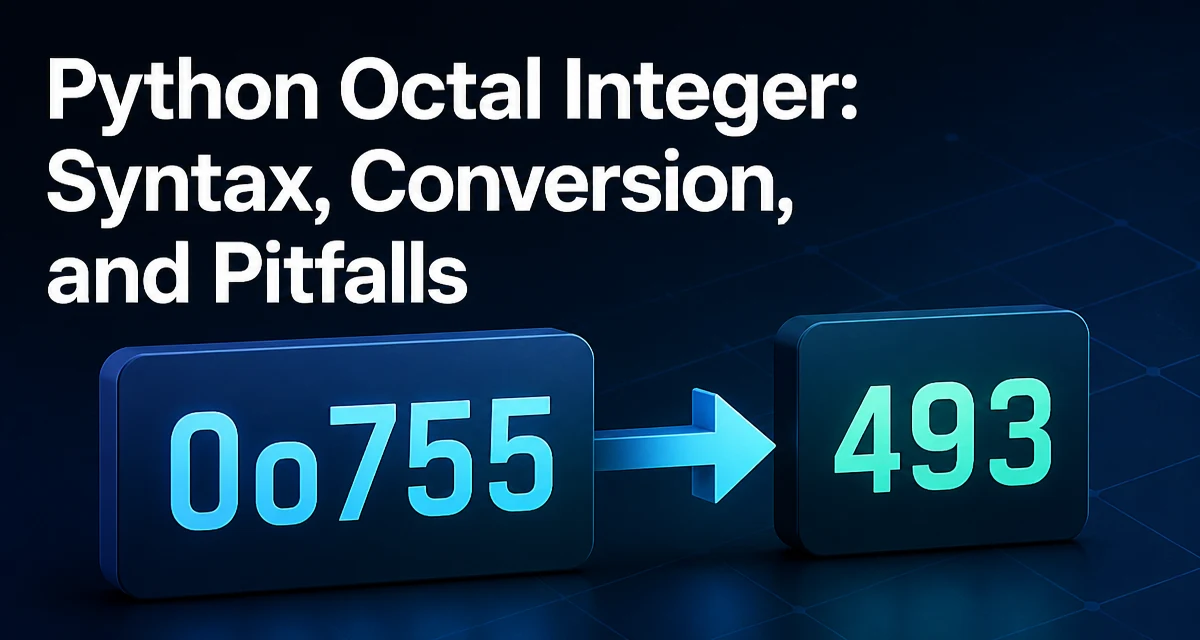
Python Octal Integer: Syntax, Conversion, and Pitfalls
Learn the python octal integer syntax in Python 3: the 0o prefix, conversions with oct() and int(), and the leading-zero SyntaxError.
Python Binary Integer: Bits and Bitwise Operations
Learn how Python represents integers in binary, how bitwise operators behave, and how to use them for practical bit manipulation.
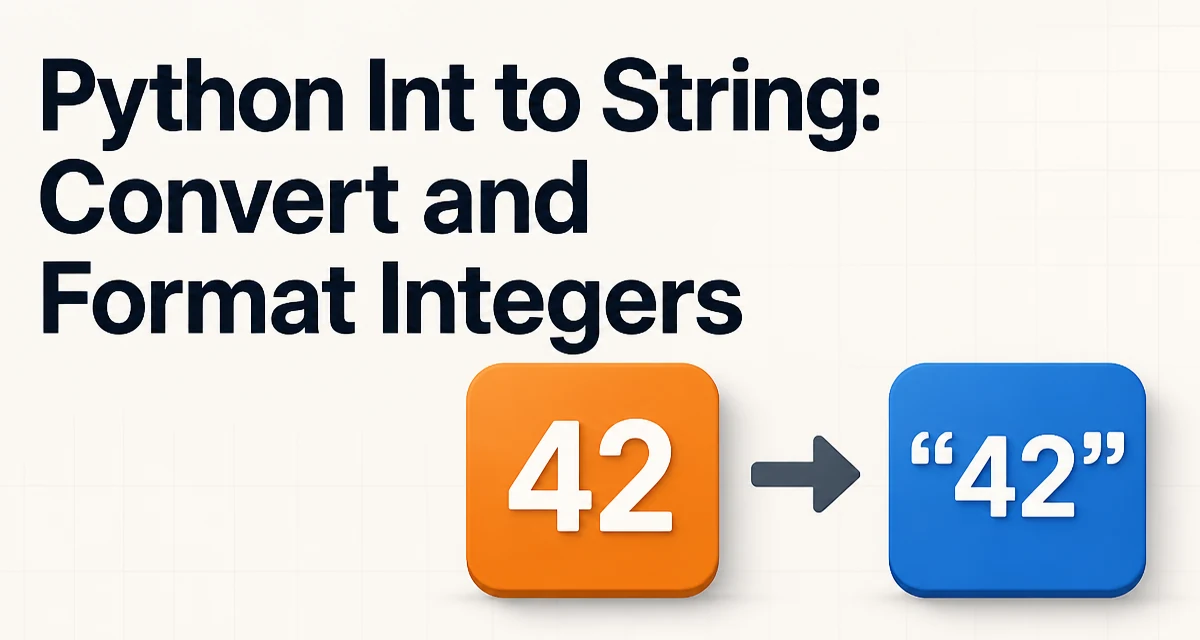
Python Int to String: Convert and Format Integers
Understand how to convert Python integers to strings with str(), f-strings, and format(). Compare behavior, formatting options, and edge cases.