Browse by Topic
Popular
Popular Posts

Latest
Latest Posts
Java Object.toString(): Overriding Default Behavior
Learn how Java's Object.toString() works by default, how to override it for readable output, and how records, null handling, and performance affect the result.

Java Object hashCode: Contract and Implementation
Understand the Java hashCode contract, why overriding equals requires overriding hashCode, and how to implement it correctly to avoid collection bugs.
Java Object Equals: Contract and Implementation
java object equals: Learn the Java object equals contract, how to implement equals and hashCode correctly, and avoid common pitfalls that break collections.
Understanding Java Object Class Methods
Learn how Java's Object class methods work: equals, hashCode, toString, clone, wait/notify, and finalize, with override contracts and practical code examples.
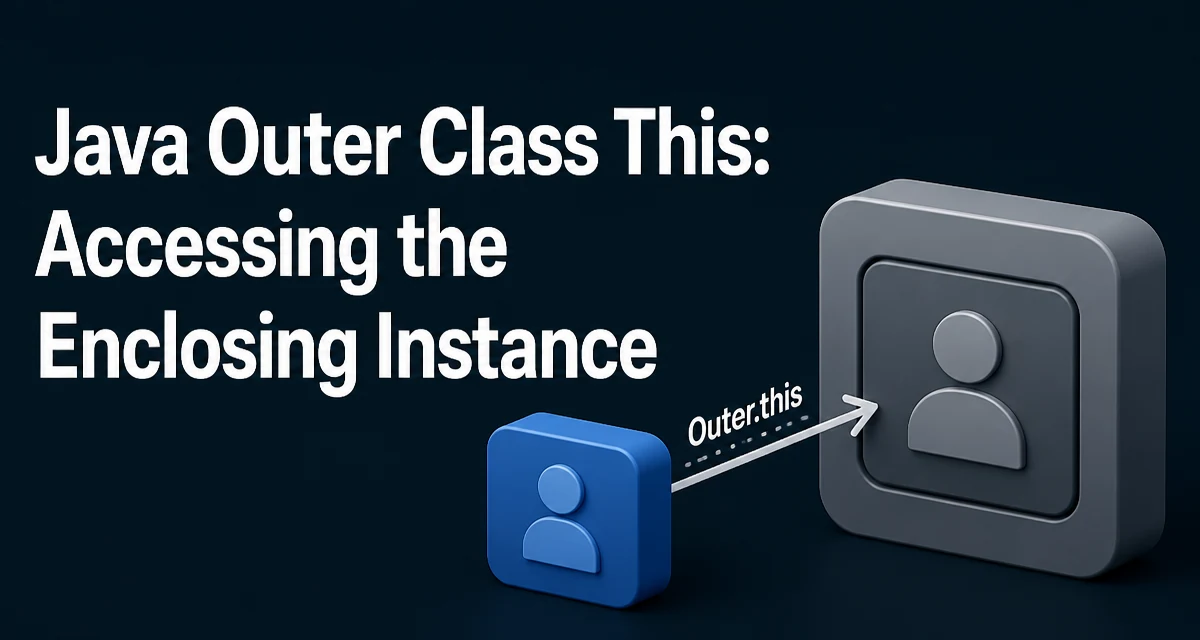
Java OuterClass.this: Accessing the Enclosing Instance
Learn how to use OuterClass.this in Java to access the enclosing instance from inner classes, with practical code examples and common pitfalls.
Java Inner Class this: Accessing the Outer Instance
java inner class this: Understand how `this` behaves inside Java inner classes and when to use `Outer.this` to reach the enclosing instance.
Java Nested Class Access Explained
java nested class access: Understand how Java nested classes access outer class members, including visibility rules, static vs inner classes, and common pitfalls.
Java Anonymous Class: Syntax, Scope, and Practical Use
Learn how to declare and use anonymous classes in Java, including variable capture, scope, and when to prefer lambdas or local classes.
Java Anonymous Inner Class: Syntax, Use Cases, Limits
Learn how Java anonymous inner classes work: syntax, variable capture, memory behavior, when to use them, and how they compare with lambdas.
Java Local Inner Class: Scope, Syntax, and Use Cases
Java local inner classes are declared inside a method, constructor, or initializer block. See how they access enclosing members and effectively final variables, and when to prefer them over anonymous classes.