Browse by Topic
Popular
Popular Posts
Latest
Latest Posts
Python Generator Expression: Lazy Iteration Explained
Learn how python generator expressions create memory-efficient iterators, when to use them over list comprehensions, and how to avoid common pitfalls.
Python yield vs return: How Generators Work
Understand how yield and return differ in Python, how to write generator functions, and when to choose each for lazy, memory-efficient iteration.
Understanding the Python yield Keyword
Learn how Python's yield keyword turns functions into generators, enabling lazy evaluation and memory-efficient iteration with practical examples.
Python Generator Function: Lazy Iteration Explained
Learn how Python generator functions work, how to use the yield keyword, and why they save memory for large or infinite data streams.
Python Generator: Lazy Iteration with Yield
Learn how Python generators use yield to produce values lazily, reduce memory usage, and simplify iteration over large or infinite sequences.
Python Reverse Iterator: Using reversed() and More
Learn how to iterate over Python sequences in reverse with reversed(), slicing, and custom iterators, including memory and performance tradeoffs.
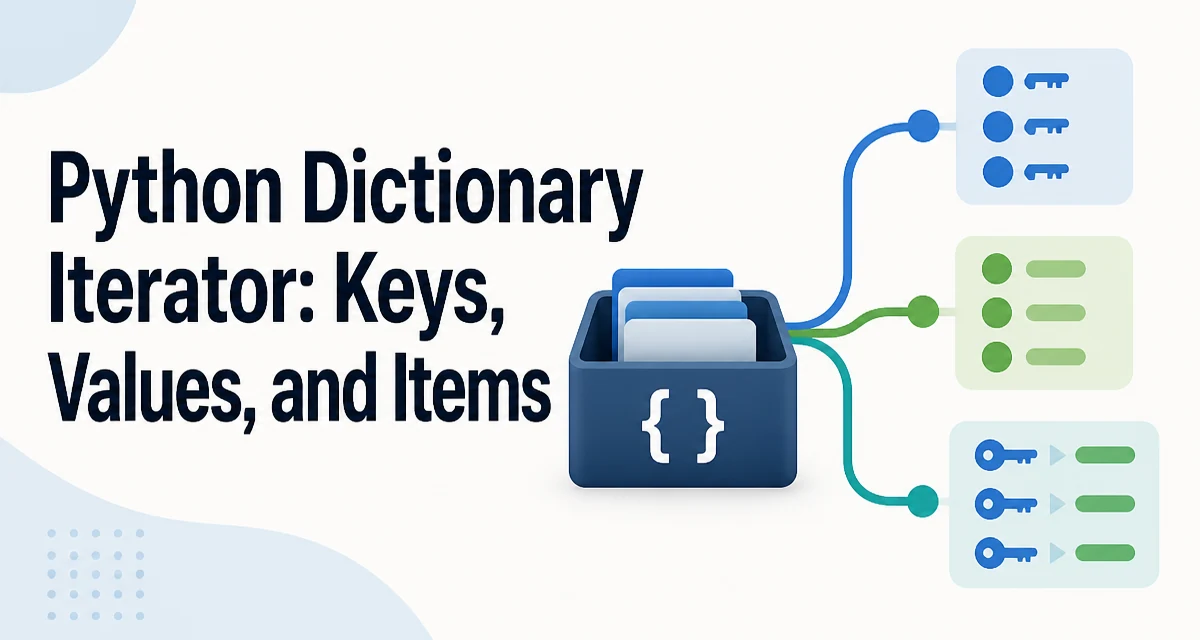
Python Dictionary Iterator: Keys, Values, and Items
Learn how Python dictionary iteration works: keys(), values(), and items() views, live view behavior, insertion order, and safe modification patterns.
Python List Iterator: How It Works and When to Use It
Learn how Python list iterators work, how for loops use them, and when to prefer iterators over index-based access.
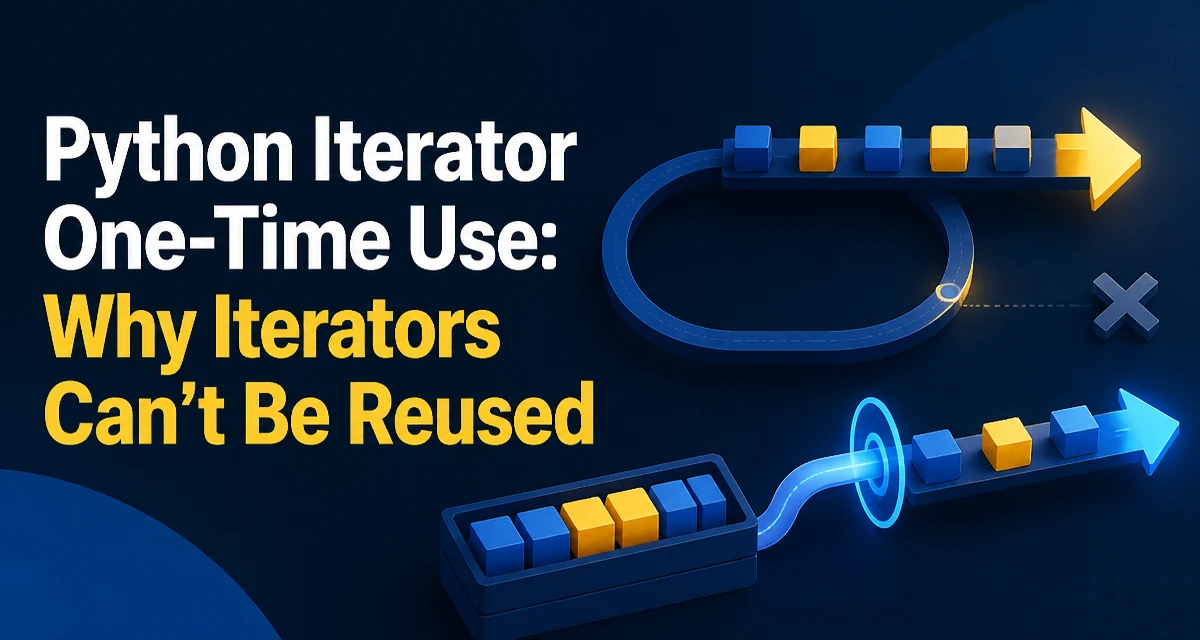
Python Iterator One-Time Use: Why Iterators Can't Be Reused
Python iterators are one-time use objects. Learn why that matters, how to create fresh iterators, and when to use lists or itertools.tee.
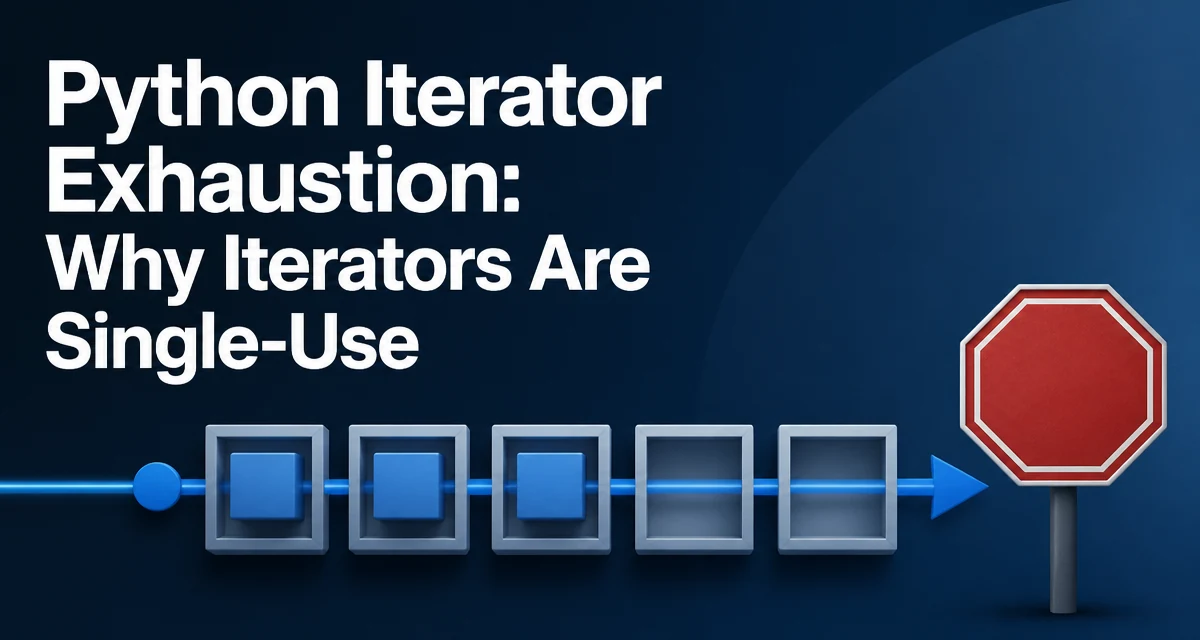
Python Iterator Exhaustion: Why Iterators Are Single-Use
Learn why Python iterators become exhausted, how to detect and handle exhaustion, and practical patterns for reusing or re-creating iterators.