Browse by Topic
Popular
Popular Posts
Latest
Latest C# Posts
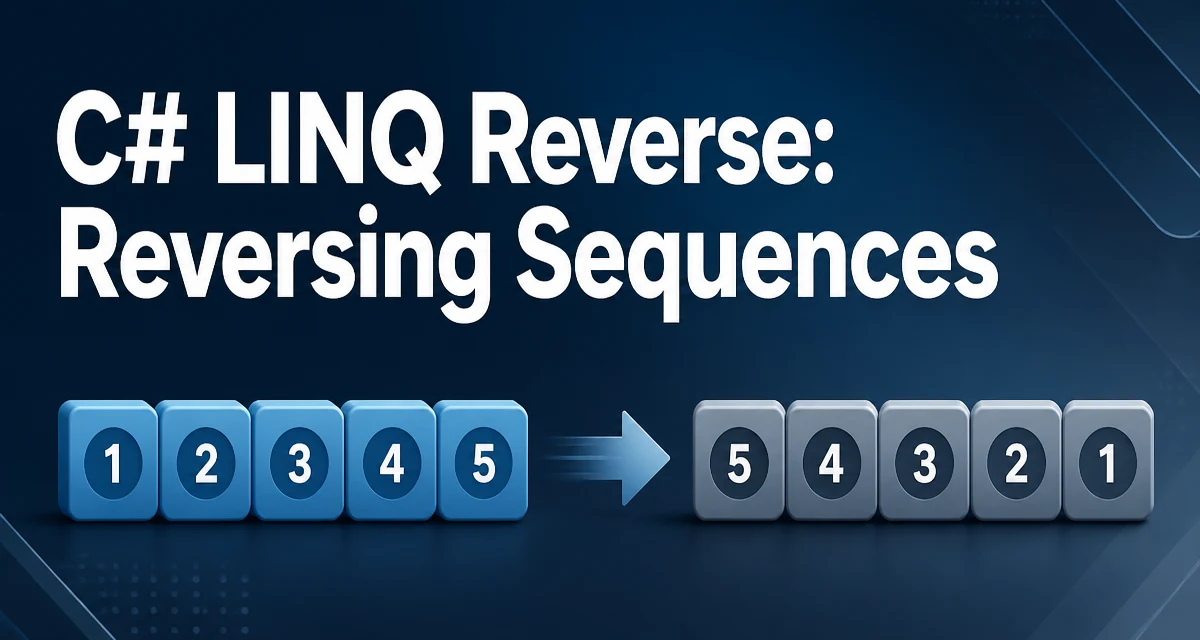
C# LINQ Reverse: Reversing Sequences
c# linq reverse: Learn how LINQ Reverse() works in C#: its deferred execution behavior, buffering cost, and when to choose it over in-place reversal methods.
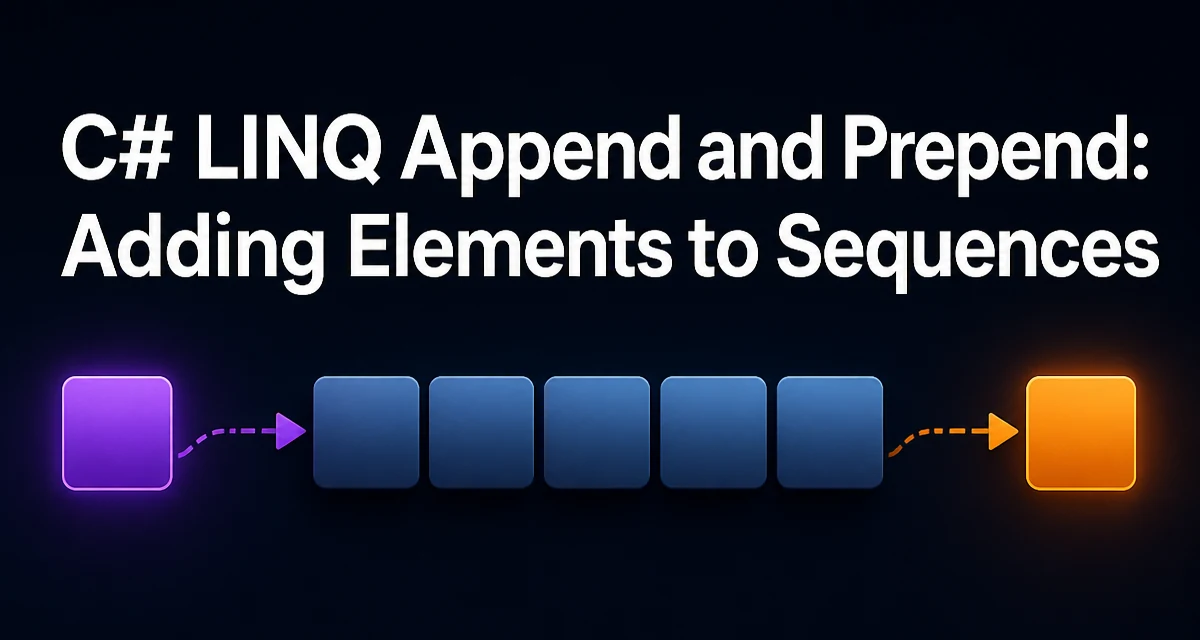
C# LINQ Append and Prepend: Adding Elements to Sequences
c# linq append prepend: Understand C# LINQ Append and Prepend: their deferred execution behavior, chaining patterns, performance tradeoffs, and when to prefer Concat o...
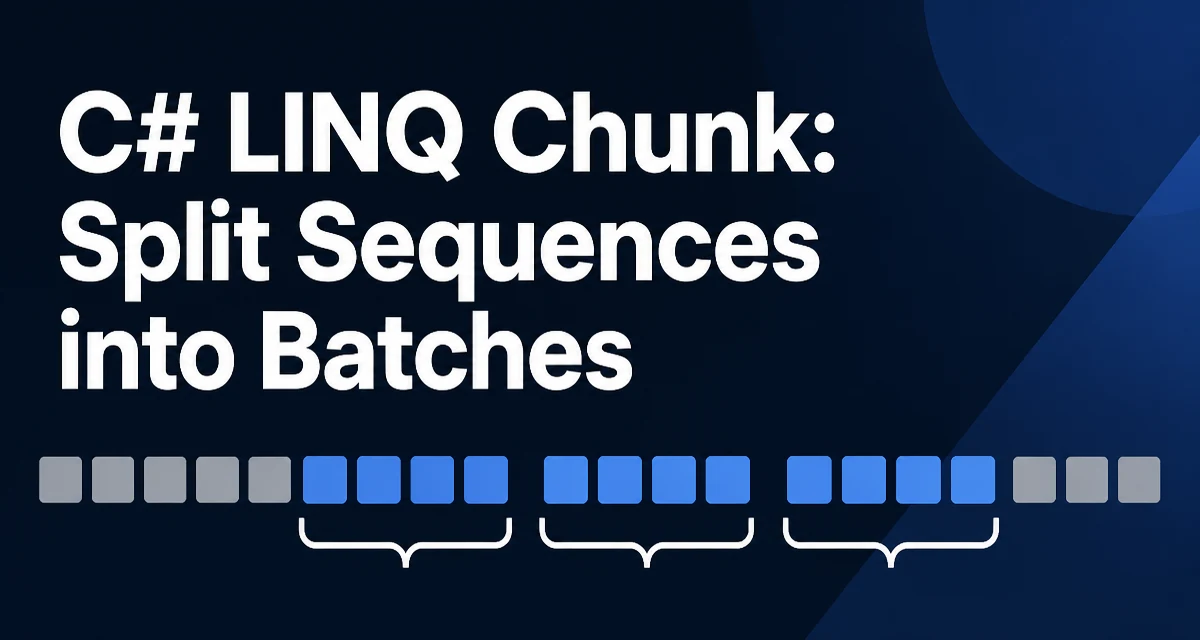
C# LINQ Chunk: Split Sequences into Batches
Learn how to use the LINQ Chunk method in C# to split sequences into fixed-size batches, with practical examples and performance considerations.

C# LINQ TakeWhile: Stop at First Failure
c# linq takewhile: Learn how C# LINQ TakeWhile returns elements until a condition fails, its difference from Where, and when to use it for early exit.
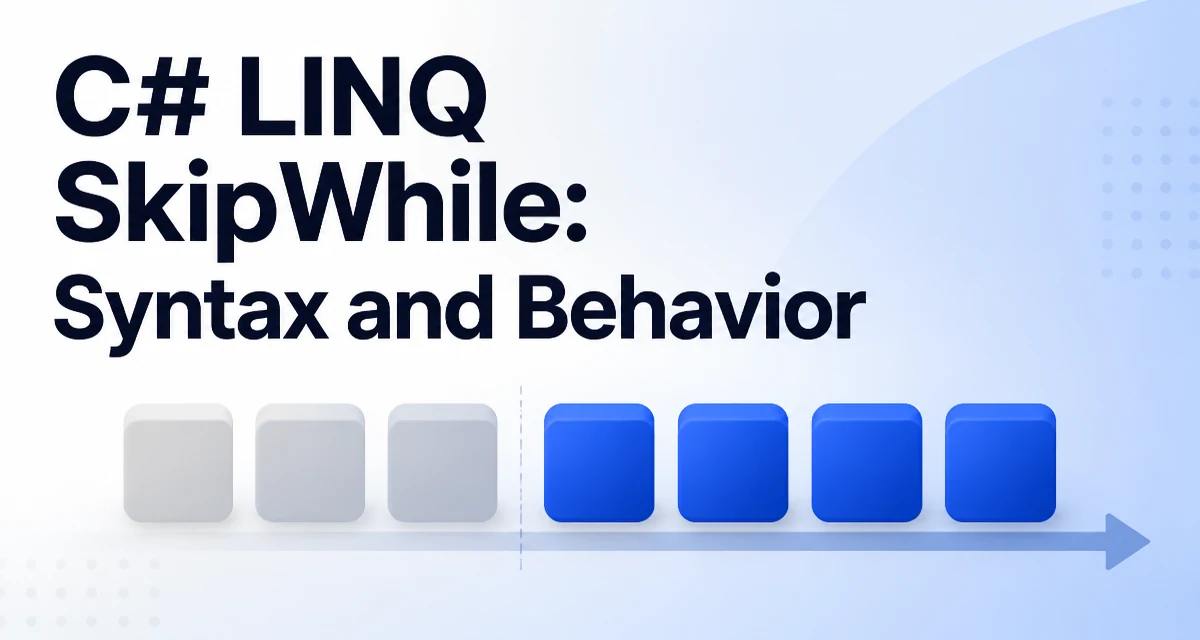
C# LINQ SkipWhile: Syntax and Behavior
C# LINQ SkipWhile skips leading elements until a predicate first returns false, then returns the rest. Learn its syntax, indexed overload, and common pitfalls.

C# LINQ Take: Syntax, Behavior, and Use Cases
Learn how to use the LINQ Take method in C#: syntax, deferred execution, edge cases, performance implications, and practical pagination examples.

C# LINQ Skip: Usage, Behavior, and Edge Cases
Learn how the LINQ Skip method works in C#, including deferred execution, pagination with Take, and edge cases like skipping past the end of a sequence.
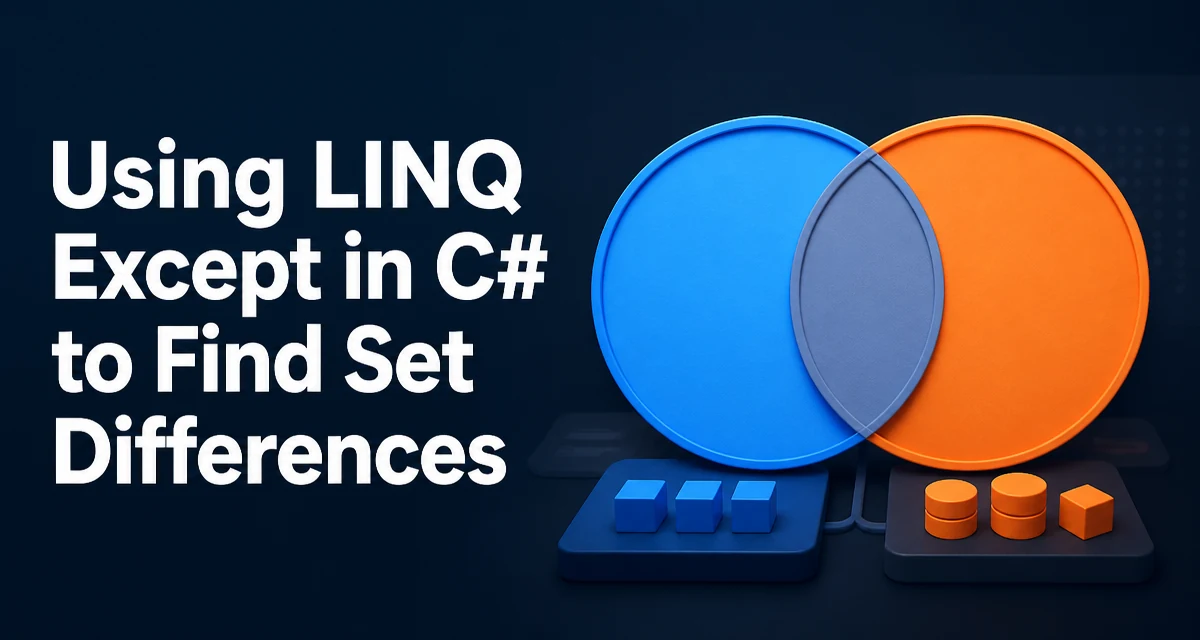
Using LINQ Except in C# to Find Set Differences
c# linq except: Learn how LINQ Except works in C#: default equality, custom comparers, duplicate handling, order preservation, and performance tradeoffs.
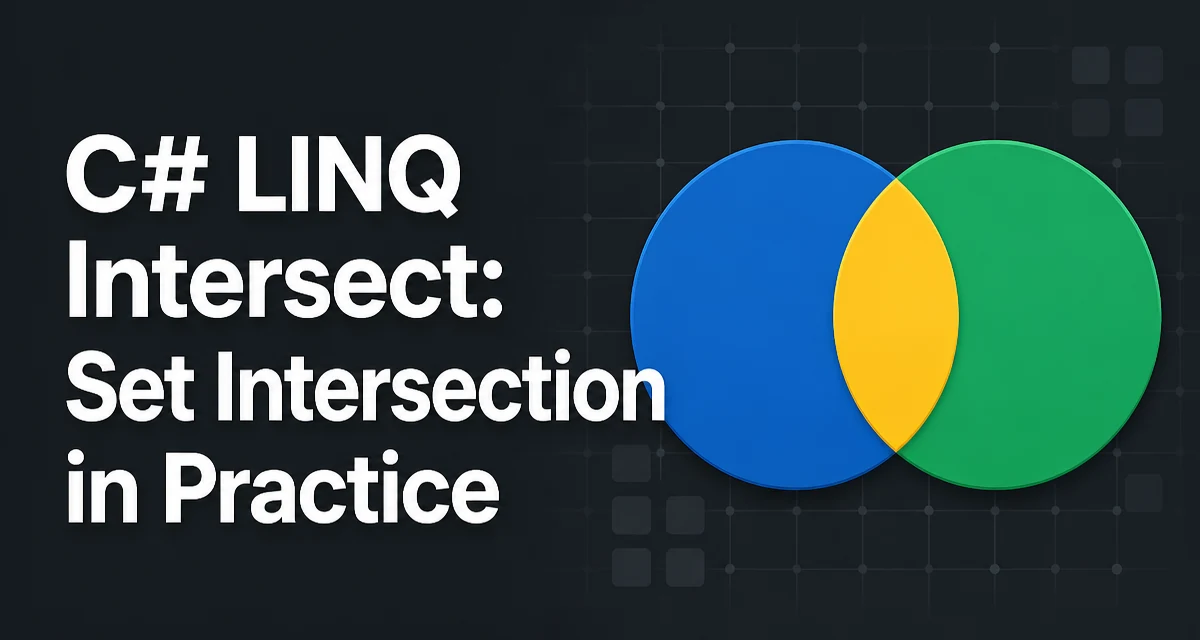
C# LINQ Intersect: Set Intersection in Practice
c# linq intersect: Learn how to use C# LINQ Intersect to find common elements between collections, including custom equality comparers, performance considerations, and...
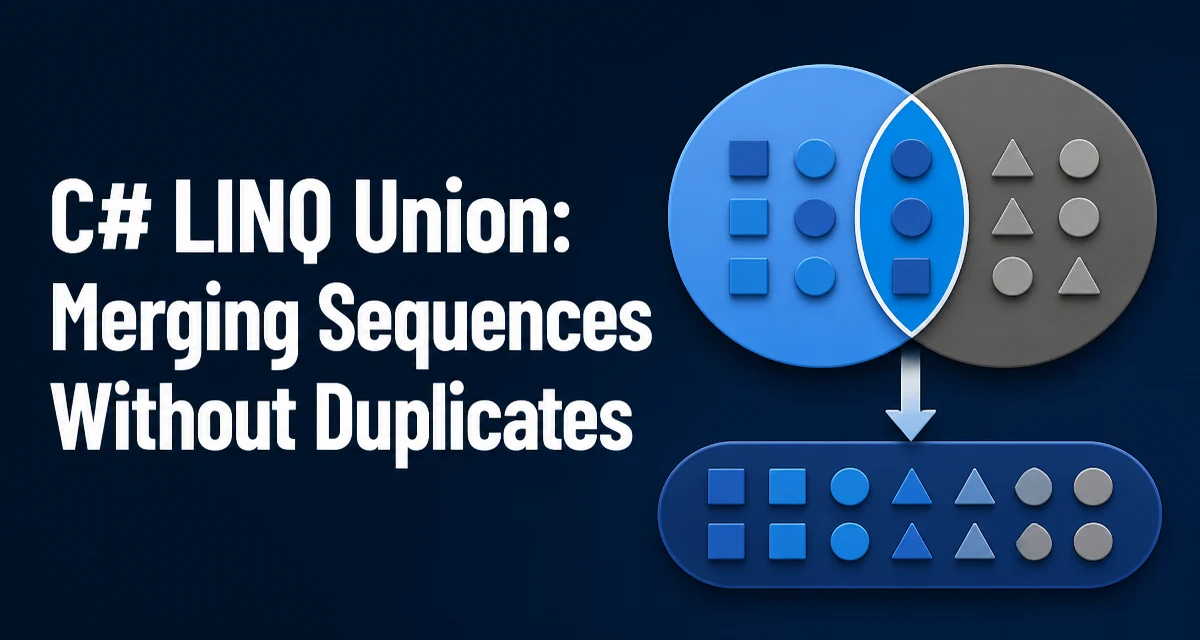
C# LINQ Union: Merging Sequences Without Duplicates
Learn how C# LINQ Union merges two sequences without duplicates, how it differs from Concat, and how to control equality for custom types.