Browse by Topic
Popular
Popular Posts
Latest
Latest Posts
C# Yield Break: How to End Iterator Methods
Learn how yield break terminates a C# iterator method, its behavior, and when to use it for early exit in lazy sequences.
C# yield return: Lazy Iteration Explained
Learn how C# yield return creates lazy iterators, when to use it, and how it affects memory and execution.
C# LINQ Immediate Execution: When and How to Force It
Understand when C# LINQ queries actually run, how ToList, ToArray, and aggregate methods force immediate execution, and what that means for performance and correctness.
Using c# eventargs for Custom Event Data
Learn how to use c# eventargs to pass data in events, create custom event argument classes, and follow best practices for .NET event design.
Reading and Preserving C# Exception Stack Traces
Learn how to read, log, and preserve C# exception stack traces, handle async stack traces, and understand the role of PDB files.
Using InnerException in C# to Preserve the Original Error
Learn how C# InnerException preserves the original error when exceptions are wrapped, and how to access the root cause in catch blocks.
C# Custom Exception Class: How to Build One
Learn when and how to create a C# custom exception class, including the standard constructors, serialization, and choosing between built-in and custom exceptions.
C# Enum TryParse: Safe String-to-Enum Parsing
Learn how to parse strings into C# enums safely with Enum.TryParse, including case handling, numeric strings, undefined values, and performance trade-offs.
C# Enum Parse: Converting Strings to Enum Values
c# enum parse: Learn how to parse strings into C# enum values safely, handle invalid input, and manage case sensitivity and flags enums.
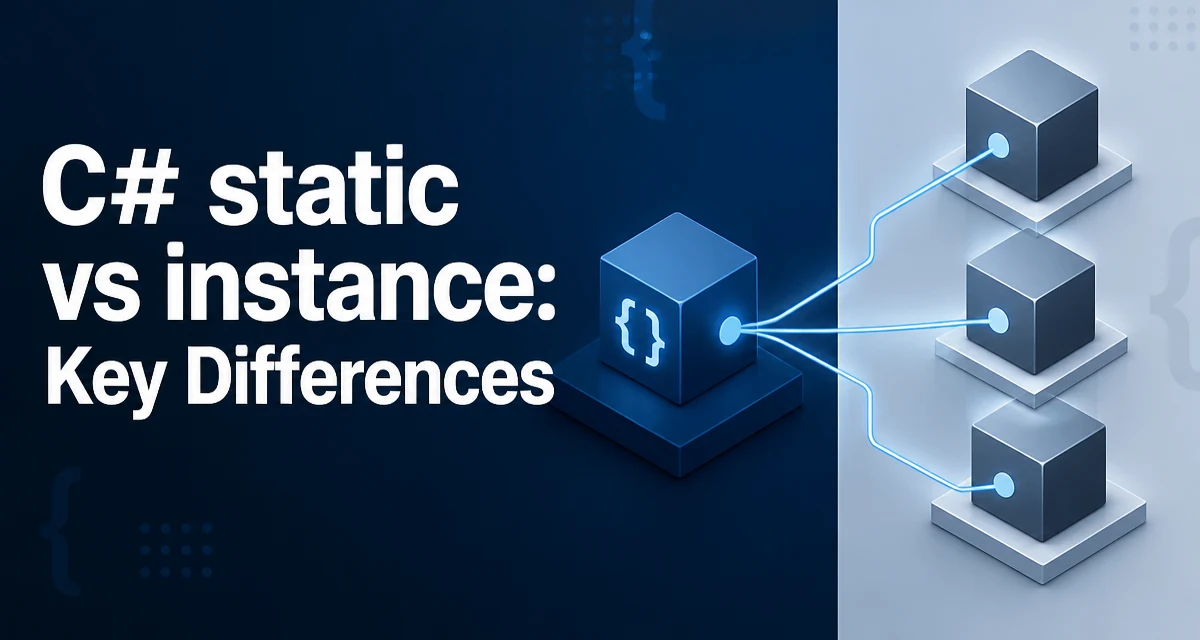
C# static vs instance: Key Differences
c# static vs instance: Learn the key differences between static and instance members in C#, including memory, thread safety, and when to use each.