Browse by Topic
Popular
Popular Posts
Latest
Latest Posts
C# Object.Equals vs ReferenceEquals: Key Differences
Object.Equals and ReferenceEquals answer different questions in C#: value equality vs reference identity. Learn how each works, when to override Equals, and common pitfalls.
C# String Equals vs ==: What’s the Difference?
Understand the difference between == and Equals when comparing strings in C#, including reference equality, interning, and culture-sensitive comparisons.
C# List Find vs LINQ First: Which to Use
Compare List<T>.Find with LINQ First and FirstOrDefault in C#: syntax, behavior, performance, and when to use each.
C# Where vs Find: Choosing the Right Approach
Understand the differences between Where and Find in C#, including when each is appropriate for collection searches and how their behavior affects performance.
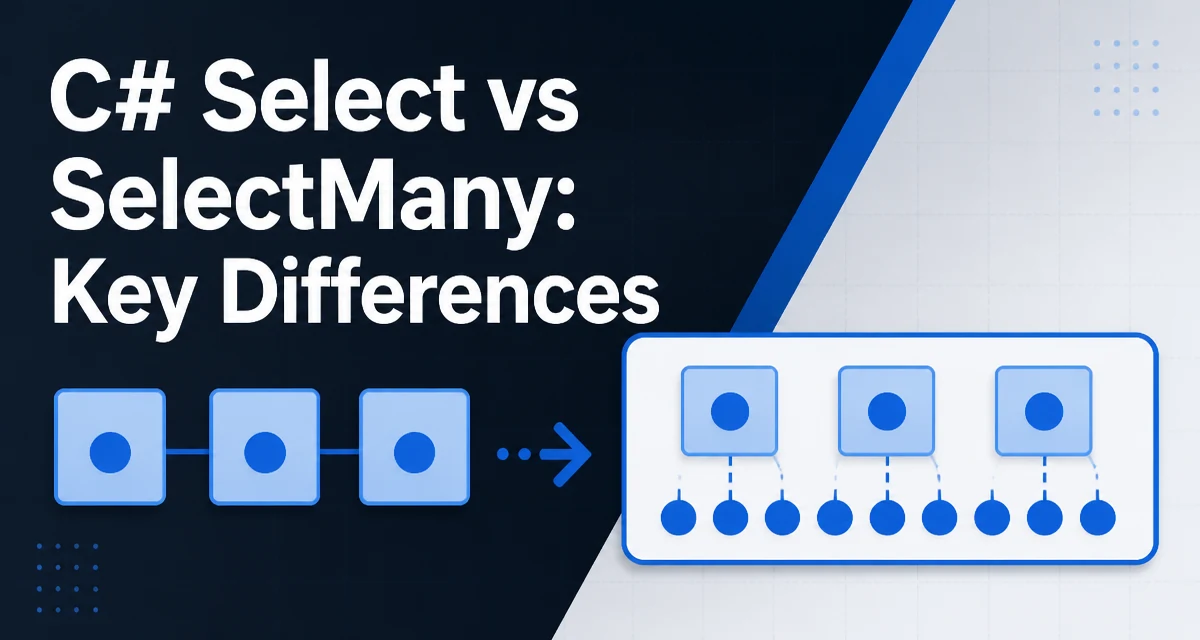
C# Select vs SelectMany: Key Differences
Understand the difference between C# LINQ Select and SelectMany. See code examples for one-to-one projection, flattening nested collections, and when to choose each method.
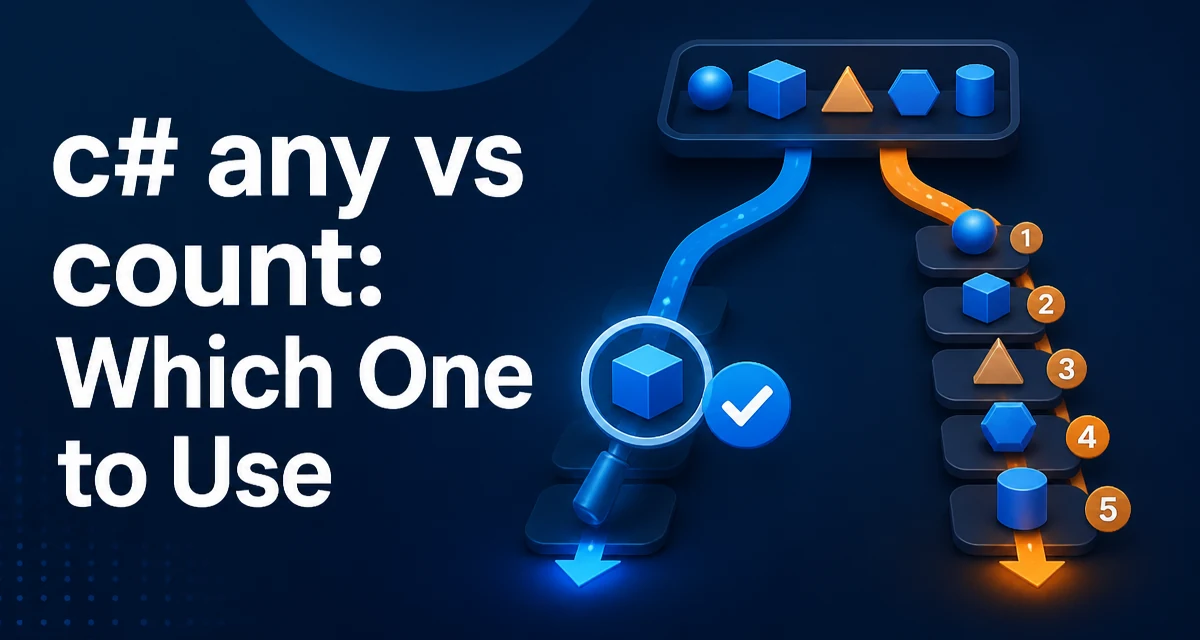
C# Any() vs Count(): Which One Should You Use?
Choosing between Any() and Count() in C# depends on whether you need an existence check or an exact count. See performance and edge-case guidance.
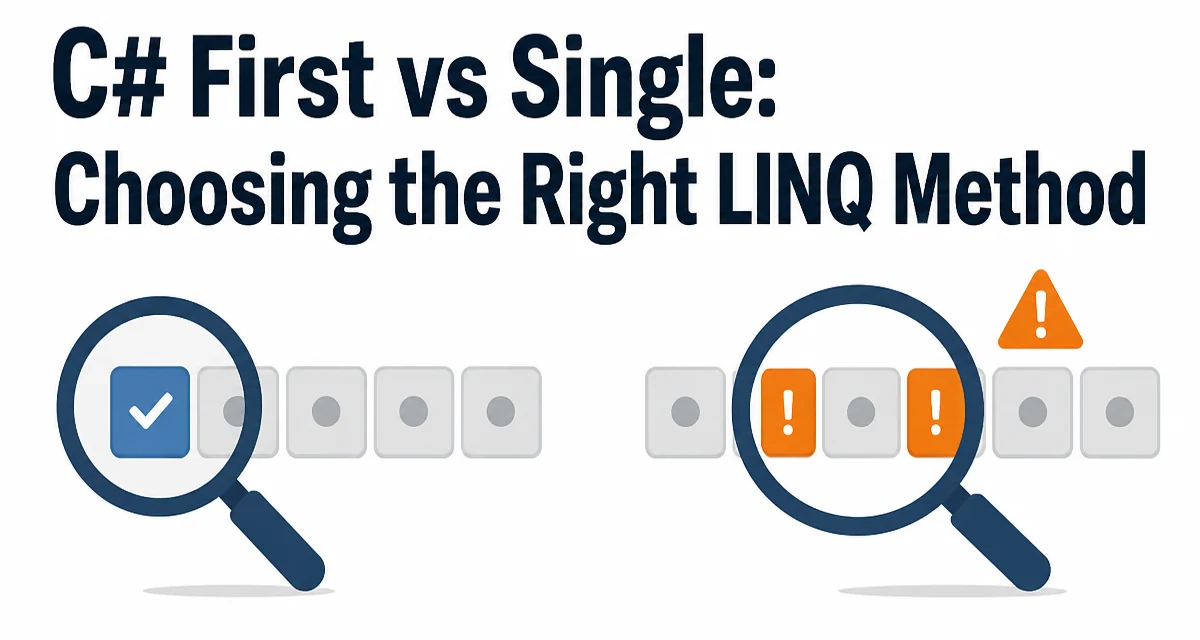
C# First vs Single: Choosing the Right LINQ Method
Understand the difference between First and Single in C# LINQ, including exception behavior, performance tradeoffs, and practical guidance for choosing the right method.
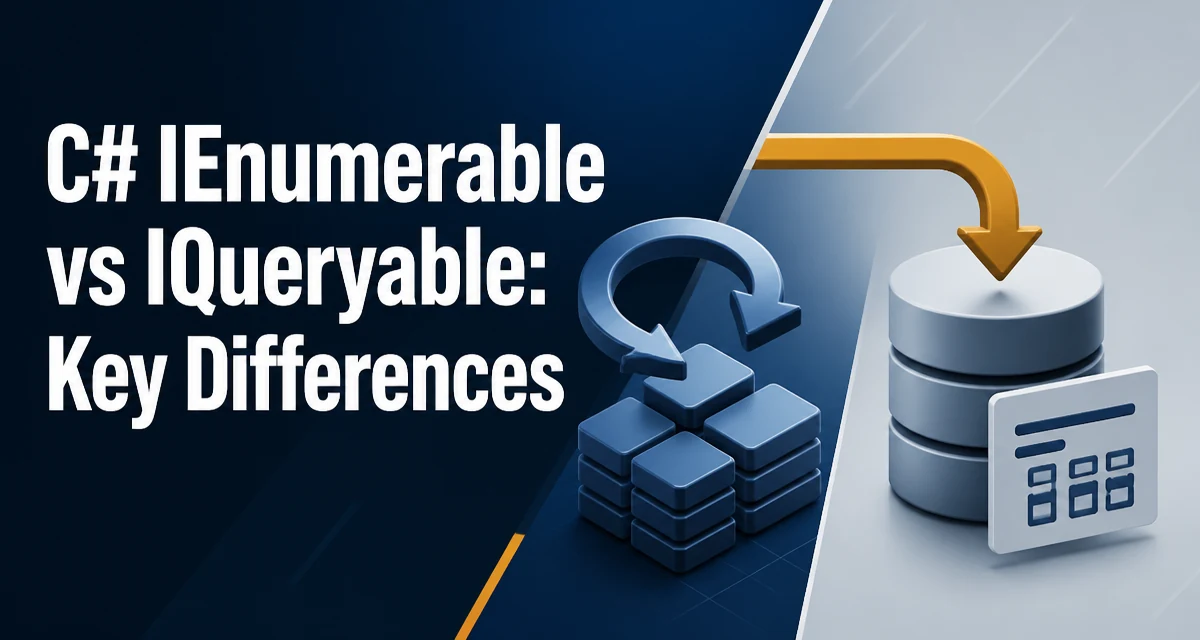
C# IEnumerable vs IQueryable: Key Differences
Understand the practical differences between IEnumerable and IQueryable in C#: how they execute, when to use each, and how the choice affects performance and memory.
C# Tuple vs Record: When to Use Each
c# tuple vs record: Compare C# tuples and records for data modeling: syntax, equality, mutability, and when each type fits best.
C# Generic vs Non-Generic: Type Safety and Performance
Compare generic and non-generic types in C#, including type safety, boxing overhead, code clarity, and when to choose each approach.