Browse by Topic
Popular
Popular Posts


Latest
Latest Posts

C# Class vs Struct vs Record: Choosing the Right Type
Choose the right C# type by learning how class, struct, and record differ in reference vs value semantics, equality, performance, and common use cases.
C# Switch Statement vs Switch Expression: Which to Use?
Compare the classic C# switch statement with the switch expression: syntax, pattern matching, exhaustiveness, and when each form fits best.
C# Collection Expression vs Collection Initializer
c# collection expression vs collection initializer: Compare C# collection expressions with collection initializers: syntax, type inference, span support, and when to u...
C# Collection Initializer vs Object Initializer
c# collection initializer vs object initializer: Understand the difference between C# collection initializers and object initializers, how the compiler translates each...
C# InterceptsLocation Attribute Usage
Learn how to use C# InterceptsLocationAttribute with source generators to redirect method calls at compile time, including syntax, limitations, and debugging tips.
Implementing C# Interceptors with a Minimal Example
C# interceptors let a method replace calls at specific source locations during compilation. This article shows a minimal source generator, how the compiler resolves intercepted calls, and when the preview feature is practical.
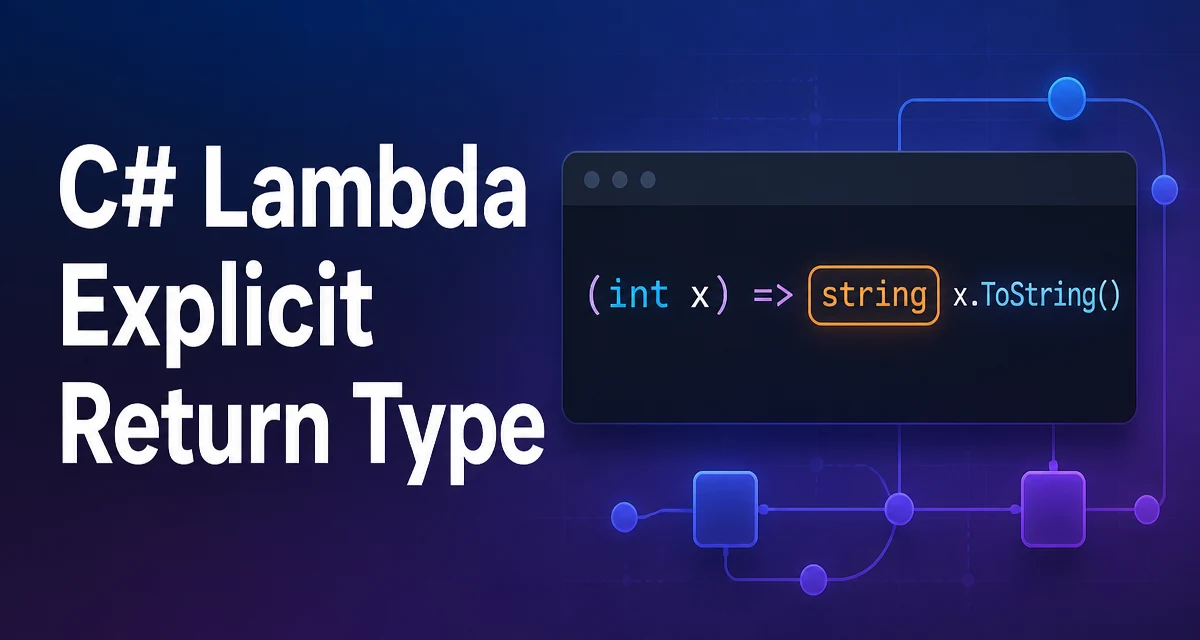
C# Lambda Explicit Return Type
c# lambda explicit return type: Learn when and how to specify an explicit return type for a C# lambda expression, including syntax, limitations, and practical examples.
C# Lambda Ref Parameter: Why It's Not Allowed
c# lambda ref parameter: Learn why C# lambda expressions cannot declare ref parameters and how to use local functions or wrapper types to achieve pass-by-reference beh...
C# Lambda Params: Syntax and Common Pitfalls
Learn how to define lambda parameters in C#, including implicit and explicit types, multiple parameters, and working with params arrays through delegates.
C# Using Alias for Generic Types
Learn how C# using aliases shorten closed generic type names, why open generic types cannot be aliased, and when a wrapper class may be a better fit.