Browse by Topic
Popular
Popular Posts



Latest
Latest Posts

C# Nullable Operators: Syntax and Usage
Learn how C# nullable operators ?., ??, and ??= simplify null handling, help prevent NullReferenceException, and make code more readable.
C# Parse vs TryParse vs Convert
Compare C# Parse, TryParse, and Convert for string-to-number conversion, including exception behavior, null handling, and practical use cases.

C# override vs new: Choosing the Right Method Behavior
Understand the practical difference between override and new in C#: how each affects polymorphism, virtual dispatch, and when to use it.
C# Virtual vs Abstract: When to Use Each
Understand the difference between virtual and abstract members in C#, when to use each, and how they affect inheritance and polymorphism.
C# Method vs Function: What Actually Differs
c# method vs function: Understand the real difference between methods and functions in C#, including local functions, static methods, delegates, and when the distincti...
C# Property vs Field: When to Use Each
Learn the differences between C# properties and fields, including encapsulation, validation, computed values, performance, and when to choose each.

C# Delegate vs Event: The Practical Difference
Learn the practical differences between delegates and events in C#, including invocation rules, access control, and when each design fits your code.

C# List vs Dictionary: Choosing the Right Collection
c# list vs dictionary: Compare C# List and Dictionary for lookups, iteration, and memory. Learn when each collection fits best with code examples.
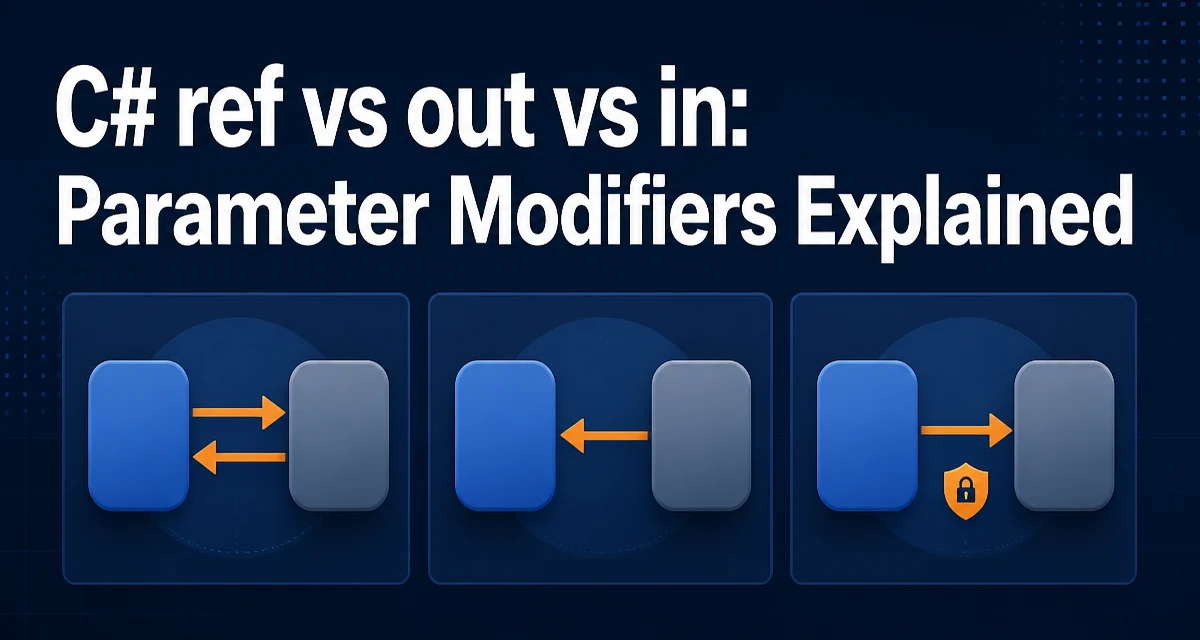
C# ref vs out vs in: Parameter Modifiers Explained
c# ref vs out vs in: Understand how ref, out, and in parameter modifiers differ in C#, when each is is required,, and how they affect runtime behavior and API design.

C# const vs readonly vs static readonly: What to Use When
C# const vs readonly vs static readonly: Learn the differences between these modifiers, including initialization timing, memory behavior, and when each is the right choice.