All syntax guides
Short, practical guides on programming syntax, language fundamentals, and the tools developers reach for every day.
3,980 guides across 14 topics
Topics
Popular guides
Most read



Latest guides
Page 325 of 398
C# Primary Constructor Struct: Syntax and Behavior
c# primary constructor struct: Understand C# primary constructor struct syntax, how parameters map to fields, and when to use them.
C# Expression Tree Internals: How Code Becomes Data
Explore how C# expression trees represent code as data, how Compile() produces delegates, and when to use them in production.
Compiling C# Expression Trees into Executable Delegates
Learn how C# Expression.Compile() converts expression trees into executable delegates, when to use it, and how to avoid repeated compilation costs.
C# Expression vs Func: When to Use Each
Understand the difference between C# delegates and expression trees, when to use each, and how they affect LINQ and dynamic query building.
C# Expression Trees: Building Dynamic Queries
See how to construct, compile, cache, and use C# expression trees for dynamic filters and IQueryable providers.
C# Covariance vs Contravariance: How Generic Variance Works
Understand how C# covariance and contravariance control generic type conversions, including when the compiler permits them and how arrays differ.
C# Generic In Parameter: Syntax and Constraints
c# generic in parameter: Learn how to define and use generic type parameters in C# methods, including constraints, multiple parameters, and runtime behavior.
C# Generic Out Parameter: Type Inference Explained
Generic methods with out parameters have type-inference constraints at the call site. This article explains why explicit type arguments are often required and compares TryGetValue and tuple alternatives.

C# Contravariance: How the in Keyword Works
Learn how C# contravariance works with delegates and generic interfaces, including the in keyword, practical usage, and common type-safety boundaries.
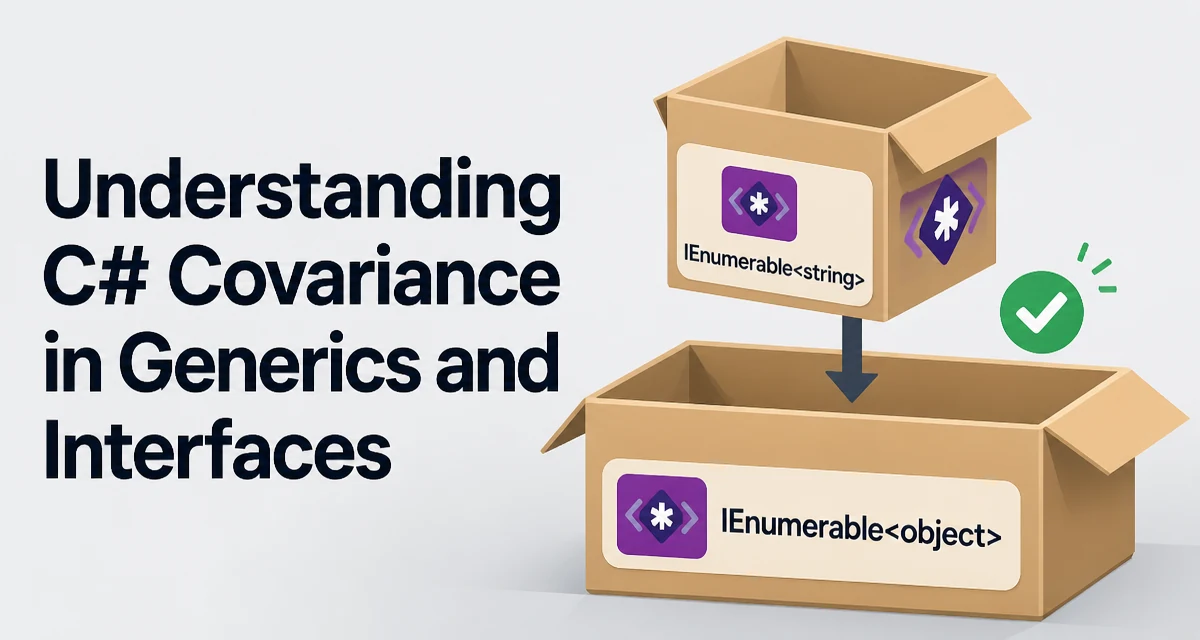
Understanding C# Covariance in Generics and Interfaces
c# covariance: Learn how C# covariance works in arrays, generic interfaces, and delegates, where it is allowed, and how to avoid runtime exceptions.