All syntax guides
Short, practical guides on programming syntax, language fundamentals, and the tools developers reach for every day.
3,980 guides across 14 topics
Topics
Popular guides
Most read



Latest guides
Page 327 of 398
C# IDisposable: The Dispose Pattern Explained
c# idisposable: Learn how to implement IDisposable correctly in C#, use the using statement, and avoid common resource leaks.
Implementing the C# Dispose Pattern
Learn how to implement the C# dispose pattern correctly, covering IDisposable, finalizers, using statements, async disposal, and common failure modes.

Using C# SemaphoreSlim to Limit Concurrent Access
Learn how C# SemaphoreSlim limits concurrent access to shared resources, with async waiting, cancellation, and practical throttling examples.

C# ConcurrentStack: Thread-Safe LIFO Collection
Learn how to use C# ConcurrentStack for thread-safe LIFO operations: Push, TryPop, TryPeek, bulk methods, and the performance tradeoffs to consider.
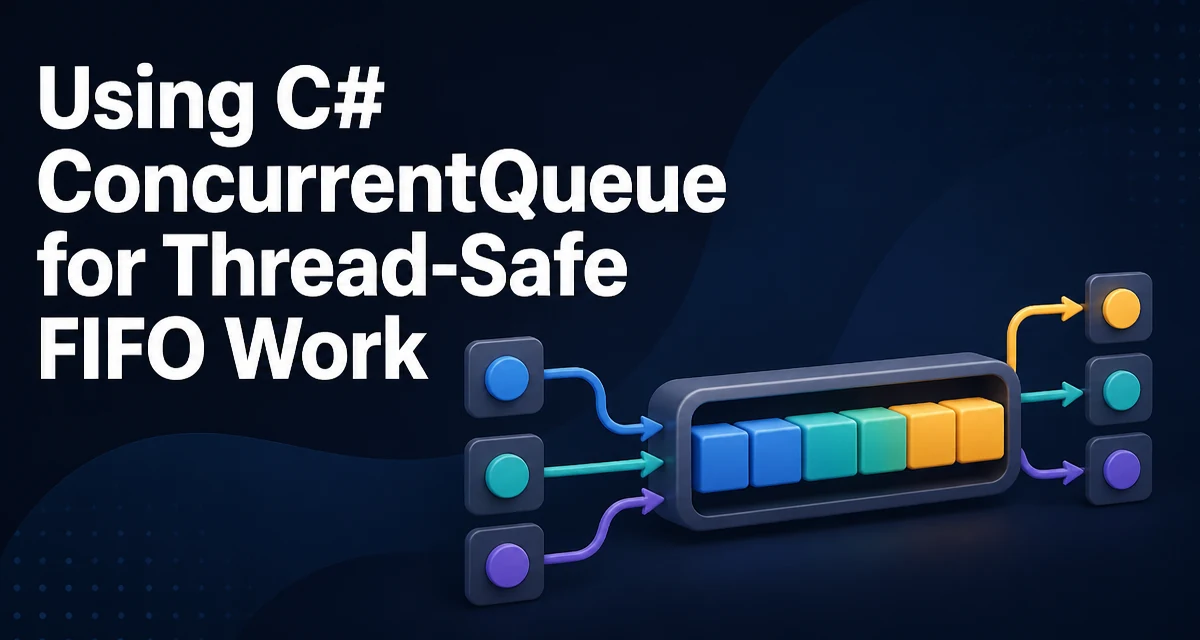
Using C# ConcurrentQueue for Thread-Safe FIFO Work
Understand how to use C# ConcurrentQueue<T> for thread-safe FIFO operations: core methods, enumeration, performance, and common pitfalls.
Using C# ConcurrentDictionary for Thread-Safe Collections
Learn how to use C# ConcurrentDictionary for thread-safe operations, including atomic methods, performance tradeoffs, and when to choose it over other approaches.

C# Concurrent Collections: Choosing the Right Thread-Safe Collection
Learn how to choose and use C# concurrent collections such as ConcurrentDictionary, ConcurrentQueue, ConcurrentStack, ConcurrentBag, and BlockingCollection, including code examples and common pitfalls.
Using ThreadLocal<T> in C# for Per-Thread State
Learn how C# ThreadLocal<T> provides isolated per-thread state, when to use it instead of ThreadStatic or AsyncLocal, and how it affects memory and disposal.

C# volatile: Semantics and Practical Use
Understand what C# volatile does, when to use it, and its limits. Practical examples show correct usage and common pitfalls.

C# Interlocked: Atomic Operations Without Locks
c# interlocked: Learn how C# Interlocked provides atomic operations for thread-safe counters and lock-free updates without explicit locking.