Browse by Topic
Popular
Popular Posts




Latest
Latest Posts
C# Dictionary Declaration: Syntax and Initialization
Learn how to write a C# dictionary declaration with type parameters, collection initializers, initial capacity, custom comparers, and performance tradeoffs.

C# Dictionary Usage: Key Operations and Performance
Learn practical C# Dictionary operations: fast key-value lookups, missing-key handling, performance considerations, and thread-safe alternatives.
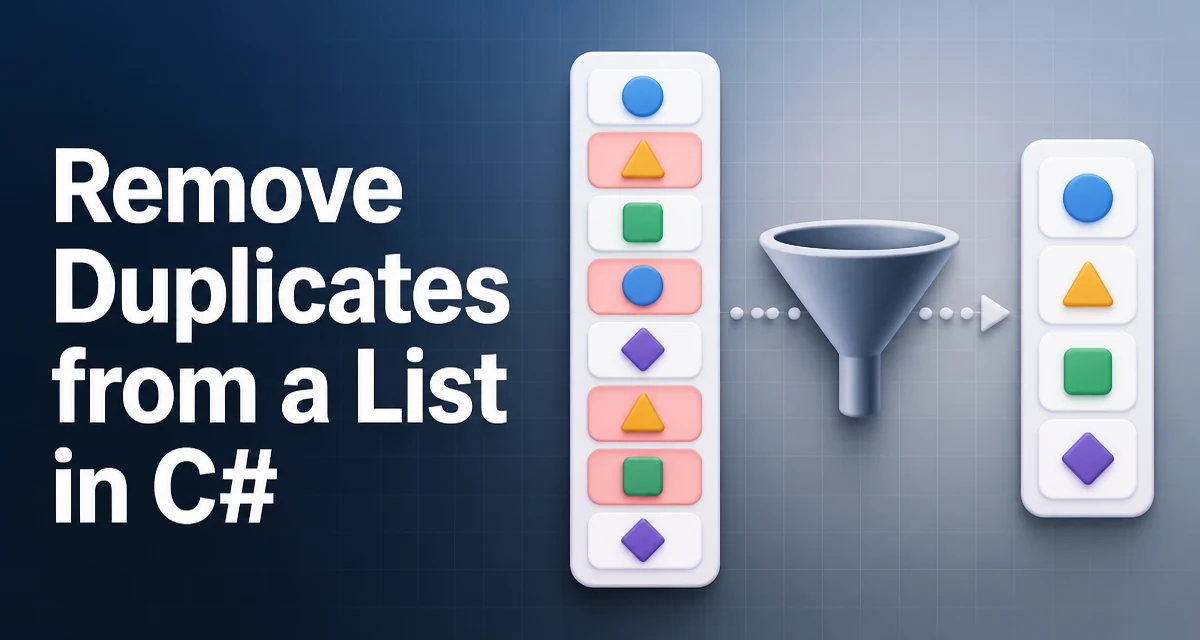
Remove Duplicates from a List in C#
Learn how to remove duplicates from a List<T> in C# using LINQ Distinct, HashSet, and custom comparers, with performance tradeoffs, order preservation, and in-place removal.
C# Array to List: Conversion Methods and Performance
Learn how to convert a C# array to a List with ToList() or the List<T> constructor, including performance, memory, and common pitfalls.
C# List to Array: Converting Collections with ToArray()
Convert a List<T> to an array in C# with ToArray() or CopyTo(), and understand the type, performance, and memory implications of each approach.

C# List Count vs Capacity: Key Differences
Understand the difference between Count and Capacity in C# List<T>, and see how setting Capacity can affect memory usage and performance.
C# List Count: Count Property vs Count() Method
Compare the List<T>.Count property and the LINQ Count() method: how they behave on List<T>, performance traits, and when to use Count() over Count.

C# List foreach: Syntax, Pitfalls, and Performance
Learn how to use foreach with List<T> in C#, including syntax, enumerator behavior, common pitfalls, and performance tradeoffs.

How to Reverse a List in C#: In-Place and LINQ
Reverse a C# List<T> with List.Reverse() or LINQ's Reverse(). Compare in-place mutation, deferred enumeration, and practical tradeoffs.

C# List Sort: List.Sort vs LINQ OrderBy
Learn how to sort a List<T> in C# using List.Sort and LINQ OrderBy, including custom comparers, multiple-key sorting, and performance tradeoffs.