All syntax guides
Short, practical guides on programming syntax, language fundamentals, and the tools developers reach for every day.
3,965 guides across 14 topics
Topics
Popular guides
Most read



Latest guides
Page 361 of 397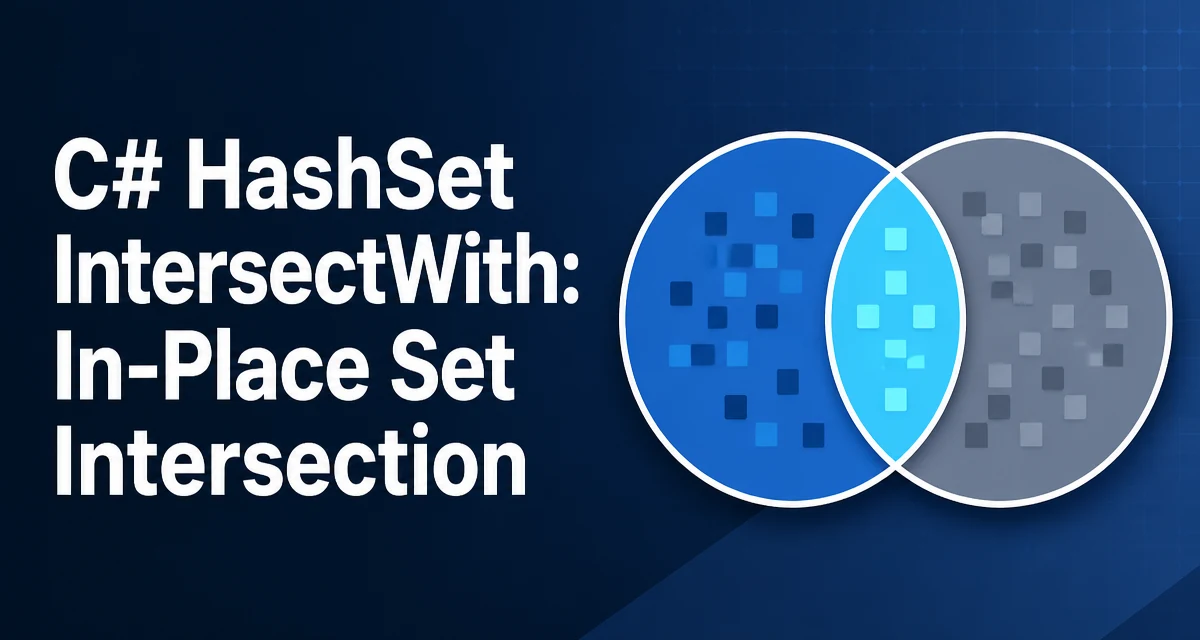
C# HashSet IntersectWith: In-Place Set Intersection
Learn how to use C# HashSet.IntersectWith to compute set intersection in place, with code examples, performance notes, and common pitfalls.
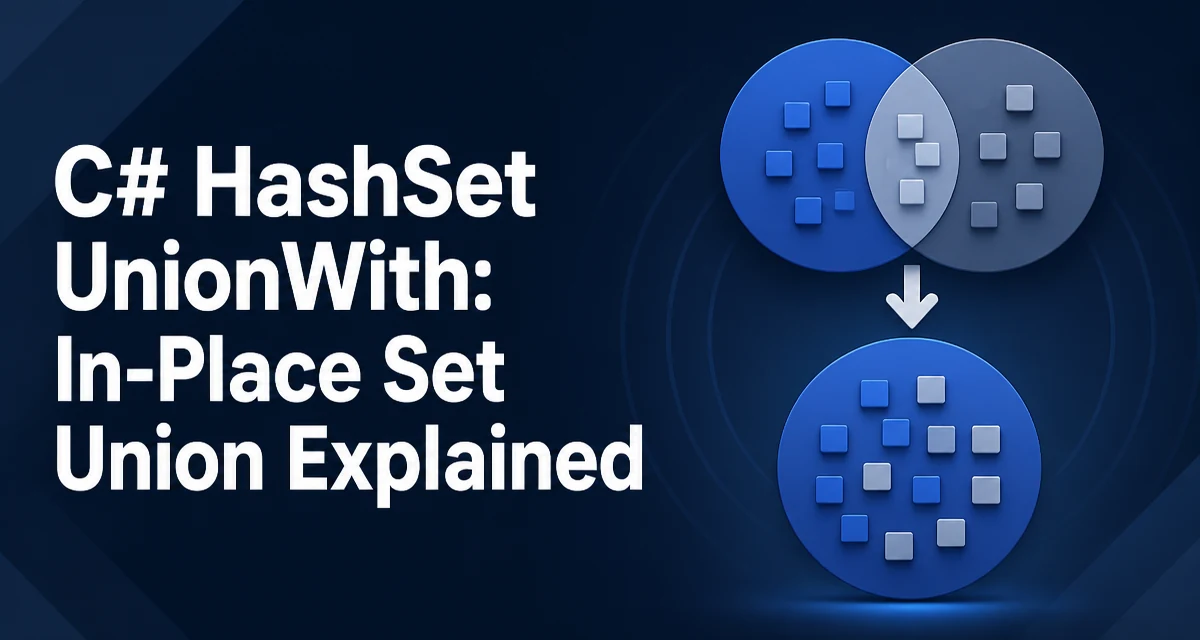
C# HashSet UnionWith: In-Place Set Union Explained
Learn how HashSet<T>.UnionWith merges elements in place, how it differs from LINQ's Union, and when to use it for efficient set merging.
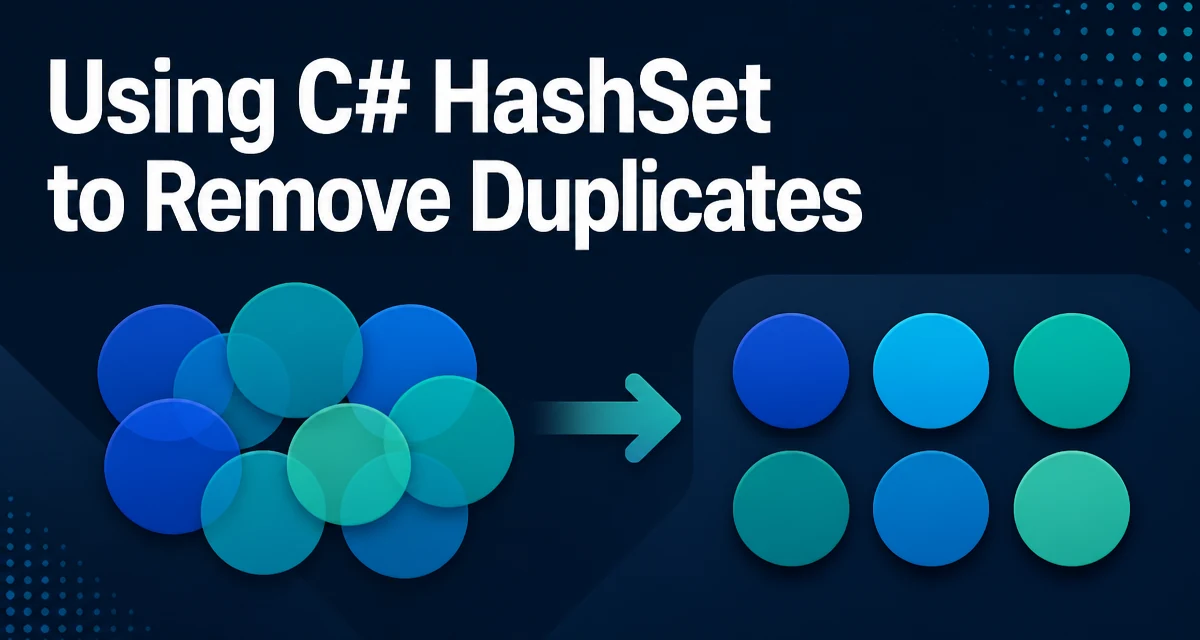
Using C# HashSet to Remove Duplicates
Learn how to use C# HashSet to remove duplicates from collections, including order preservation, custom equality, and performance tradeoffs.

C# HashSet.Contains: Fast Lookup and Usage
Learn how HashSet.Contains works, its O(1) average lookup, custom type support, and when to choose HashSet over List for membership tests.
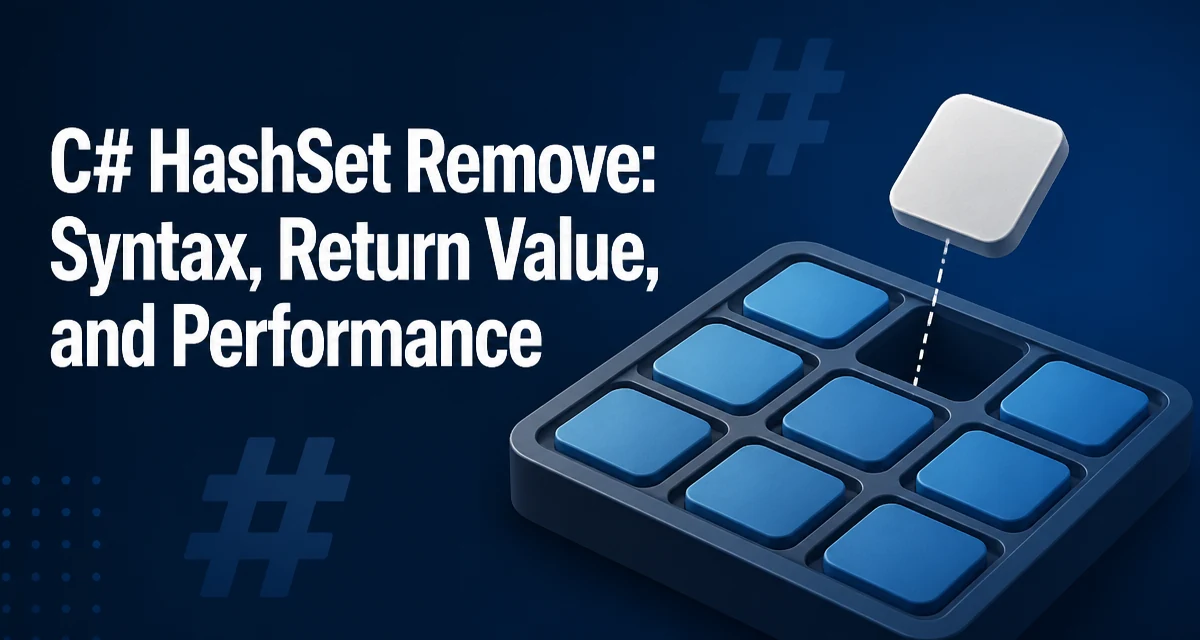
C# HashSet<T>.Remove: Syntax, Return Value, and Performance
See how HashSet<T>.Remove works in C#: return values, RemoveWhere for conditional deletion, performance behavior, and common pitfalls.
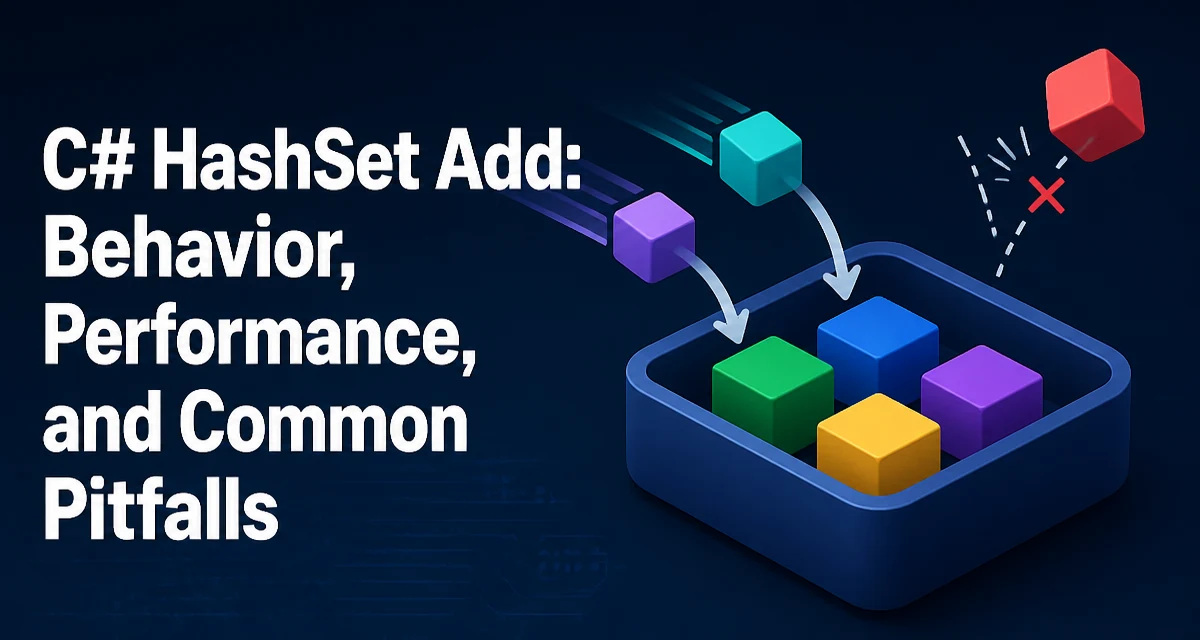
C# HashSet Add: Behavior, Performance, and Common Pitfalls
C# HashSet.Add returns a bool that tells you whether an item was inserted. See how duplicates are handled, performance tradeoffs, and common pitfalls.

C# HashSet Usage: Efficient Set Operations
Learn how to use C# HashSet for fast membership checks, deduplication, and set operations, with practical examples and performance tradeoffs.
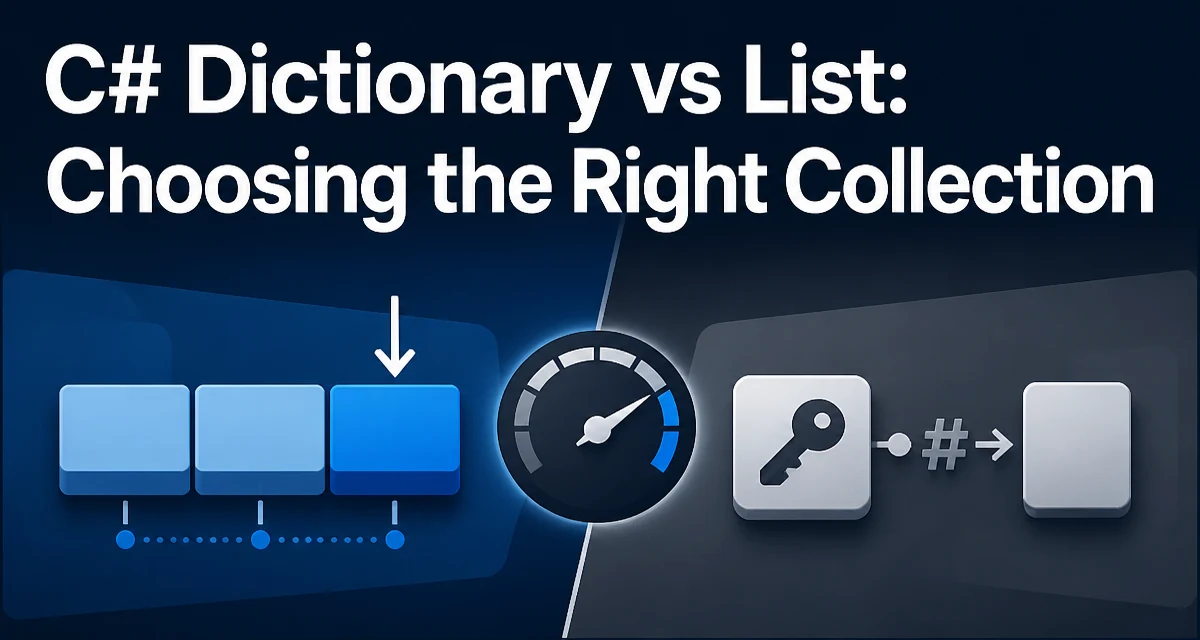
C# Dictionary vs List: Choosing the Right Collection
Compare C# Dictionary and List collections by lookup, iteration, memory, and typical access patterns to decide when to use each.
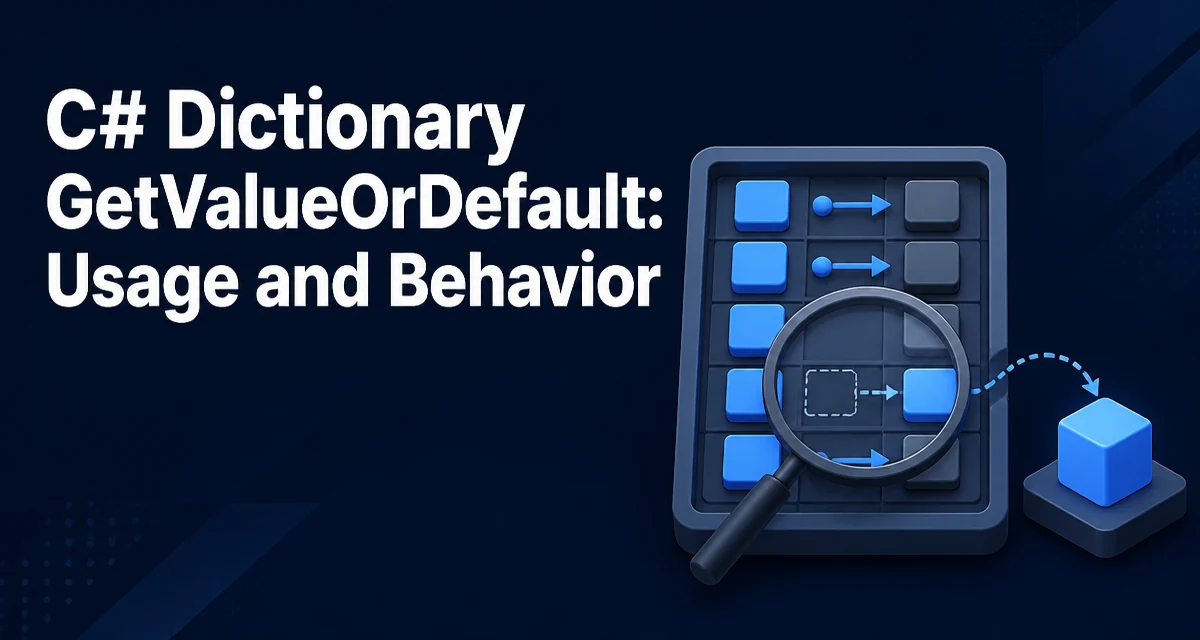
C# Dictionary GetValueOrDefault: Usage and Behavior
Learn how Dictionary.GetValueOrDefault works in C#: default return values for missing keys, the overload with an explicit fallback, comparison with TryGetValue, and common edge cases.
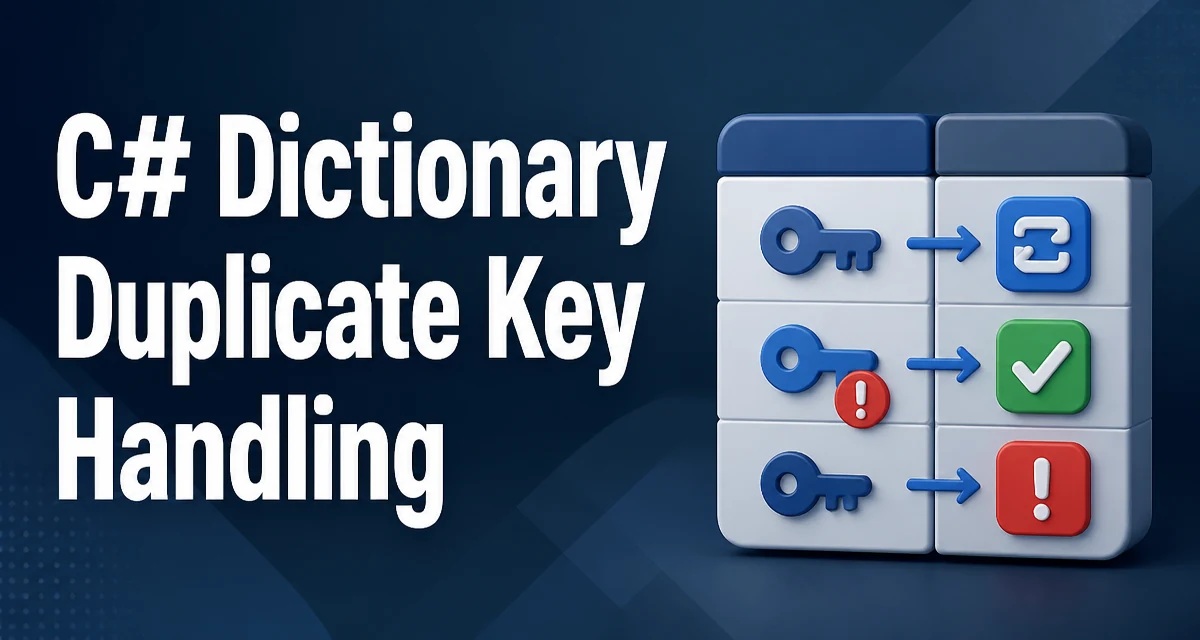
C# Dictionary Duplicate Key Handling
Dictionary.Add throws when a key already exists, while the indexer overwrites. See how to choose among Add, TryAdd, indexer updates, custom comparers, and ConcurrentDictionary.