Browse by Topic
Popular
Popular Posts

Latest
Latest Posts
C# Record vs Struct: Choosing the Right Type
Learn the practical differences between C# records and structs: reference vs value semantics, equality, immutability, performance, and when to choose each.
C# Record vs Class: Choosing the Right Type
Learn the key differences between C# records and classes, including equality, immutability, and when to use each type in your code.
C# Record Usage: Syntax, Equality, and Tradeoffs
Understand C# records: declaration syntax, value equality, with-expressions, inheritance, and when records fit better than classes or structs.
Understanding C# Struct Value Type Behavior
See how C# structs copy on assignment and method calls, where mutation of structs in collections can fail, and when value type behavior matters for performance.
C# Struct Copy Behavior: Value Type Semantics Explained
Understand how C# structs are copied by value, why it matters for performance and correctness, and how to control copy behavior with ref, readonly, and in parameters.
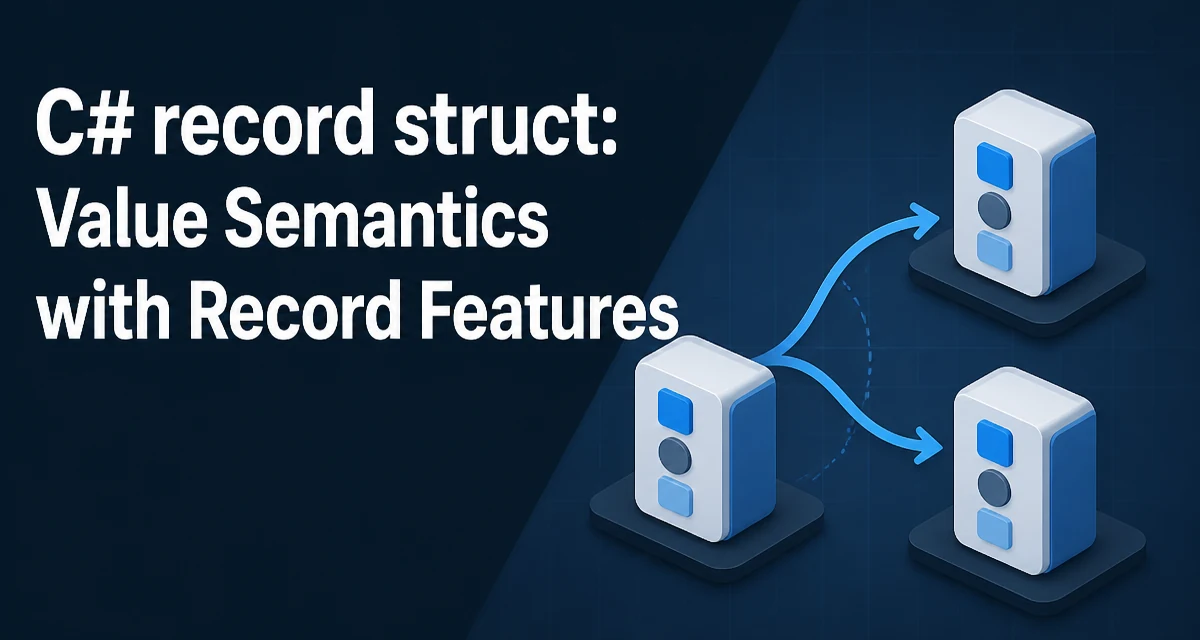
C# record struct: Value Semantics with Record Features
Record structs combine C# value-type semantics with record syntax. See how positional declarations, value equality, mutation, readonly variants, and performance tradeoffs work, and when to choose one over a record class or plain struct.
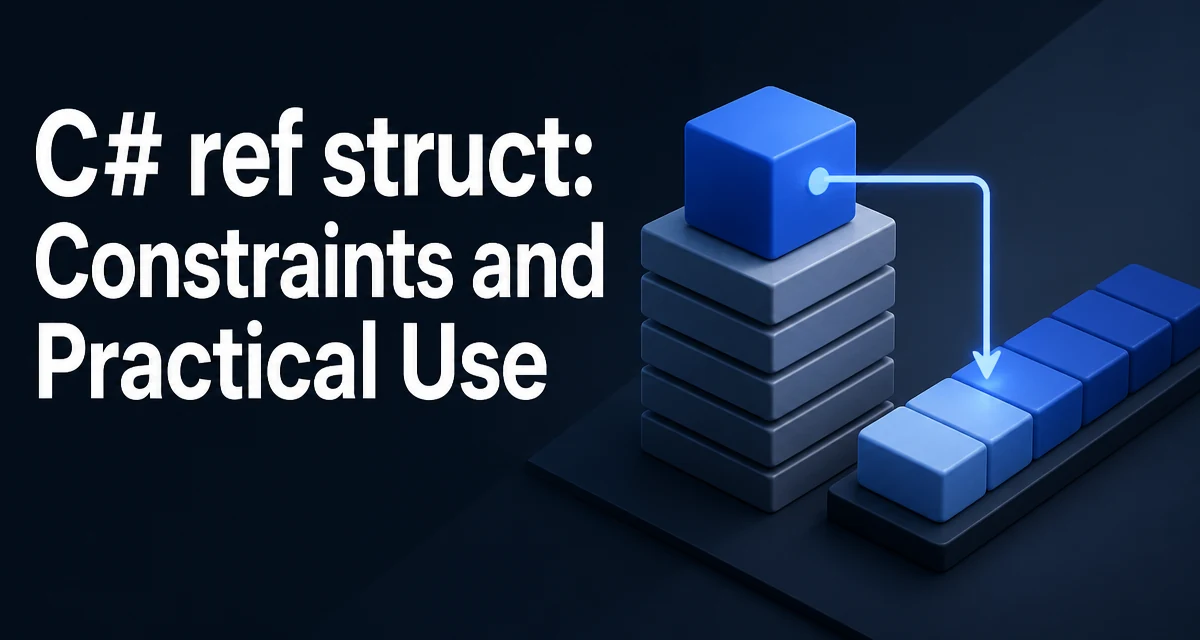
C# ref struct: Constraints and Practical Use
Learn how C# ref struct types enforce stack-only allocation, what compiler restrictions they carry, and how Span<T> uses them for safe, allocation-free memory access.
C# Readonly Struct: When and How to Use
c# readonly struct: Learn how C# readonly structs prevent defensive copies, enforce immutability, and when they improve performance.
C# Struct Constructor: Rules and C# 10 Changes
c# struct constructor: Learn C# struct constructor rules: parameterized constructors, implicit parameterless initialization, C# 10 field initializers, and performance.
C# Struct vs Class: Choosing the Right Type
c# struct vs class: Understand the differences between C# structs and classes: value vs reference semantics, memory allocation, performance tradeoffs, and when to choo...