Browse by Topic
Popular
Popular Posts
Latest
Latest Posts
C# Local Function: Syntax, Use Cases, and Performance
Learn how C# local functions work, when they are a better choice than lambda expressions, and how they affect performance and code clarity.
C# Recursive Method: Syntax, Stack, and Pitfalls
c# recursive method: Learn how to write C# recursive methods, understand base cases, call stack behavior, and avoid stack overflow pitfalls.
C# Tuple Return: Syntax and Usage
Learn how to return multiple values from C# methods with tuples, use named elements, deconstruct results, and choose between Tuple and ValueTuple for performance and clarity.
C# Return Multiple Values: Tuples, Out Parameters, and Custom Types
Learn how to return multiple values from C# methods using tuples, out parameters, and custom types, with code examples and tradeoffs.
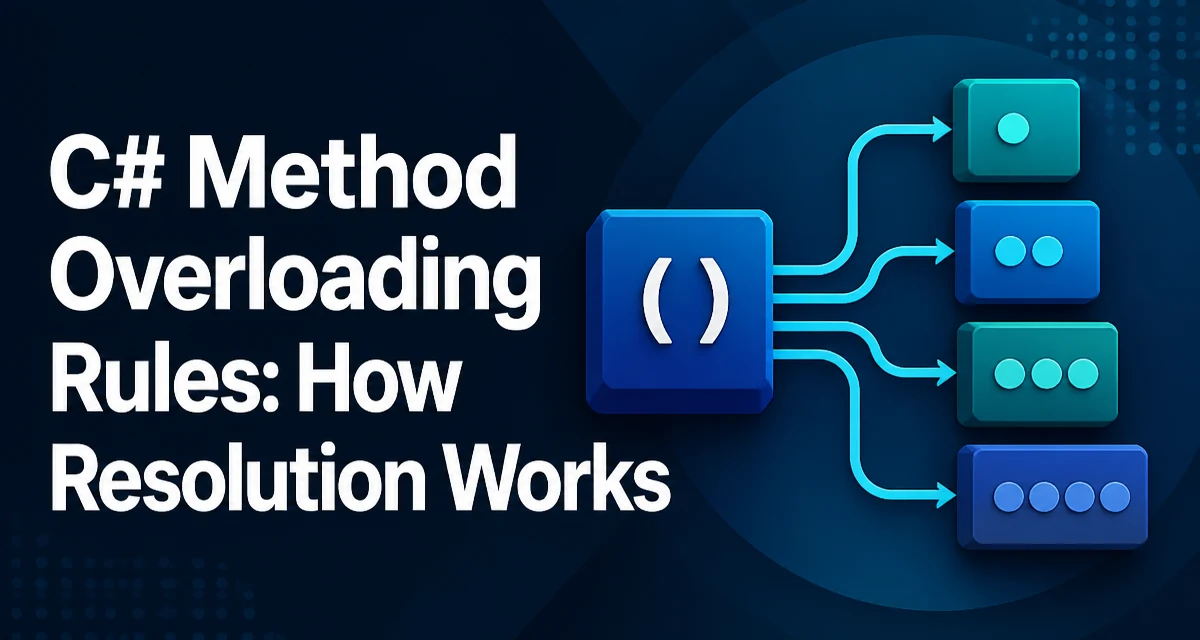
C# Method Overloading Rules: How Resolution Works
Understand C# method overloading: valid signatures, overload resolution, optional and named arguments, ref/out/in, params arrays, and common ambiguity pitfalls.
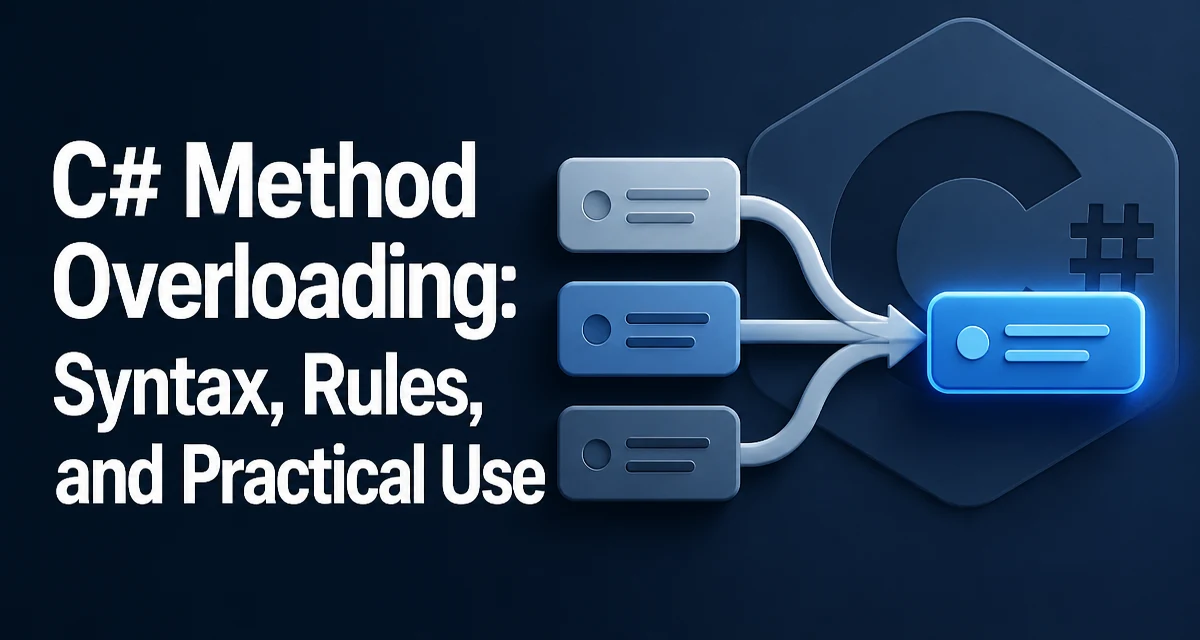
C# Method Overloading: Syntax, Rules, and Practical Use
Learn how C# method overloading works: signature rules, compiler resolution, common mistakes, and when generics or optional parameters fit better.
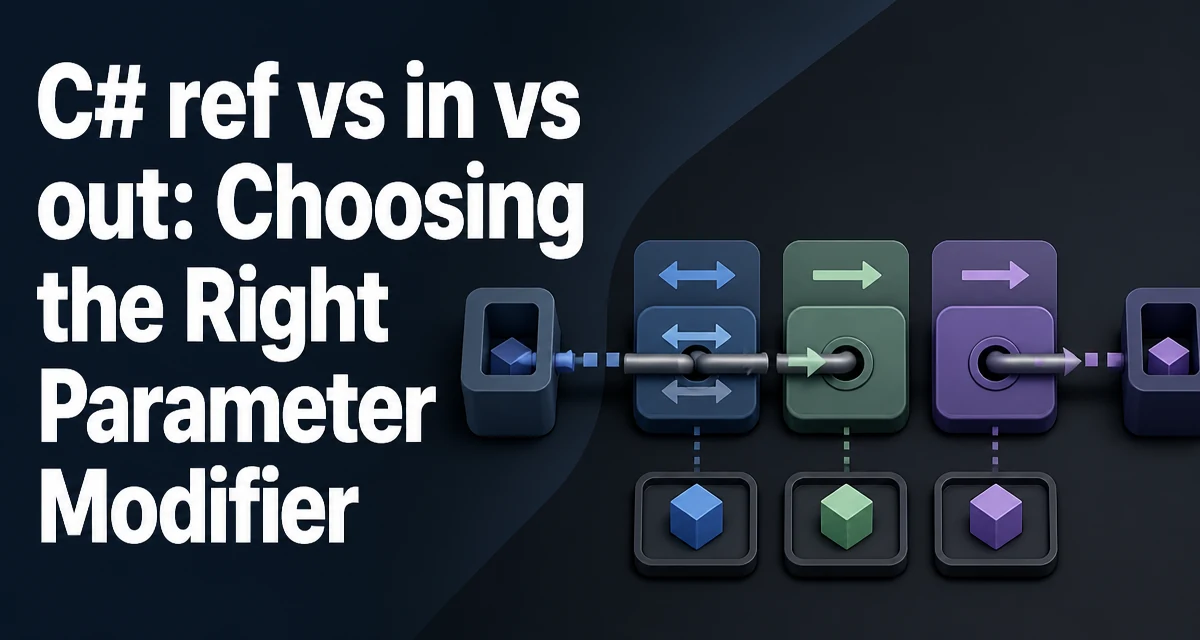
C# ref vs in vs out: Choosing the Right Parameter Modifier
Understand the differences between C# ref, in, and out parameter modifiers, when to use each, and how they affect performance and code clarity.
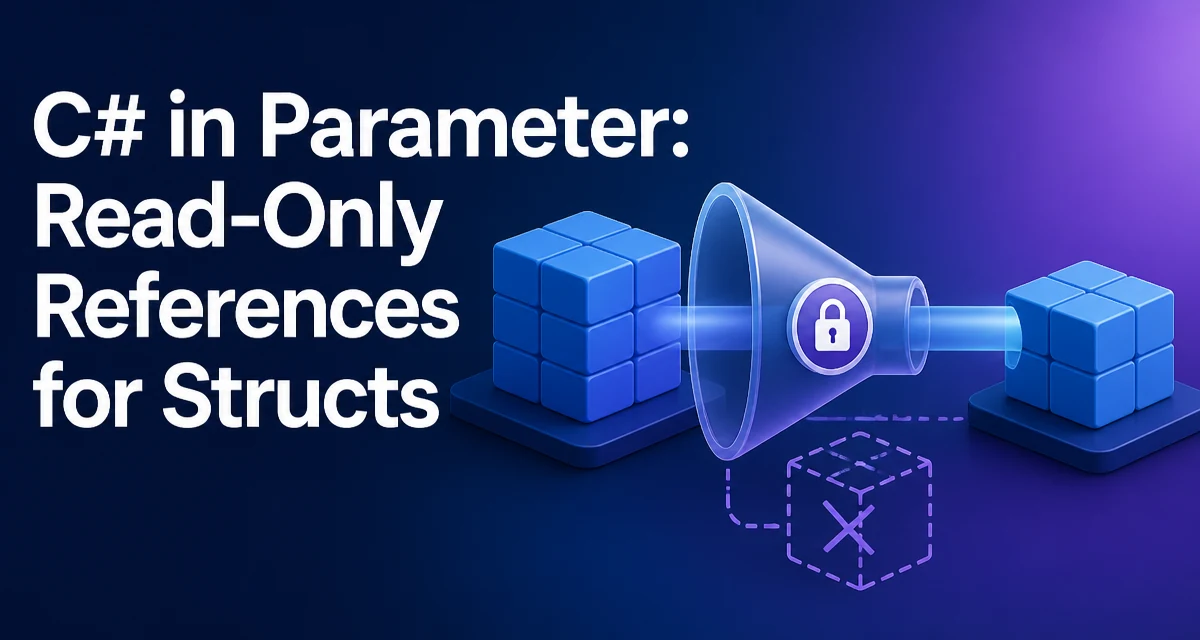
C# in Parameter: Read-Only References for Structs
Learn how the C# in parameter passes structs by read-only reference, avoids copying for large values, and affects overload resolution and performance.
C# Out Parameter: How to Use It Correctly
c# out parameter: Learn how to use C# out parameters: syntax, initialization rules, common patterns like TryParse, and when to prefer out over ref or return values.
C# ref Parameter: How It Works and When to Use It
Understand how C# ref parameters work, when to use them, and how they differ from out and in parameters in practical code.