Browse by Topic
Popular
Popular Posts
Latest
Latest Posts
Using the C# params Keyword for Variable Arguments
Understand the C# params keyword: syntax, compiler behavior, overload resolution, allocation costs, edge cases, and when an explicit array parameter is a better choice.
C# Named Arguments: Syntax and Usage
Learn how to use C# named arguments, including syntax, placement rules, optional parameters, and readability tradeoffs.
C# Optional Parameters: Syntax, Behavior, and Pitfalls
c# optional parameters: Learn how C# optional parameters work, including default value rules, named arguments, and pitfalls like ambiguous calls.
Using C# Default Parameters Safely
C# default parameters are compiled into callers, so updating a public default may not affect existing consumers. See how optional arguments, named arguments, interfaces, overloads, and API design interact.
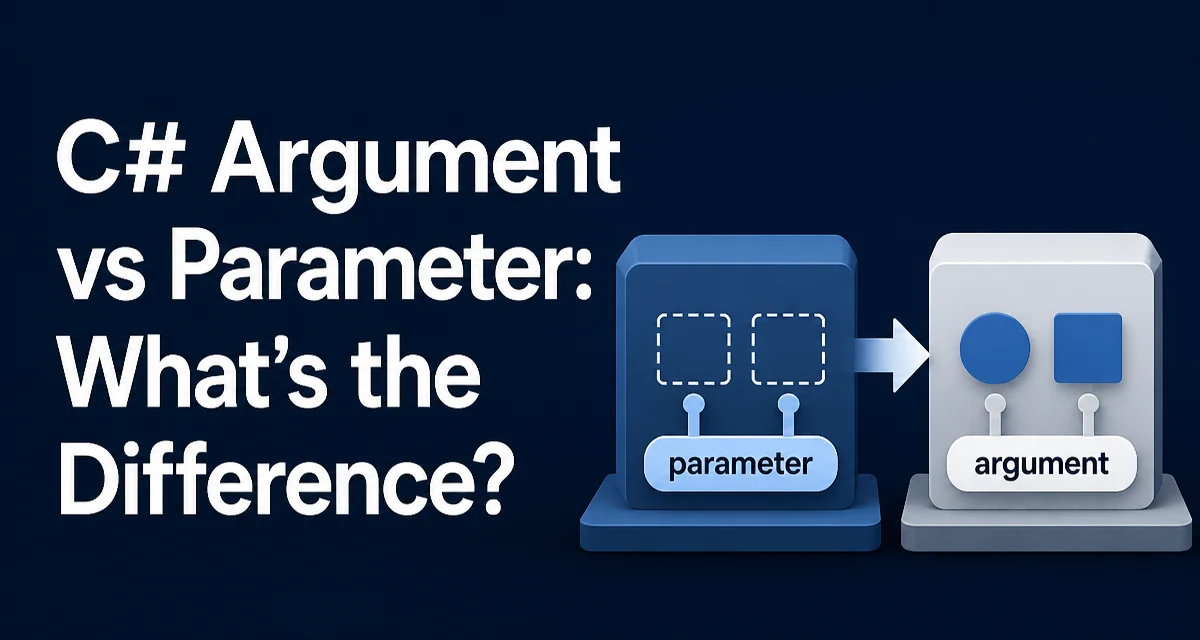
C# Argument vs Parameter: What's the Difference?
Parameters are declared in a method signature; arguments are values passed at the call site. Learn the difference in C#, including ref, out, and in passing modes.
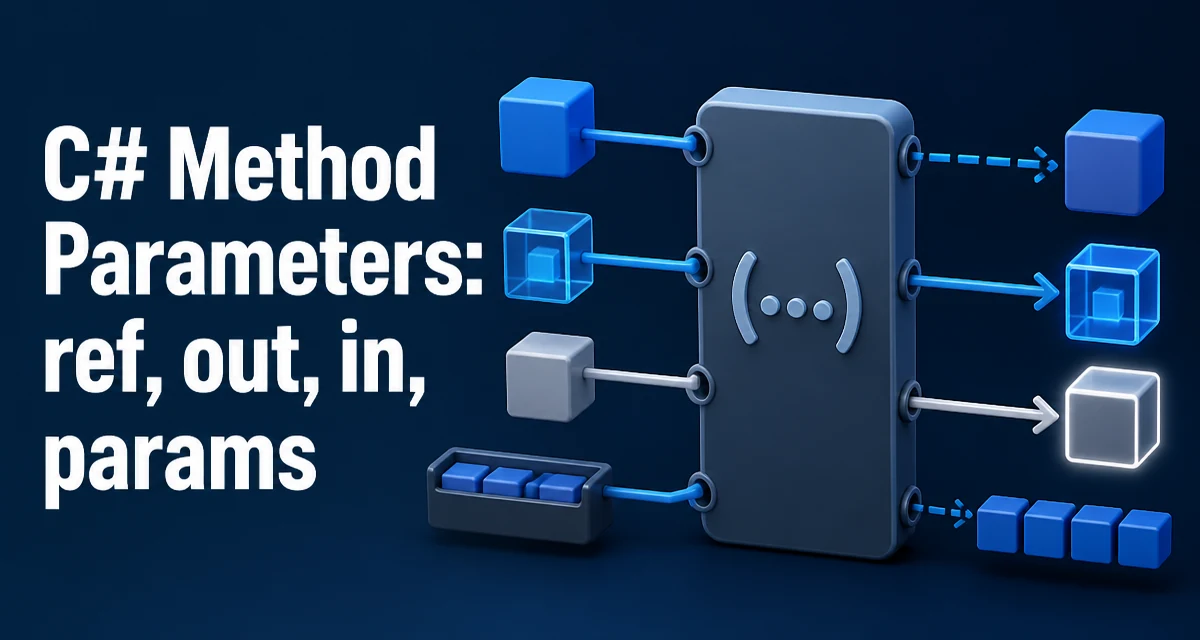
C# Method Parameters: ref, out, in, params
Understand C# method parameter modifiers: value parameters, ref, out, in, and params. See use cases, code examples, and performance tradeoffs.
C# Return Statement: Syntax and Behavior
Understand the C# return statement: syntax, compiler requirements, early returns, void methods, tuples, async behavior, and ref returns.
C# Void Method: Syntax, Usage, and Common Pitfalls
c# void method: Learn how to declare and use void methods in C#, understand their limitations, and avoid common pitfalls like async void exception handling.
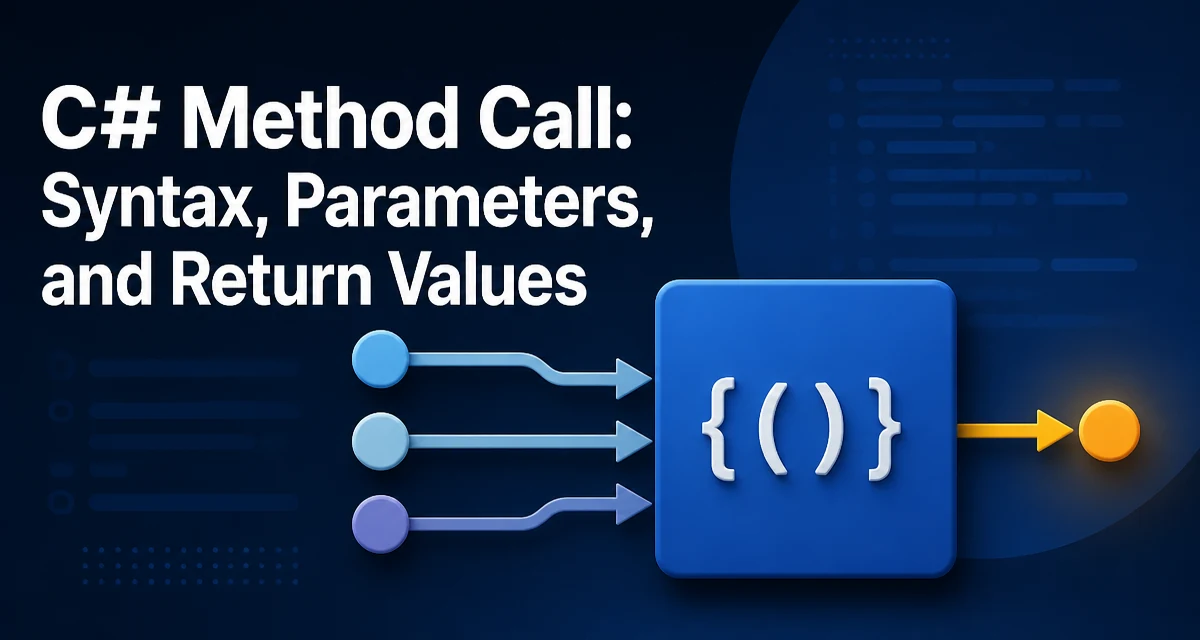
C# Method Call: Syntax, Parameters, and Return Values
Learn how to call methods in C#: syntax, argument passing by value and by reference, return values, named and optional arguments, and overload resolution.
C# Method Declaration: Syntax and Use
Learn C# method declaration syntax, parameters, return types, and overloading with practical examples for everyday development.