Browse by Topic
Popular
Popular Posts
Latest
Latest Posts
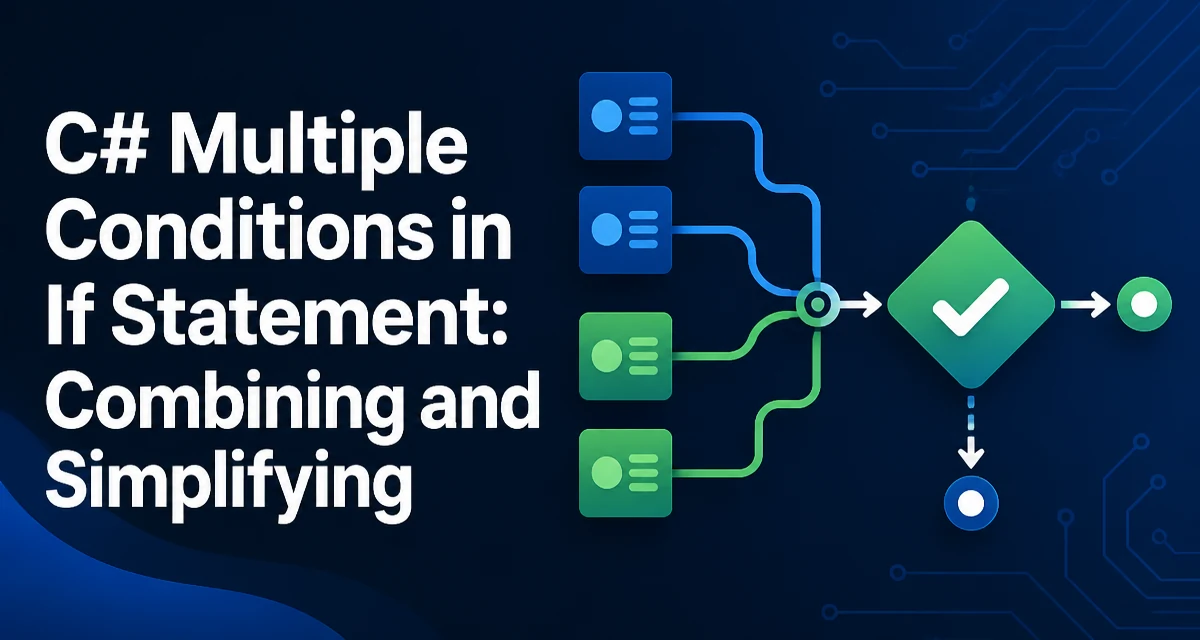
C# Multiple Conditions in If Statement: Combining and Simplifying
Learn how to combine multiple conditions in C# if statements using &&, ||, parentheses, and pattern matching. Includes precedence, short-circuiting, nullable bools, and readability tips.
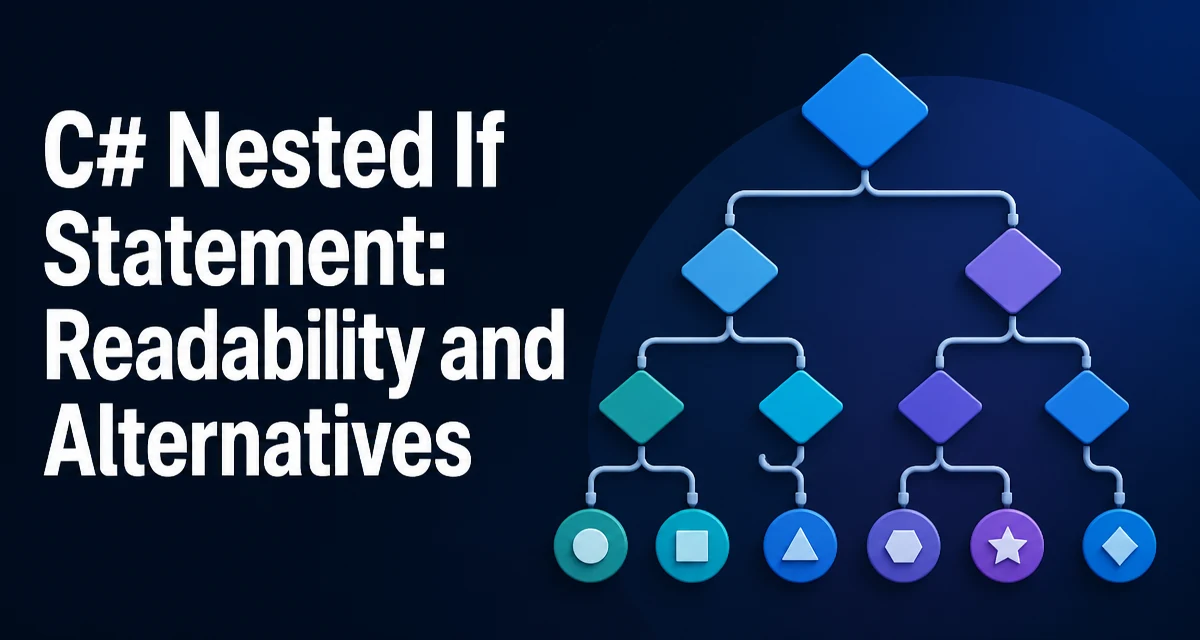
C# Nested If Statement: Readability and Alternatives
c# nested if statement: Learn how to write and refactor C# nested if statements. Understand when nesting is acceptable, how guard clauses improve readability, and when...
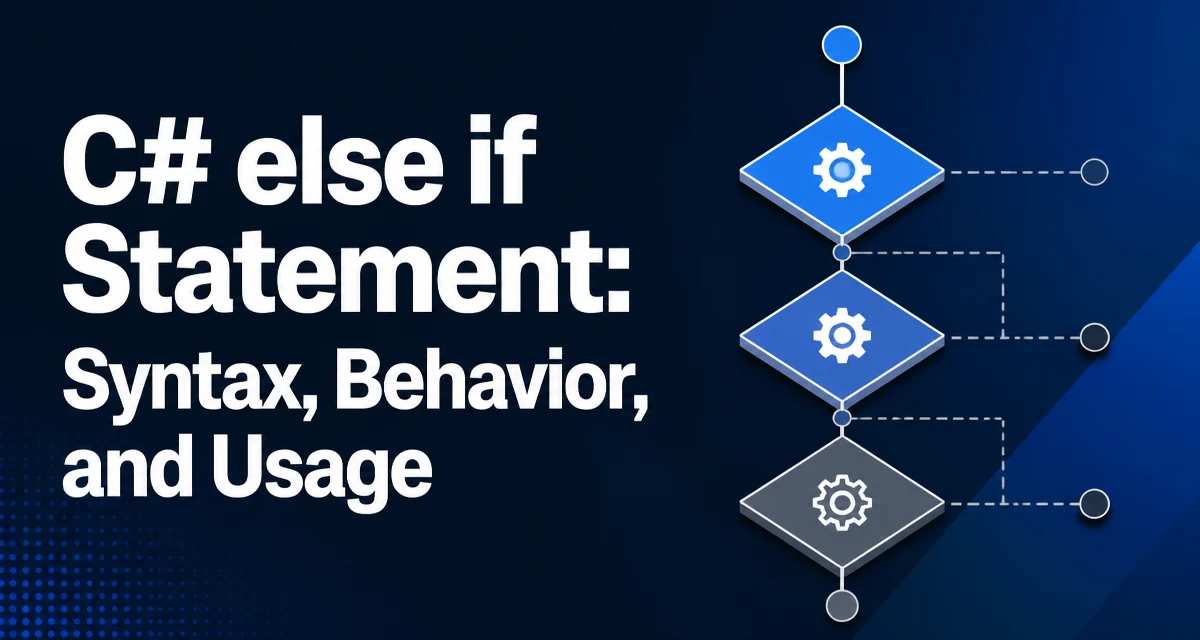
C# else if Statement: Syntax, Behavior, and Usage
c# else if statement: Learn how the C# else if statement works, how to structure conditional chains, and when to prefer switch or pattern matching.
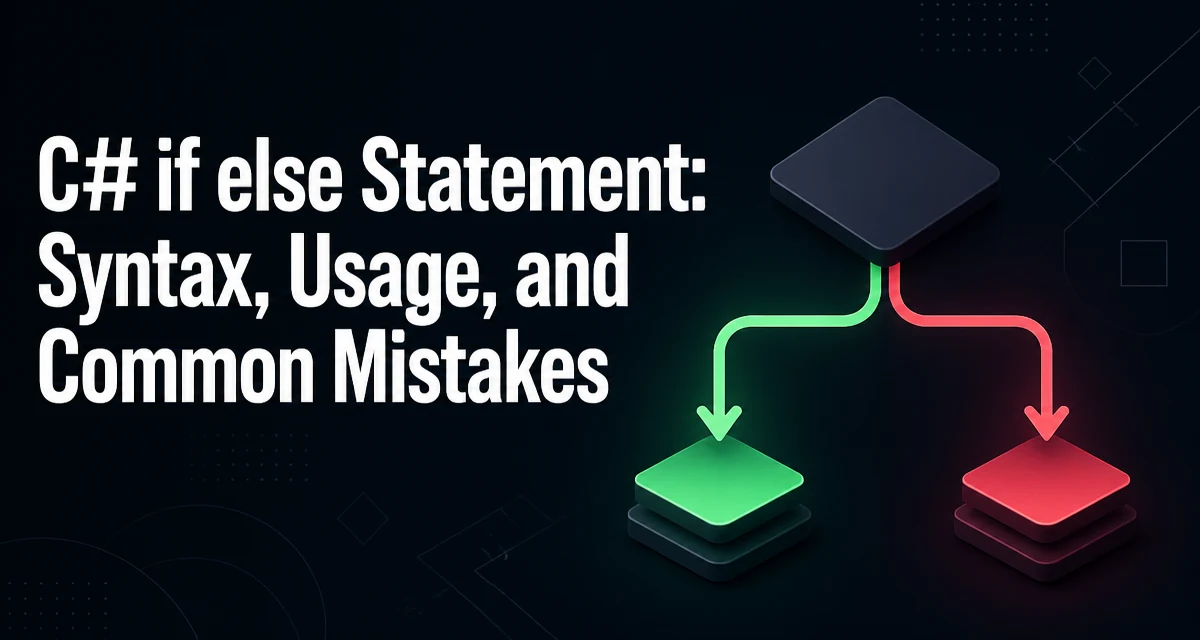
C# if else Statement: Syntax, Usage, and Common Mistakes
Learn C# if/else syntax, common patterns, operator precedence, short-circuiting, and mistakes to avoid when writing real-world conditional logic.
C# If Statement: Syntax and Real-World Usage
Learn the C# if statement syntax, how to use else and else if branches, and how to avoid common pitfalls when writing conditionals in real projects.
C# Default Keyword: Syntax and Use Cases
Learn how the C# default keyword works for value types, reference types, generics, and the default literal in modern C#.
C# nameof Keyword: Compile-Time String Names
The C# nameof keyword produces compile-time string names, preventing magic strings and keeping validation, property-change notification, and logging code refactoring-safe.
C# typeof Keyword: Syntax, Usage, and Runtime Behavior
c# typeof keyword: Learn how the C# typeof keyword works, how it differs from GetType(), and when to use it for type checks, generics, and reflection.
C# sizeof Keyword: Compile-Time and Runtime Behavior
Learn how the C# sizeof operator returns type sizes, when unsafe context is required for structs, and how it differs from Marshal.SizeOf.
C# Null Conditional Operator: Syntax and Behavior
Learn how the C# null conditional operator ?. and indexed form ?[] work: short-circuiting, value types, common mistakes, and runtime behavior.