All syntax guides
Short, practical guides on programming syntax, language fundamentals, and the tools developers reach for every day.
3,965 guides across 14 topics
Topics
Popular guides
Most read


Latest guides
Page 349 of 397
C# LINQ Method Syntax Explained with Examples
c# linq method syntax: Understand how C# LINQ method syntax works: extension methods, lambda predicates, deferred execution, and when IEnumerable differs from IQueryable.

C# LINQ Query Syntax: A Practical Guide
Understand C# LINQ query syntax with practical examples, translation to method calls, and guidance on choosing between query and method syntax.

Using Lookup in C# LINQ for One-to-Many Maps
Learn how to create and use a C# LINQ Lookup for one-to-many key mappings, and when it fits better than Dictionary or GroupBy.

C# LINQ ToHashSet: Convert Query Results to a HashSet
See how C# LINQ's ToHashSet() converts query results into a HashSet, how it differs from ToList and ToArray, and how to avoid common pitfalls with comparers, order, and duplicates.
C# LINQ ToDictionary: Syntax, Edge Cases, and Performance
Learn how to use LINQ ToDictionary in C# to convert sequences into dictionaries, handle duplicate keys, and understand performance implications.

C# LINQ ToArray: Usage and Performance
Learn how C# LINQ ToArray materializes sequences into arrays, when to use it, and what it can cost in memory and performance.
C# LINQ ToList: Materialization and Practical Use
Understand what ToList() does in C# LINQ: how it materializes queries, its performance tradeoffs, and when to use it instead of deferred execution.
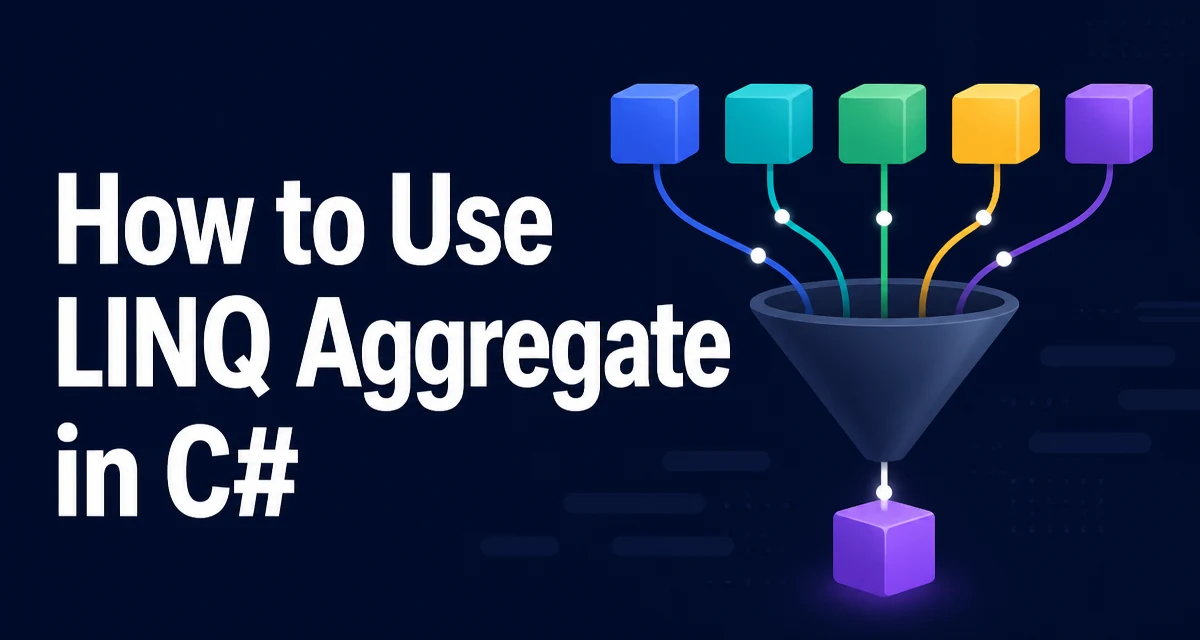
How to Use LINQ Aggregate in C#
Learn how to use the LINQ Aggregate method in C# for custom reductions, including seed values, string concatenation, and performance considerations.
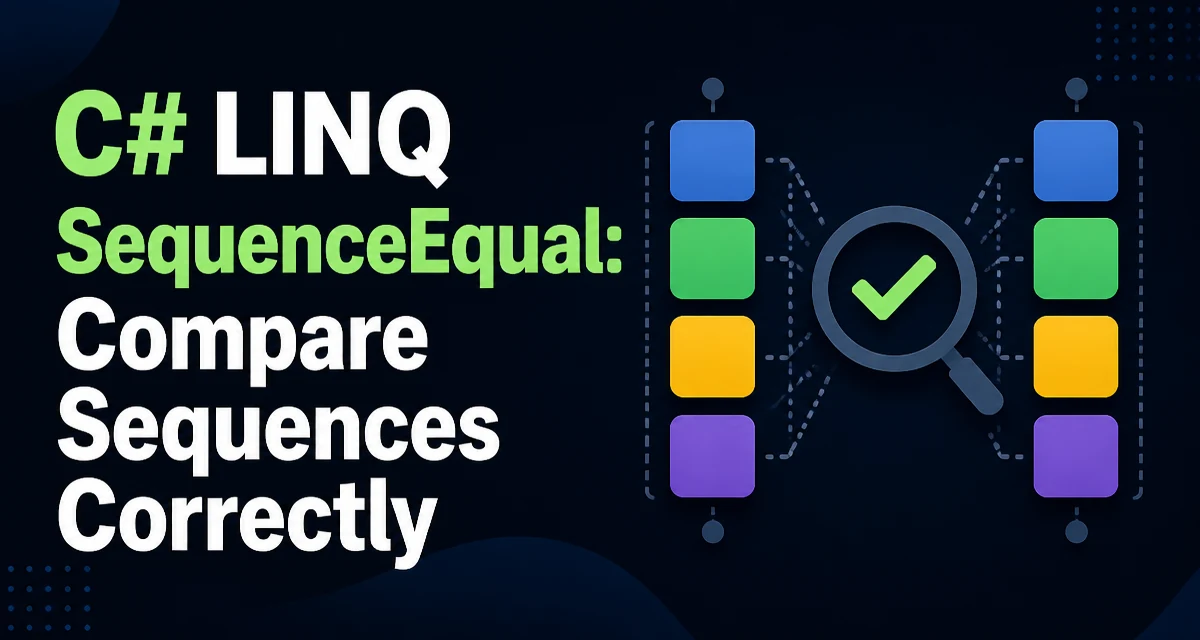
C# LINQ SequenceEqual: Compare Sequences Correctly
c# linq sequenceequal: Learn how SequenceEqual works in C# LINQ, when to use it, its runtime behavior, and how to compare sequences with custom equality.
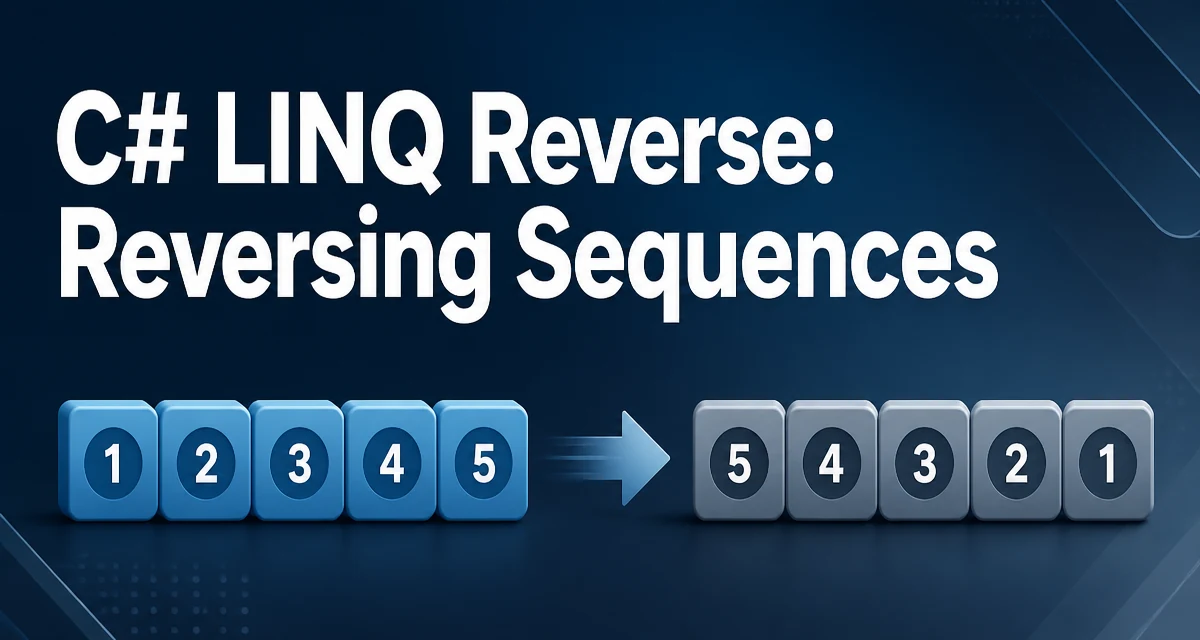
C# LINQ Reverse: Reversing Sequences
c# linq reverse: Learn how LINQ Reverse() works in C#: its deferred execution behavior, buffering cost, and when to choose it over in-place reversal methods.